EU's largest onshore solar project takes shape in Romania
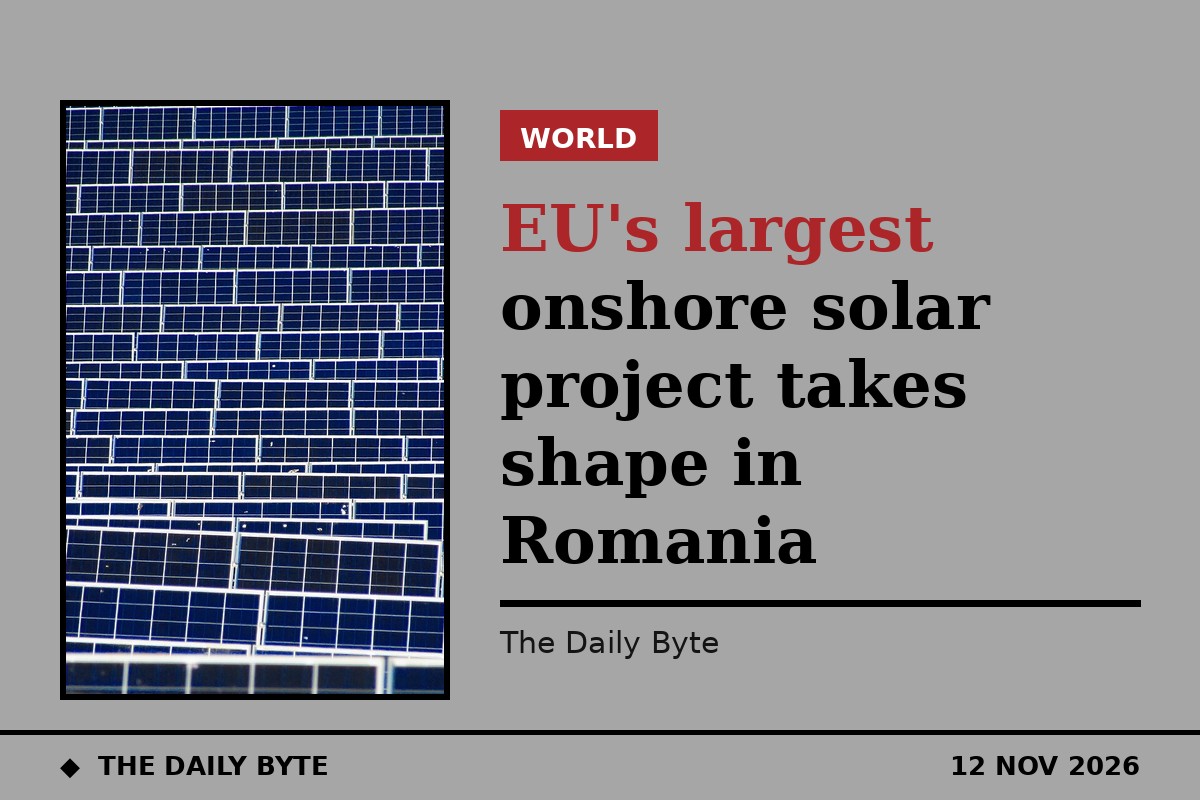
Rezolv Energy has appointed seven companies to build Dama Solar, a 1.36 GWp solar project in Arad County, western Romania, that is set to become the largest onshore renewable energy project in the European Union once it starts operating.
CHINT Green Energy, CMC Europe and Solarpro will each handle separate engineering, procurement and construction packages, while EnergoBit and Siemens Energy will deliver the high-voltage electrical infrastructure. Tongwei and Astronergy will supply the solar modules, with Astronergy providing its flagship ASTRO N7 Pro panels.
Power for hundreds of thousands of homes
Covering more than 1,000 hectares, Dama Solar is expected to generate about 1,800 GWh of green electricity a year, equivalent to around 36% of Romania's total solar electricity generation in 2025. Commercial operation is scheduled to begin in the second half of 2028, and construction is expected to employ a peak workforce of about 1,500 people.
The appointments follow the project's financial close at the end of September 2026, when Rezolv's project subsidiary signed a financing package of up to 561 million euros with 14 lenders, underpinned by an anchor investment from the European Investment Bank. Dama Solar was also awarded two contracts for difference by Romania's Ministry of Energy in the country's second contracts-for-difference auction in August 2025, covering 520 MW of its capacity.
Part of a wider Romanian renewables push
Rezolv Energy, launched in 2022 by sustainable infrastructure investor Actis, is building a 2.8 GW portfolio of large-scale renewable projects in Romania and Bulgaria. Romania's total installed power generation capacity now exceeds 23 GW, with clean energy sources accounting for 76%, as the country works towards renewables reaching 38.3% of final energy consumption by 2030.