Danone completes MADE Group deal in Asia-Pacific
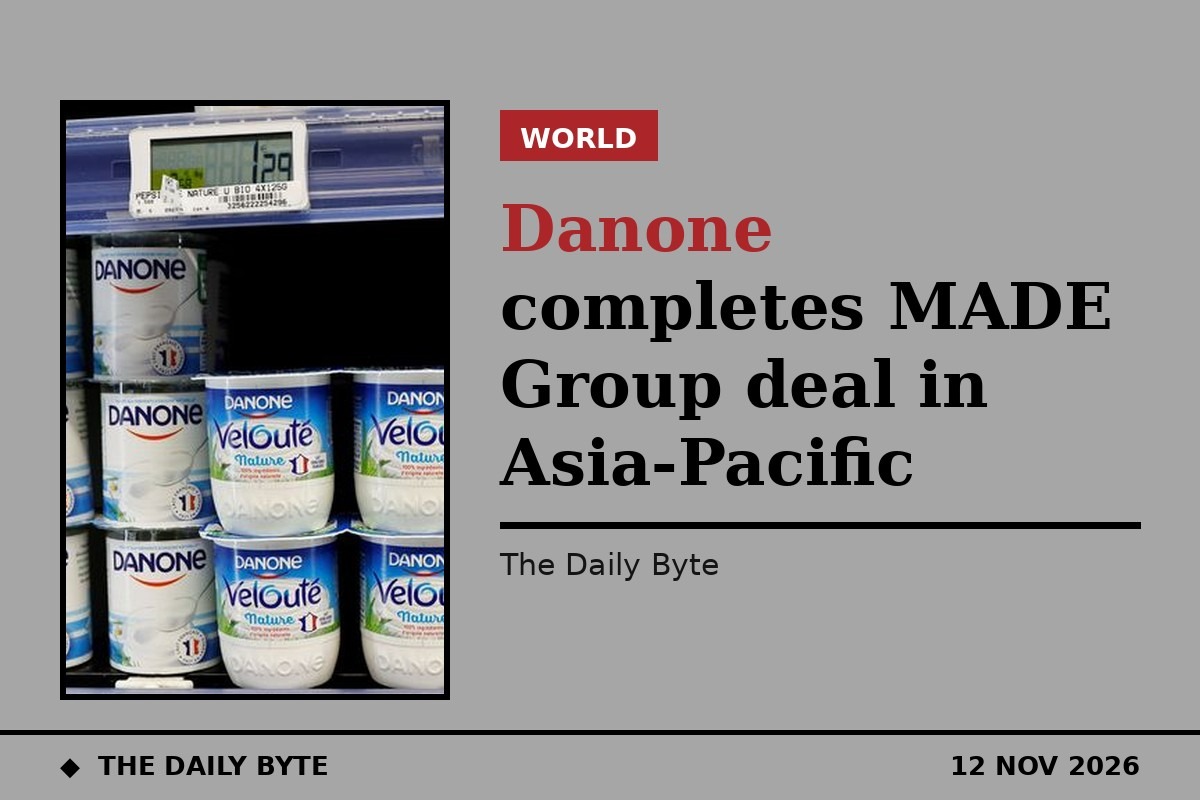
French food giant Danone has completed its acquisition of MADE Group, the Australian healthy nutrition business, in a deal that expands its presence across Australia, New Zealand and Southeast Asia.
Danone announced the completion in Paris on Thursday 12 November, turning an agreement first signed in June into a done deal. MADE, founded in Melbourne in 2005, makes high-protein ready-to-drink products, gut-health yoghurts and coconut-based products, and recorded sales of more than 300 million euros in the financial year ending June 2026.
The company has delivered double-digit growth and what Danone described as attractive margins, and will become a meaningful contributor to Danone's Essential Dairy and Plant-Based business in Asia-Pacific. Danone said the deal would add to its operating margin and earnings per share from the first year.
What Danone has bought
MADE Group's portfolio spans some of Australia's best-known health food brands, including Cocobella coconut products and Rokeby Farms high-protein milk drinks, alongside gut-health yoghurt ranges. Its products sit squarely in the fast-growing categories Danone has targeted: protein, gut health and plant-based nutrition.
The business has a significant presence in its home market of Australia as well as across New Zealand and Southeast Asia, and a track record of innovation backed by strong marketing. Danone chief executive Antoine de Saint-Affrique said the group wanted to combine MADE's entrepreneurial culture, marketing expertise and route to market with Danone's scale and scientific and category expertise.
MADE Group chief executive Amanda Butler said the acquisition opened a new chapter for the business, giving it access to broader resources to support its expansion across the region.
Why Asia-Pacific matters
The deal reflects Danone's bet that demand for healthier, protein-rich and gut-friendly food will keep growing faster in Asia-Pacific than in its mature European markets. Consumers across Australia and Southeast Asia are spending more on functional foods, and Danone has made the region a priority for investment under its Renew strategy.
MADE gives Danone established brands, shelf space and local manufacturing know-how in markets where building a presence from scratch would take years. Its sales of more than 300 million euros, roughly 490 million Australian dollars, make it a substantial addition to Danone's regional business rather than a niche bolt-on.
The acquisition also strengthens Danone's position against rivals in the health and wellness aisle, where protein drinks and probiotic yoghurts have become some of the fastest-growing categories in supermarkets across Australia and Southeast Asia.
A deal announced in June
Danone first announced two agreements on 22 June 2026 to expand in Asia-Pacific: the acquisition of MADE Group and the purchase of the remaining 49 per cent stake in its fresh dairy joint venture with Saputo Dairy Australia, taking that business to full ownership.
Both transactions were subject to customary closing conditions, including regulatory approvals, and were expected to complete in the second half of 2026. Financial terms of the MADE deal were not disclosed when it was announced, although reports at the time put the price at about $1.4 billion.
The completion of the MADE acquisition was announced on Thursday; Danone has not said separately whether the Saputo joint venture buyout has also closed.
Part of a wider buying spree
The MADE deal continues Danone's run of targeted acquisitions under the Renew strategy, following the purchase of UK-founded nutrition brand Huel earlier in 2026 and the 2025 acquisitions of Belgian biotic specialist Akkermansia and US specialised nutrition business Kate Farms.
Each deal has added a fast-growing health brand to a portfolio that Danone is reshaping around nutrition, gut health and protein. With MADE now inside the group, Danone's challenge will be to grow the Australian brands across Southeast Asia without losing the local identity and entrepreneurial culture that made them successful.
Source: GlobeNewswire / Danone