Delhi Diwali air turns severe as AQI hits 483
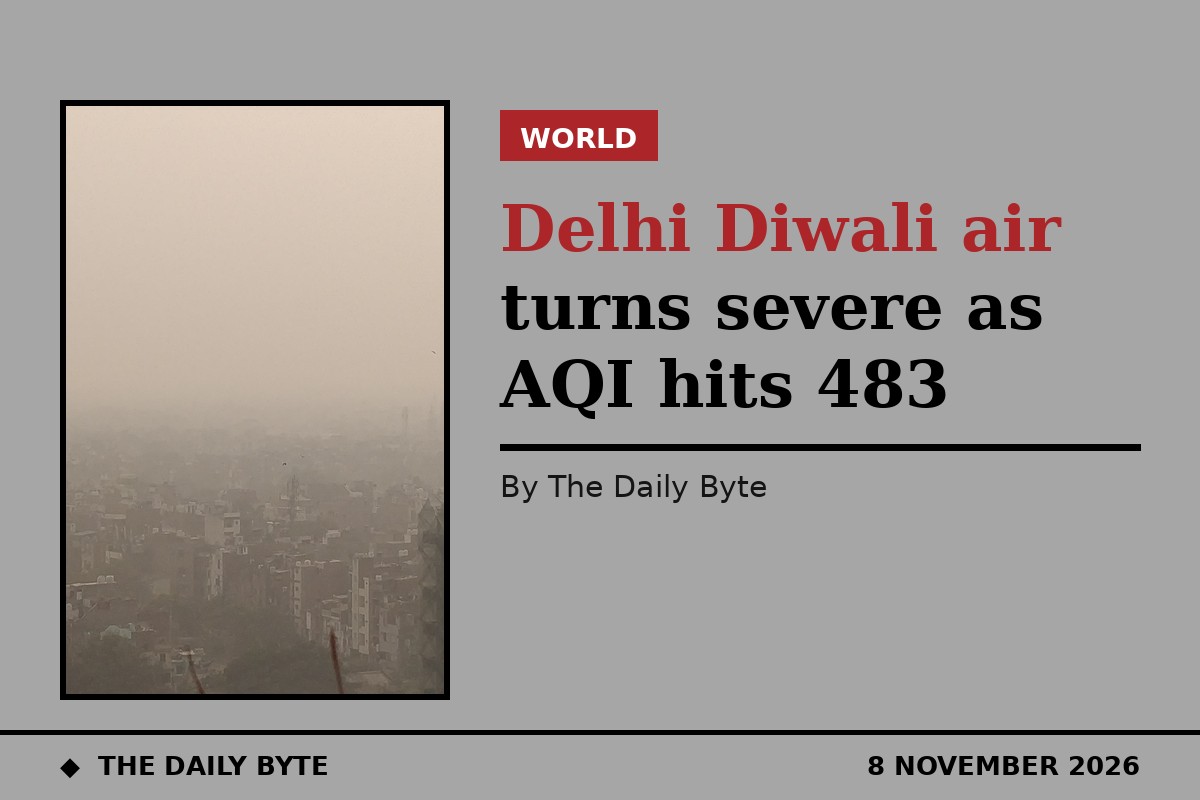
Delhi woke on Diwali morning to air deep in the 'severe' band, with the capital's overall air quality index (AQI) reaching 483 at 8:10am, according to Central Pollution Control Board (CPCB) data reported by The Hindu BusinessLine. It was a sharp deterioration from Saturday morning, when the overall reading stood at 364, in the 'very poor' category.
Several neighbourhoods recorded readings above 400. Punjabi Bagh registered 449, Bawana 446, RK Puram 448, IIT Delhi and Rohini 445 each, Chandni Chowk 420, Patparganj 421 and Alipur 413, all in the severe range. India Gate, at 398, and Akshardham, at 336, were only slightly better, in the 'very poor' band. Across the day the citywide average settled at 376, with 12 of 59 monitoring stations severe and 22 very poor; Jahangirpuri recorded the worst reading of the day at 463.
The Commission for Air Quality Management (CAQM) had invoked Stage III of the Graded Response Action Plan (GRAP) on Friday, two days ahead of Diwali. The emergency measures ban BS-III petrol and BS-IV diesel four-wheelers, halt non-essential construction and dust-generating work, and move primary school pupils to hybrid learning. The restrictions apply across Delhi and adjoining districts of Haryana, Uttar Pradesh and Rajasthan.
Forecasters expect little relief. The Air Quality Early Warning System predicts severe air from Monday 9 November for several days, driven by Diwali firecrackers, vehicle exhaust, about 19 per cent of Sunday's pollution according to the government's Decision Support System, and peak-season stubble burning in neighbouring states, with calm winds under 10 kilometres per hour trapping pollutants close to the ground. Monitoring group IQAir ranked Delhi the world's most polluted major city on Saturday morning, Reuters reported, and one report put Saturday's 24-hour average at 369, the highest on the eve of Diwali since 2016. Residents have been advised to limit outdoor activity and wear masks when pollution peaks.