Democrats Plan Healthcare, Iran and Tariff Votes First
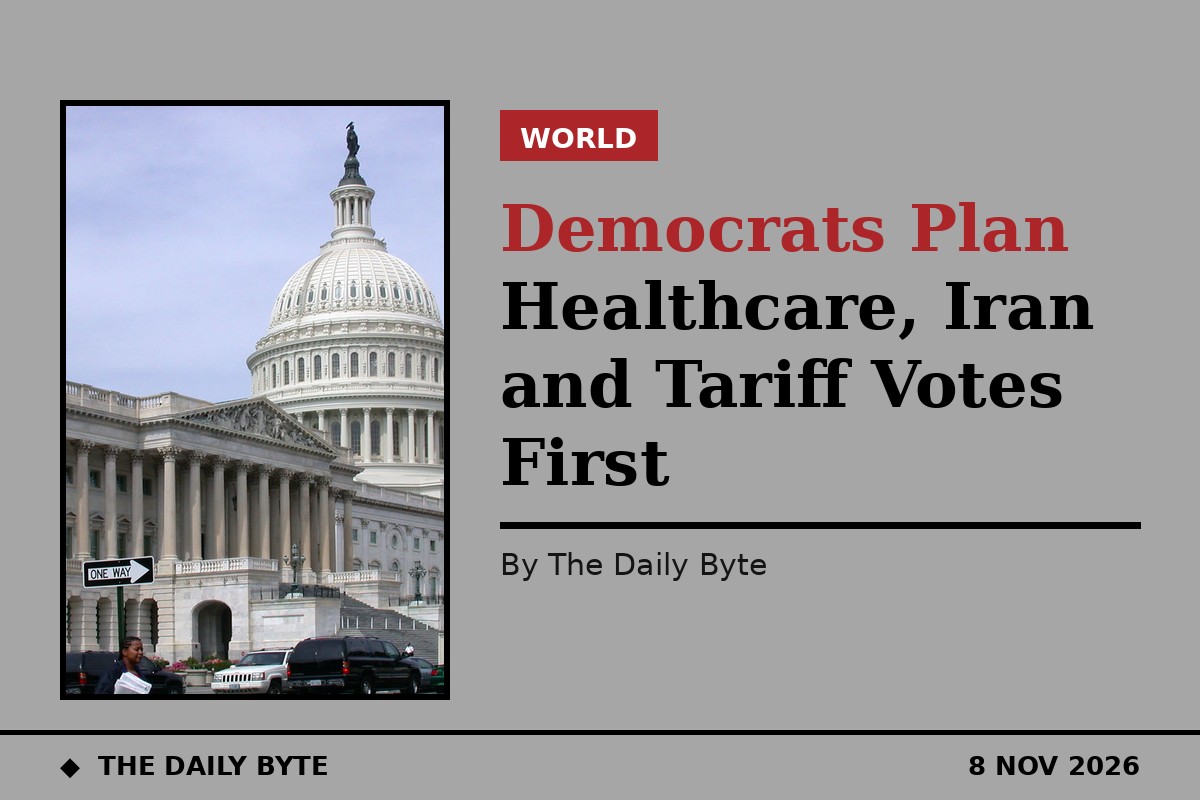
House Democrats plan to open their new majority with early votes to expand healthcare support, stop the war with Iran and reverse some of President Donald Trump's tariffs, setting up a rapid confrontation with the White House when the new Congress convenes on 3 January.
Democrats won control of both the House and the Senate in the midterm elections on 3 November, and are positioned to hold more than 250 of the 435 seats in the House. Democratic Leader Hakeem Jeffries, who is expected to seek election as speaker, has promised a fast start. "We're going to get out of the gate fast," he said, telling reporters the party would usher in "bold, dramatic change."
Healthcare comes first
The first priority in the opening 100 hours is healthcare. Democrats want to restore enhanced Affordable Care Act subsidies that lower premiums for millions of enrollees, and to reverse Medicaid cuts enacted by Republicans last year in the One Big Beautiful Bill Act, some of which are about to take effect.
They want to reverse Medicaid changes projected to reduce spending by more than $900 billion over a decade. Those changes helped finance Trump's tax and spending legislation and imposed additional administrative rules and eligibility conditions, including work requirements. Some of the largest changes have not yet taken effect, yet Medicaid enrolment has already fallen by about 5 million people, or roughly 7 per cent, since July 2025, according to KFF.
A measure extending the enhanced ACA subsidies passed the current House with some Republican support but stalled in the Senate. Democrats believe their new majorities change the prospects for passage in Congress, though not the threat of a presidential veto.
Iran war and tariffs next
On foreign policy, Democratic leaders are promising swift legislation aimed at stopping the war with Iran, which began on 28 February 2026. Lawmakers have already considered war powers measures on Iran repeatedly, with 14 votes in the Senate and six in the House, without ending the conflict. Democrats also plan early legislation to reassert Congress's authority over tariffs and reverse some of Trump's trade measures, a priority that matters acutely to Canada and other trading partners hit by US import taxes.
Beyond the opening votes, Jeffries said five working groups are preparing broader proposals on the cost of living, covering housing, energy, groceries and caregiving. Democrats also intend to hold public hearings and pass legislation on artificial intelligence and data centres, an area where the party argues Republicans let the industry run unchecked.
Senate rules and a veto stand in the way
Enacting the agenda will be far harder than passing bills in the House. Most Senate legislation must clear a 60-vote procedural threshold, requiring Republican cooperation unless Democrats change the rules. Trump has also advertised his willingness to veto Democratic bills, posting an election-night photograph of a red cap bearing the word "VETO". Before the election, Republican Senate Majority Leader John Thune warned that Democratic control would produce "two years of paralysis".
Senate Democratic Leader Chuck Schumer said his party would pursue its priorities even if Trump opposed them. "If he vetoes it, it will show the divisions," he said, pointing to the month-long government shutdown over healthcare as proof that voters knew whose side Democrats were on. He said he was seeing initial signs that some Republicans might support restoring the enhanced ACA subsidies.
Investigations will also be a major focus now that Democrats hold subpoena power. The top Democrat on the House Oversight Committee, Representative Robert Garcia of California, released a two-word statement on election night directed at Trump and his circle: "Lawyer up."
Progressives are pressing the leadership to go further, with some arguing the party should eliminate the Senate filibuster rather than accept it as the reason legislation fails. Schumer has not committed to that step, saying the focus has to be on getting things done. Even unsuccessful votes, however, would define the parties' positions before the 2028 presidential election, and the new majority's first weeks will test whether a sweeping midterm victory can be turned into laws that lower costs for voters who delivered it.


