DfE internal suspensions plan risks isolation
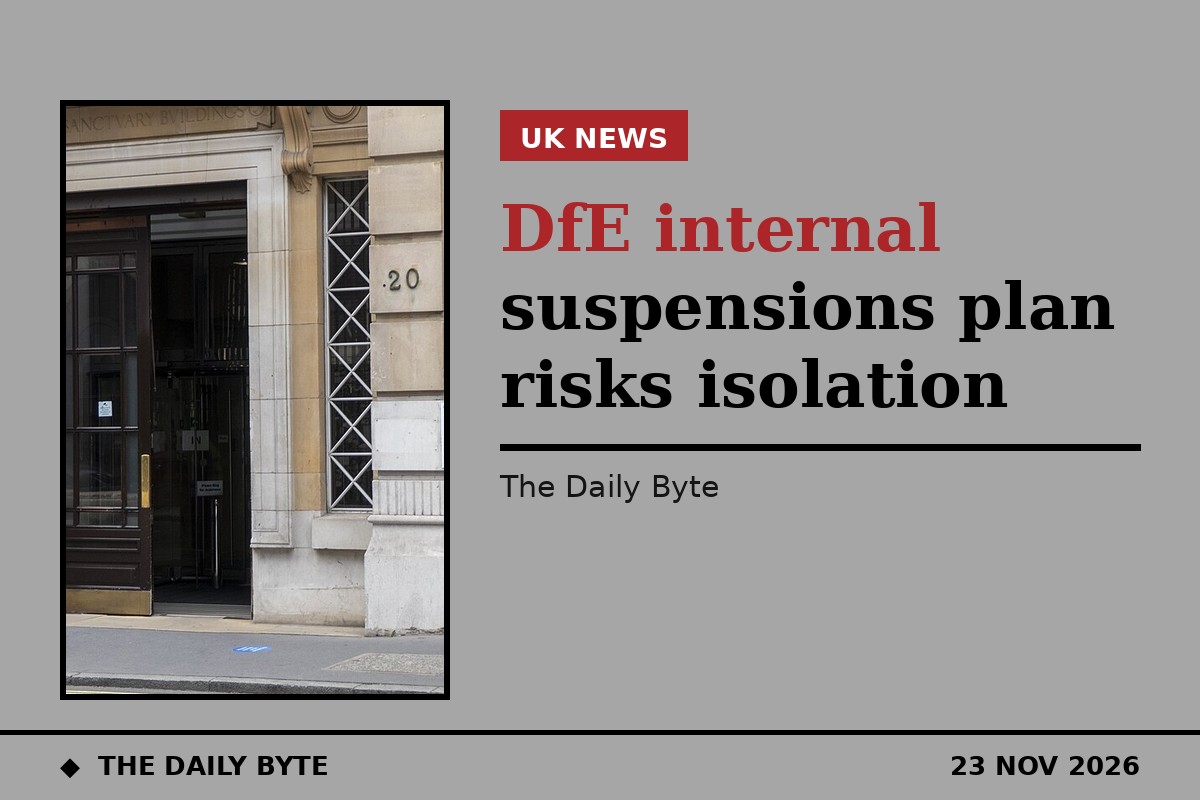
Government plans for a framework for internal suspensions in schools risk formalising isolation under a new name, education experts have warned, in responses to a Department for Education (DfE) consultation on exclusion reforms that has just closed. In its schools White Paper, the DfE announced a plan for time-limited internal suspension, allowing pupils removed from the classroom for disciplinary reasons to remain on site instead of being sent home.
A Tes analysis of consultation responses, published on 23 November 2026, found worries across the sector about how the sanction might be used and a lack of research or evidence about effective practice. The warnings come from charities, teaching unions and school leaders, alongside more supportive voices who say the sanction can work when it is used well.
What experts are warning
Education charities The Difference, Impetus and Mission 44 said in a joint response that an internal suspension framework would need a recording requirement and a quality test, or it would risk formalising isolation under a new name. Beccy Earnshaw, chief executive of The Difference, said that if the government introduces a framework for internal suspension, it must come with national recording and clear standards for what pupils are taught while they are out of class.
The NASUWT teaching union called on the government to define the sanction and to provide detail on what schools are expected to do when they elect to internally suspend a pupil. Its consultation response said clear and consistent definitions are necessary to distinguish internal suspension from other forms of on-site removal. The NAHT school leaders' union warned of a lack of evidence on the effectiveness of on-site removals and called for further research before the government makes any significant policy changes.
Fears over penalising schools
There are also fears among school leaders that the proposals could penalise schools for attempts to promote positive behaviour. Kabir Miah, executive headteacher at Swanlea School in London, told Tes that internal suspensions are a powerful tool to help support behaviour policies, and that his school has used the sanction for years. But he expressed concern if internal suspensions are reported as an accountability measure, saying a school could be penalised for having higher suspension rates because it has higher behaviour standards and expectations — ironically, that could work against promoting positive behaviour in schools.
The National Governance Association has called for greater clarity on what internal suspensions are intended to achieve and how schools can effectively implement them. In its response, it said there are clear potential benefits to on-site removals, but warned their impact depends on the quality of provision: a supervised space for suspension alone does not constitute meaningful education or support.
Exclusion in all but name
The Independent Provider of Special Education Advice (IPSEA), a SEND law charity, told Tes that internal suspensions are often exclusions in all but name. Its chief executive, Madeleine Cassidy, said the practice frequently amounts to exclusion in all but name, yet it can take place without the safeguards and scrutiny that apply to formal exclusions. In IPSEA's view, exclusion reform must focus on meeting children's needs early, improving accountability and ensuring that support, and not removal, is the response to unmet need.
Coram Children's Legal Centre, which offers free legal representation to parents of pupils permanently excluded from London schools, gave the proposals partial support. It told Tes that internal suspension could be positive in principle, but warned of concerns about misuse, including placements becoming open-ended, being applied disproportionately to pupils with additional needs, or being used as a vehicle for informal exclusion.
Reintegration and work set during suspension
The DfE also sought views on reintegrating pupils following a suspension, and on setting work for students during the first five days of an external suspension or exclusion. Existing guidance places a statutory duty on governing boards or local authorities to arrange full-time education from the sixth school day of a suspension or permanent exclusion, but the DfE said there is an obvious benefit to starting provision as soon as possible.
Respondents were cautious. The NASUWT said the value of reintegration meetings hinges on whether pupils leave with the necessary support to engage in school, and added that staff affected by incidents leading to a suspension, such as violence, threats or abuse, should not be compelled to attend a restorative meeting with the pupil. It also opposed any blanket expectation that classroom teachers arrange every reintegration meeting, phone home after each sanction or coordinate wider support without adequate time and leadership backing.
On setting work, experts warned that setting work does not guarantee it gets completed, and asked for more clarity on expectations. The NASUWT said it was unclear who would prepare, provide and mark the work, and how that time would be resourced. The Association of School and College Leaders said five days of work can add to a sense of overwhelm and distress, and in certain instances reinforce the sense of distance between the school and the child. The NAHT said setting work during suspension may play an important role in mitigating, although not eliminating, lost learning, but warned of limited robust evidence showing a causal relationship between provision of work and improvements in reduced rates of repeat suspensions.
FAQ
What is an internal suspension? Under the DfE plan, it is a time-limited sanction in which a pupil removed from the classroom for disciplinary reasons remains on site, rather than being sent home. The DfE announced the framework in its schools White Paper.
Why are experts concerned? They warn the framework needs a recording requirement, a quality test and a clear definition, or it could formalise isolation and amount to exclusion without the safeguards that apply to formal exclusions.
Does anyone support internal suspensions? Yes. Some school leaders say they are a powerful behaviour tool when used well, and Coram Children's Legal Centre said the idea could be positive in principle, with safeguards against misuse.
What happens next? The DfE consultation on exclusion reforms has just closed. The government has not yet published its response or a final framework.
Sources: Tes, 23 November 2026, reporting the DfE consultation responses and the schools White Paper. Published 23 November 2026.