Do I Need a TV Licence? UK Rules and Costs Explained
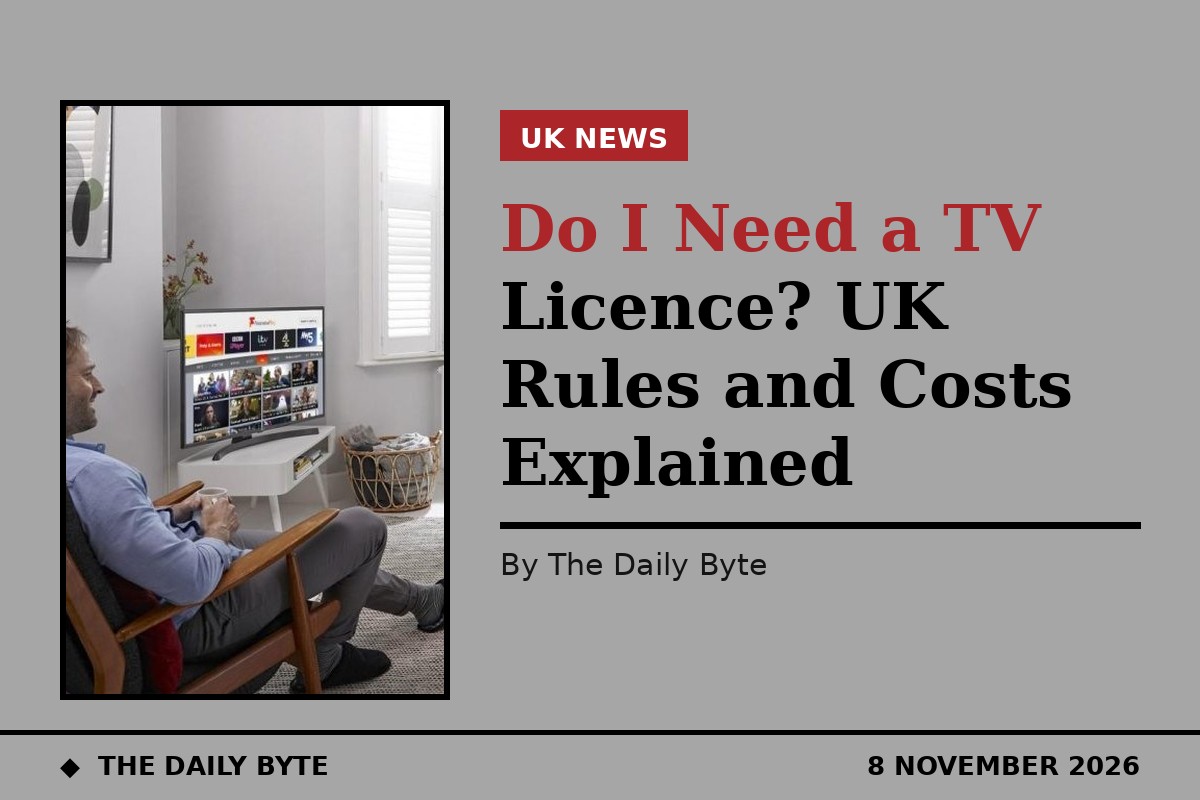
Yes, you need a TV licence if you watch or record television as it is being broadcast, or if you use BBC iPlayer on any device. If you only watch on-demand programmes from other streaming services, you do not need one. The licence currently costs £180 a year for a colour television, and it covers everyone living at the same address.
The rules catch many people out because they depend on how you watch, not on whether you own a television set. Watching live television on a laptop, tablet, phone or games console still requires a licence, while watching a box set on Netflix does not. This guide explains the current fee, when the law applies, who can get a discount or a free licence, and what happens if you watch without one.
How much does a TV licence cost in 2026?
A standard colour TV licence costs £180 a year from 1 April 2026. That is a £5.50 increase on the previous price of £174.50 a year, which had applied since April 2025. The fee is set by the Government and is linked to inflation for the remainder of the current BBC Royal Charter period, which runs until the end of 2027.
A black and white licence costs £60.50 a year from 1 April 2026. Only a small number of households still use one — according to BBC figures, around 3,000 UK households were still watching in black and white as of March 2025. You can pay the fee in one annual payment or spread it across the year in monthly or quarterly instalments.
| Licence type | Cost from 1 April 2026 | Who it covers |
|---|---|---|
| Colour | £180 a year | Any household watching live TV or using BBC iPlayer |
| Black and white | £60.50 a year | Households that only watch on black and white sets |
| Free licence | £0 | Households where someone aged 75 or over receives Pension Credit |
| Blind discount | £90 a year | Households where someone is registered as severely sight impaired |
When do you need a TV licence?
You need a TV licence if you do any of the following on any device, including a television, laptop, tablet, smartphone or games console. The full rules are set out by MoneySavingExpert and TV Licensing.
- Watching or recording programmes as they are shown on television, on any channel — for example, watching an episode of a quiz show on ITV as it goes out.
- Streaming live broadcasts through an online TV service such as ITVX, Sky Go, NOW or YouTube.
- Watching or downloading any programme on BBC iPlayer, whether live or on catch-up.
- Recording live television on a recorder such as Sky+ while it is being broadcast.
BBC iPlayer is the strictest part of the rules. You need a licence to use iPlayer at all, even if you only ever watch catch-up programmes and never watch anything live. That is different from other catch-up services, as explained below.
When you do not need a TV licence
You do not need a TV licence if you only watch content after it has been broadcast, as long as it is not on BBC iPlayer. That includes box sets and films on Netflix, Amazon Prime Video, Disney+ and Apple TV+, catch-up programmes on ITVX, Channel 4 and My5 after they have aired, DVDs and Blu-rays, and pre-recorded videos on YouTube that are not live broadcasts.
In practice, that means a household that never watches live television and never opens BBC iPlayer can legally go without a licence and save £180 a year. If you are in that position, you can tell TV Licensing that you do not need one. Be aware that TV Licensing may still write to the address, and you may be asked to confirm your position.
Who gets a free licence or a discount?
Households where someone aged 75 or over receives Pension Credit qualify for a free TV licence. The free licence is not automatic — it must be applied for, and you need to be receiving Pension Credit, either Guarantee Credit or Savings Credit. If you are 75 or over but do not receive Pension Credit, you still need to pay the full fee.
Households where someone is registered as severely sight impaired, or blind, with their local council receive a 50 per cent discount. At the current rate that halves the colour licence to £90 a year. If you live in a residential care home or sheltered accommodation and watch television in your own room or flat, you need a licence for that room, although concessionary arrangements exist for some care settings — check with TV Licensing if you are unsure.
Does one licence cover the whole household?
A TV licence covers an address, not a person. One licence covers everyone living at the same address under a joint tenancy, and it covers every device in that home. The picture is different in shared houses where each tenant has a separate tenancy agreement, which is common in student housing and houses in multiple occupation. In that case each room is generally treated as a separate household and each tenant needs their own licence. If you move home, you need a licence for the new address unless it already has one that is still valid.
What happens if you watch without a licence?
Watching live television or using BBC iPlayer without a licence is a criminal offence in the UK. Enforcement officers can visit an address, and prosecution can lead to a fine of up to £1,000, plus court costs. TV Licensing sends letters to unlicensed addresses and may carry out checks, so the safest course is to be clear about whether the rules apply to how you actually watch.
If your habits change — for example, you cancel your streaming subscriptions and start watching live sport, or you begin using iPlayer — you need to buy a licence from that point. Equally, if you stop watching live television and stop using iPlayer, you can cancel and may be entitled to a refund for the unused months, depending on how much of the licence period is left.
Frequently asked questions
Do I need a TV licence to watch Netflix? No, not if you only watch on-demand content on Netflix and never watch live television or use BBC iPlayer. The moment you watch a live broadcast on any service, you need one.
Do students need a TV licence? Students need a licence if they watch live television or use BBC iPlayer in their term-time address. Students in halls with separate tenancy agreements usually need their own licence for their room, while students living at home under their parents' licence may be covered there.
Can I watch BBC iPlayer abroad without a licence? BBC iPlayer is for use in the UK, and a licence is required to use it. Watching live UK television from abroad through other means is a separate matter and does not remove the requirement if you are watching in the UK.
Is the TV licence the same as a BBC subscription? No. The licence is a legal permission to watch live television and use iPlayer, and the money funds the BBC. It is not a subscription you can opt in and out of by channel — if the rules apply to how you watch, you need one regardless of which channels you prefer.
Rules and fees change over time, so check the TV Licensing website before you decide. The figures in this guide are the rates from 1 April 2026.