DOJ Launches Super Intelligence Task Force on AI Misuse
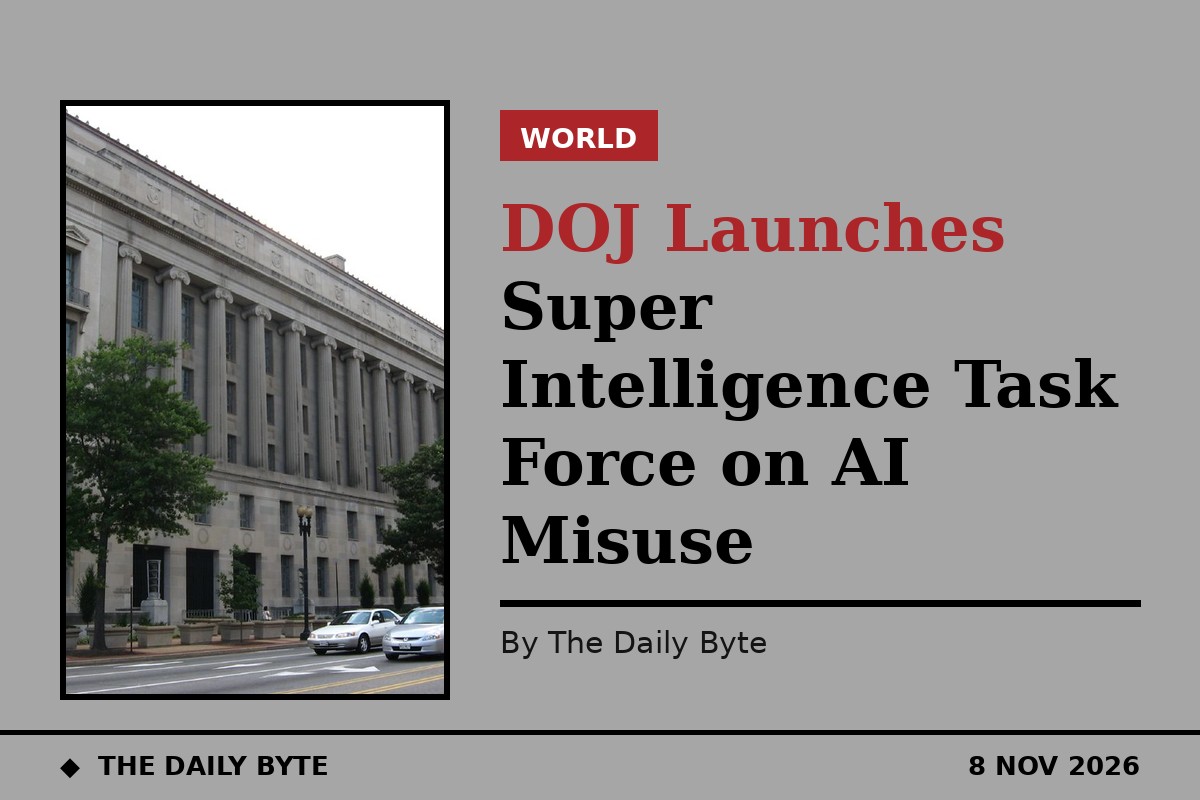
The United States Department of Justice has launched a new Super Intelligence Task Force to coordinate criminal and civil enforcement against the misuse of advanced artificial intelligence, the department announced on 5 November.
The task force, known as DOJ-SITF, will be co-chaired by Associate Attorney General Stanley Woodward and Associate Deputy Attorney General Stephen Weiss. Its brief is to make sure American leadership in the technology "is not compromised by the misuse of SI by foreign state and state-sponsored actors, transnational criminal organizations, and individual or corporate actors engaged in fraud or other unlawful conduct", Attorney General Todd Blanche wrote in a memorandum dated 13 October that created the unit.
The department says the task force will protect taxpayers, critical infrastructure and national security from criminals who use AI to commit fraud and carry out hacks. It will organise the department's criminal and civil enforcement efforts involving AI, deconflict investigations across department components and US attorneys' offices, recommend enforcement priorities, and develop guidance on prosecuting unlawful AI-related conduct.
The new unit absorbs the department's earlier Artificial Intelligence Litigation Task Force, set up in January 2026 under then Attorney General Pam Bondi, and will coordinate the department's affirmative civil litigation relating to AI. That earlier body had focused on challenging state AI laws the administration viewed as conflicting with federal policy; the new task force adds criminal enforcement to the mandate.
The name is deliberate. President Donald Trump signed an executive order on 29 September, "Inaugurating the Era of Super Intelligence", directing federal agencies to refer to artificial intelligence as "super intelligence" in non-statutory documents. The order defines the term by reference to the existing statutory definition of AI, and it sets a 60-day deadline, running to 28 November, for the White House science adviser to submit proposed legislative language for a federal definition of super intelligence.
DOJ-SITF will also serve as the department's main point of contact with the White House Super Intelligence Force, a separate body chaired by Jay Clayton, who is also Director of National Intelligence. That force, announced in October, coordinates the government's engagement with AI companies and other organisations, and was given 120 days to report on the risks and rewards of the technology. It has no enforcement authority of its own, so any case work would run through the Justice Department.
"SI development will continue to be powered by American innovators," Blanche said in the department's announcement. "The SI Task Force at the Department of Justice will facilitate our partnership with SI Force Chair Jay Clayton as we ensure critical SI technologies serve the American people and are not manipulated by bad actors at home or abroad." He added that the department "will continue identifying and prosecuting individuals whose use of SI violates the law, including by maliciously targeting American taxpayers, critical US infrastructure, or other aspects of our national security".
What the launch does not do is create any new offence. Neither the press release nor the founding memorandum names a new crime or a specific statute, and no charges or cases were announced with the task force. Blanche has said the department will not investigate or prosecute AI companies when no statute is being violated. The first real test will be the cases the task force brings, and whether prosecutors treat the "super intelligence" label as anything more than a new name for existing fraud, hacking and national security laws.
The launch comes two days after the 2026 midterm elections, in which Democrats took both chambers of Congress, and amid a wider administration push to frame AI policy in its own terms. The task force's six duties, as set out in Blanche's memorandum, are to organise enforcement, deconflict investigations, recommend priorities, act as the department's contact with the White House force, fold in the January task force and coordinate affirmative civil litigation, and develop prosecution guidance and evaluate compliance measures.
For AI companies, the practical change is a single clearing house for AI-related cases inside the Justice Department. Prosecutors are expected to notify the task force before opening AI-related investigations, with narrow exceptions for imminent danger or the loss of evidence. The next date to watch is 28 November, when the executive order's deadline for proposed legislative language on the definition of super intelligence falls due.


