DR Congo rebels seize Bunyakiri as 160,000 people flee
Fighters of the Front for the Refoundation of the Nation (FRN), the rebel movement now led by former Congolese president Joseph Kabila, have seized several localities around Bunyakiri in South Kivu province, eastern Democratic Republic of Congo, after an offensive that began on the night of 6–7 November 2026.
The fighters moved through Kahuzi-Biega National Park before taking control of localities along national road RN3, the road that links Bukavu to Kisangani via Walikale. Bitale and Bulambika fell after fighting against the Congolese army (FARDC) and allied Wazalendo militias, and Kambali also came under FRN control, according to RFI and Actualité.cd. Reports differ on the exact day Bunyakiri itself was taken, and the army disputes how much ground was lost.
Bunyakiri matters because it served as a forward command post and resupply point for FARDC and Wazalendo operations in Kalehe, Kabare and Masisi, according to RFI and the Kivu Morning Post. Local sources quoted by RFI put the rebel advance at around 50 kilometres, while Kalehe civil society estimates it at about 60 kilometres.
Army says advance halted and counter-offensive planned
The FARDC says it has halted the advance at Bulambika and is preparing a counter-offensive to retake the lost areas. Major Dieudonné Kasereka, spokesperson for the 34th Military Region, said the army had succeeded in stopping the rebels at Bulambika. In a communiqué on 11 November signed by FARDC spokesman General Sylvain Ekenge, the general staff said loyalist forces had halted the progress of the Rwandan army at Bunyakiri, a claim that reflects the government’s position that Rwanda backs the rebels.
On the ground, the picture remains contested. The Kivu Morning Post, citing local sources and civil society, reported that the Bunyakiri agglomeration itself and Bulambika were taken on Sunday 8 November, with FARDC and Wazalendo units falling back towards Hombo. Other localities in the Bunyakiri zone, including Mubugu, Kambegete, Irangi and Hombo-Sud, were reported to remain under FARDC control, leaving the area effectively divided between the two sides.
More than 160,000 people displaced
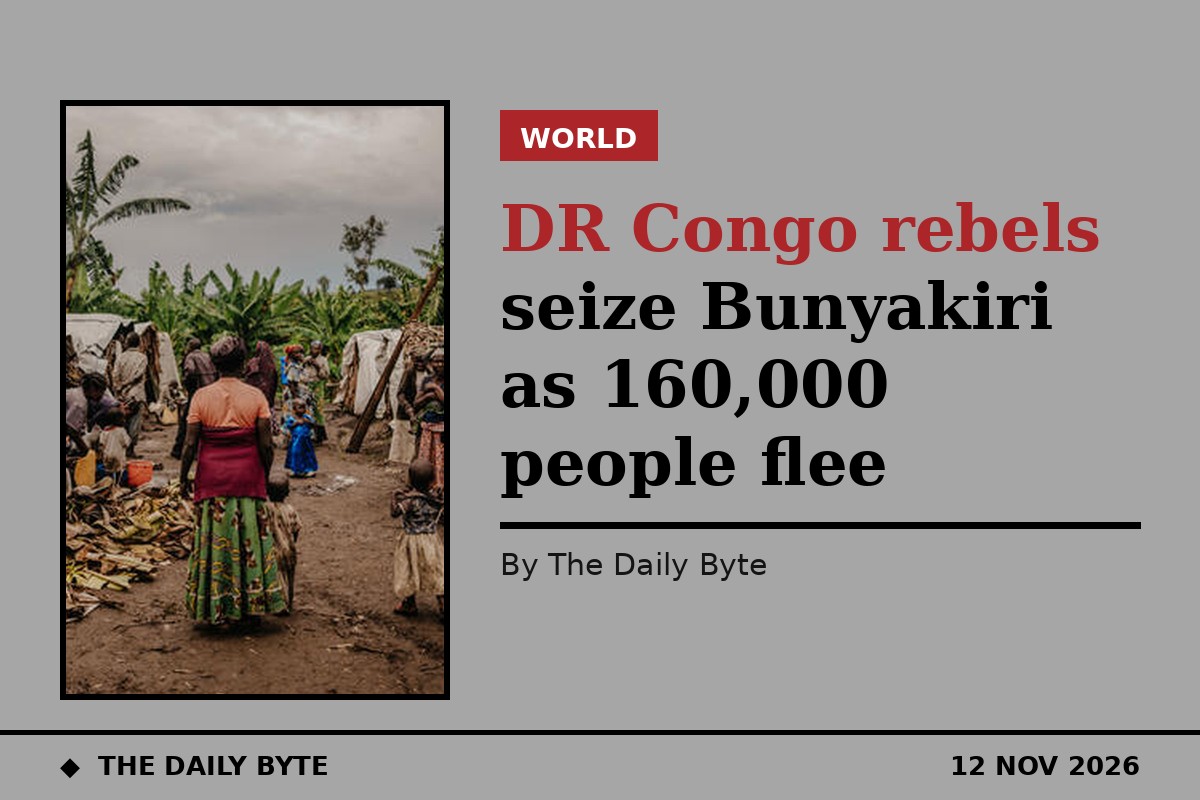
Kalehe territorial administrator Thomas Bakenga told RFI that more than 160,000 people had been displaced by the fighting, some towards Hombo on the boundary between South and North Kivu and others into the forest. Families fleeing the offensive have been left without shelter or reliable access to food and medical care, and humanitarian access along the RN3 remains uncertain while fighting continues.
The FRN is described by RFI as a political-military movement led by Joseph Kabila that grew out of the Rwanda-backed AFC/M23 alliance, which was renamed the FRN last month. The movement has seized large areas of eastern DR Congo since taking up arms again in 2021, and its declared aim is to overthrow the Congolese government. The latest advance shows that, despite peace agreements signed in Washington and Doha, the conflict in the east continues to displace civilians and redraw the map of who controls the roads between Bukavu and the interior.
Sources: DefenceMENA, reporting RFI, Actualité.cd and local sources and Opera News (AFP reporting).