DRC threatens to quit Francophonie over Mushikiwabo
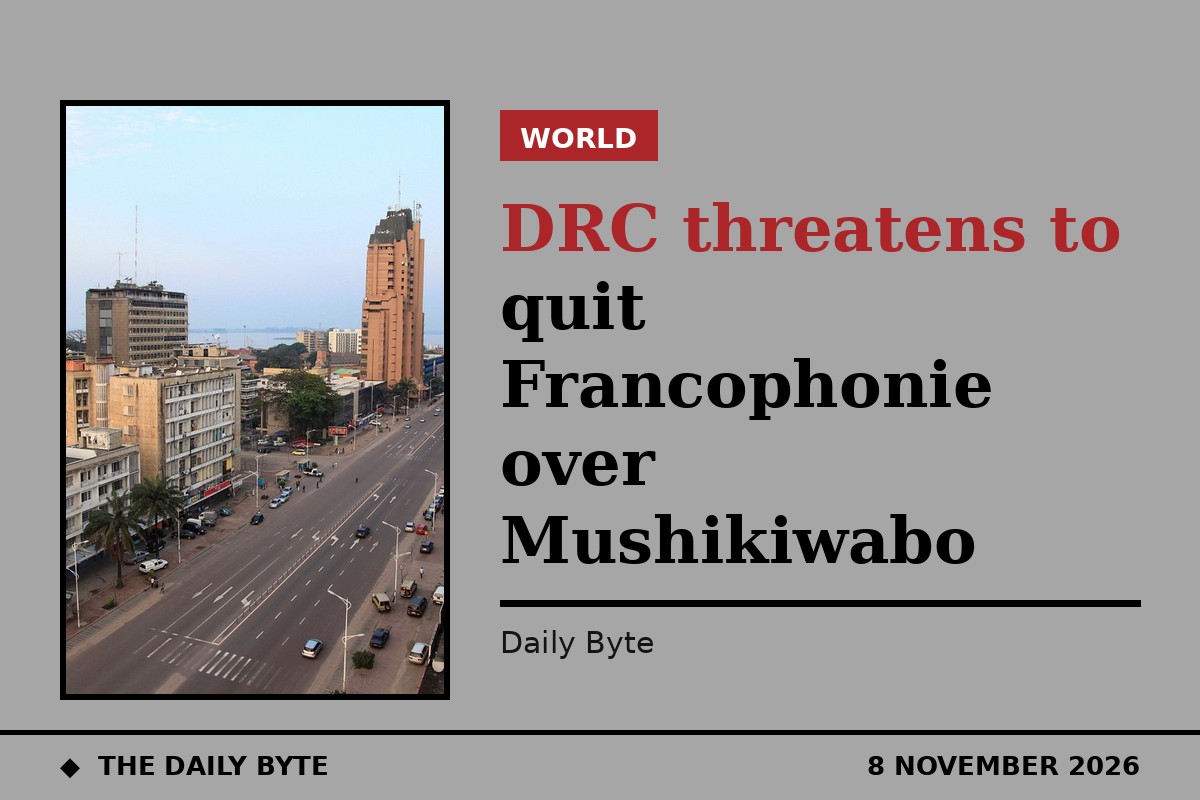
The Democratic Republic of Congo is threatening to withdraw from the International Organisation of La Francophonie (OIF) if Rwanda's Louise Mushikiwabo secures a third term as its secretary-general, according to reports published this week.
The reported threat was first carried by Jeune Afrique on 6 November and has since been picked up by Congolese and regional media. It adds a new diplomatic dimension to the contest for the leadership of the French-speaking world's main international body, ahead of the organisation's summit in Cambodia.
It is important to be clear about the status of the reports. There has been no publicly available formal announcement confirming that Kinshasa has decided to leave the organisation. What has been reported is that the Congolese authorities are considering withdrawal if the Rwandan candidate is re-elected, and that President Félix Tshisekedi discussed the possibility with French Foreign Minister Jean-Noël Barrot during their meeting in Kinshasa on 2 October.
A leadership race shaped by Kinshasa-Kigali tensions
Mushikiwabo has led the organisation since January 2019 and is seeking a third four-year mandate. Rwanda has officially endorsed her candidacy, citing her record in leading institutional reforms and strengthening the organisation's international profile.
Kinshasa, meanwhile, is backing its own candidate, Juliana Amato Lumumba, the daughter of Congo's independence leader and first prime minister, Patrice Emery Lumumba. The election is scheduled for 15 and 16 November at the Francophonie summit in Phnom Penh, Cambodia, where four candidates are in the running: Mushikiwabo, Lumumba, Coumba Ba of Mauritania and Dacian Cioloș of Romania. Former Senegalese president Macky Sall has also been mentioned as a possible compromise candidate.
The leadership contest has become entangled with the strained relations between Kinshasa and Kigali over the conflict in eastern Congo. The Congolese government accuses Rwanda of supporting the AFC/M23 armed group, an allegation Rwanda denies. Rwanda, for its part, has consistently raised concerns about armed groups operating in eastern Congo, particularly the Democratic Forces for the Liberation of Rwanda (FDLR).
High stakes for the Francophonie
The DRC is one of the largest French-speaking countries in the world, with a population of more than 100 million people, so its potential withdrawal would deal a significant blow to the organisation's ambition to unite francophone peoples. Reports suggest France has opened talks with Kinshasa in an effort to dissuade it from such a step.
Mushikiwabo has argued throughout her re-election campaign that her record of reforms and her work in raising the organisation's profile should decide the contest. Her supporters say she has strengthened the Francophonie's international engagement and made it more visible on the global stage. Kinshasa's campaign against her re-election, by contrast, appears increasingly centred on her Rwandan nationality and the diplomatic tensions between the two countries, rather than on specific shortcomings in her management of the organisation.
The DRC has yet to present a substantive public case against her record as secretary-general. With the vote now a week away, the contest will test whether the Francophonie's members choose its next leader on performance or on the politics of the Great Lakes crisis.