Dublin summit: Europe wins seat at Ukraine peace talks
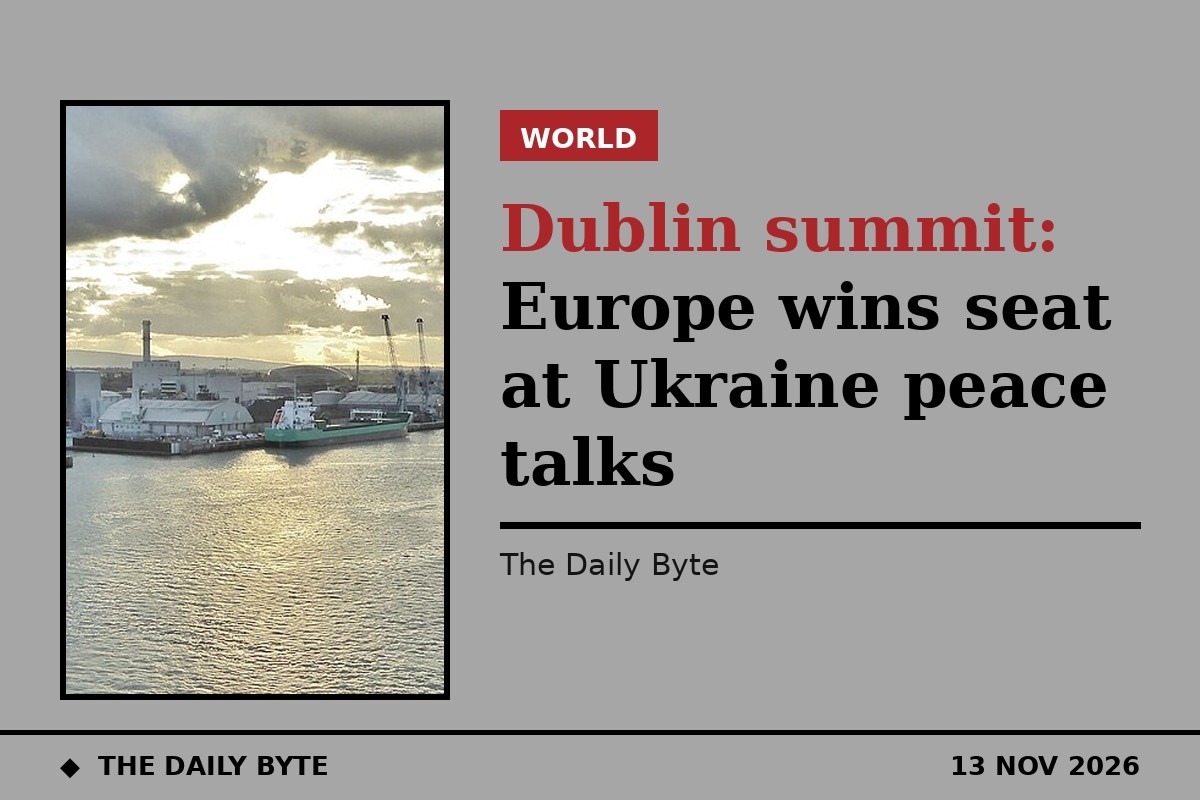
European Union leaders are meeting in Dublin on Friday as Europe prepares to take a seat at the table in the next round of talks aimed at ending the war in Ukraine, after the United States said Moscow was willing to accept the bloc's involvement.
The informal meeting of the European Council brings together the leaders of the 27 member states in the Irish capital, at the end of a week in which the question of European participation in future peace negotiations moved to the centre of diplomacy between Ukraine, Russia and the United States.
US envoys Jared Kushner and Steve Witkoff met Ukrainian President Volodymyr Zelensky in Dublin on Thursday night, hours after holding talks with Russian President Vladimir Putin in Moscow. Speaking after the meeting at Baldonnel military aerodrome on the outskirts of Dublin, Mr Kushner said: "We cannot conclude this deal without the Europeans being at the table."
"I think that we're able to achieve that with President Putin," he added. Mr Zelensky told reporters at the airbase that Europe would have a voice in the process. "They will have a voice," he said. "This is important for us because the war is in Europe."
What changed in Dublin
The commitment marks a shift from the talks held in Abu Dhabi earlier in the week, when delegations from the United States, Russia and Ukraine met directly while European officials were present only in a separate, wider meeting. Those discussions, held on 10 and 11 November, did not make substantive progress towards ending the conflict, but the warring sides did agree a significant prisoner release deal.
Mr Kushner later said on social media that Russia and Ukraine had agreed to expand the next round of negotiations to include European partners. However, as Le Monde reported, Moscow has not publicly confirmed the agreement, and no European negotiator has yet been named.
The question of who would speak for Europe is now the main point of debate among EU leaders. Mr Kushner has urged the bloc to designate a single representative, while some capitals have resisted the idea. One official said no agreement on a special representative was expected from Friday's meeting, with candidates likely to be considered at the next formal summit in December.
A week of summits in Dublin
Dublin has hosted two major European gatherings in two days as part of Ireland's six-month presidency of the EU Council. On Thursday, EU leaders were joined by allies and partners from across the continent, including UK Prime Minister Andy Burnham and Canadian Prime Minister Mark Carney, for a meeting of the European Political Community.
Addressing that gathering, Mr Zelensky warned European leaders of Russia's intent to reshape the security framework of the continent. He also raised concern about the latest speed restrictions on SpaceX's Starshield satellite internet service over occupied parts of Ukraine, saying a 100mph limit was hampering Ukraine's ability to intercept fast-moving jet-powered drones launched from those areas.
The back-to-back summits have prompted the Irish authorities to roll out the biggest security operation in the history of the state, with tight security across Dublin for both meetings.
Sanctions and AI also on the agenda
Friday's informal EU Council meeting is also set to include a strategic discussion on artificial intelligence. The agenda said leaders would discuss how to "harness AI's potential to boost European competitiveness and examine its wider impact on society, security and trust".
European Commission President Ursula von der Leyen said on Thursday that the Commission would present a new sanctions package against Russia, the bloc's 22nd, along with proposals on covering Ukraine's financial needs in 2027, before the next European Council on 26 and 27 November. The package is expected to include new restrictions on banks, cryptocurrencies and crypto platforms, and measures to close circumvention loopholes through third countries.
For now, the Dublin meeting is a discussion rather than a decision-making summit, and the test of Thursday night's pledge will come when the next round of negotiations is convened and European delegates are, or are not, in the room.


