Dutch PM in crisis talks to save government
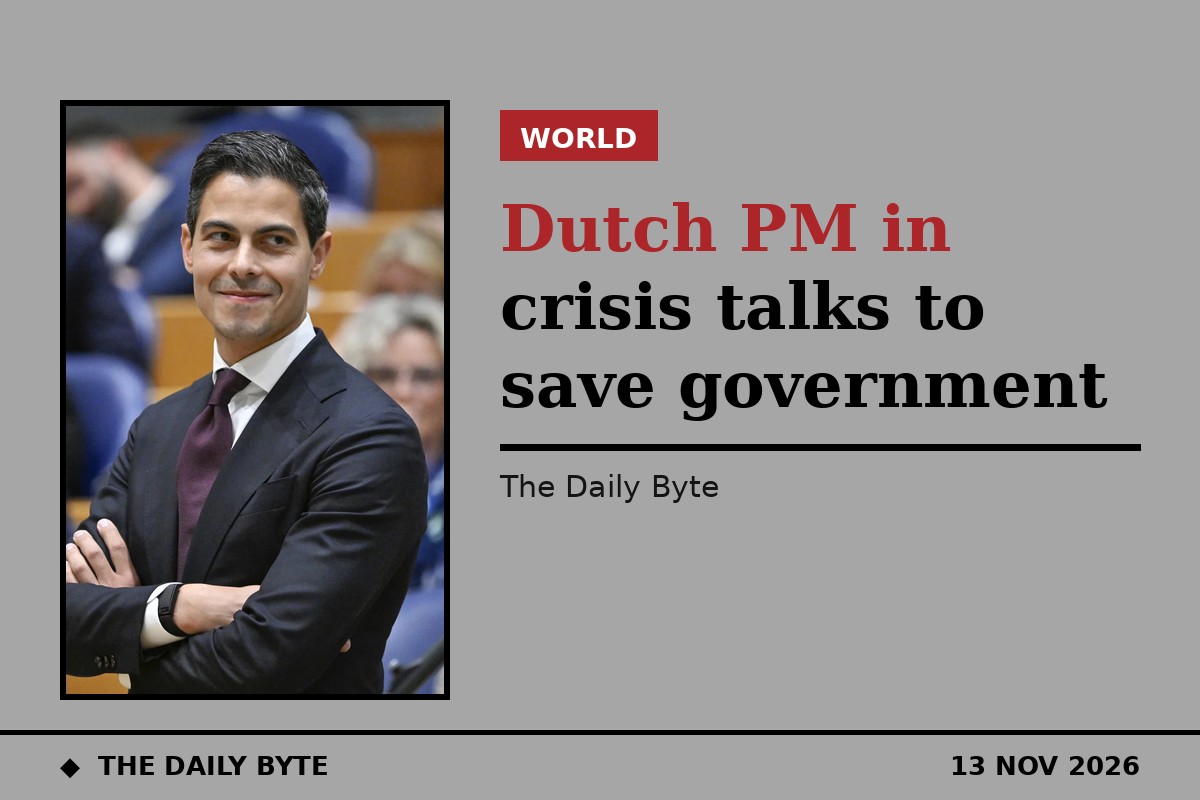
Dutch Prime Minister Rob Jetten will hold crisis talks with his coalition partners on Friday in a last-ditch attempt to save his minority government, less than nine months after it took office. The talks follow a bitter row over wealth taxes that left the three-party coalition openly split. Reuters reported that Jetten would meet the leaders of the VVD and the Christian Democrats to try to find what he called a new start for the government.
The crisis broke on Thursday, when the lower house of parliament approved the 2027 tax package by 76 votes to 74. The right-wing VVD, one of the three governing parties, voted against its own government’s plan, which only passed with the support of opposition parties. Jetten, who became the Netherlands’ youngest prime minister when he took office in February, stayed away from a summit of European leaders in Dublin to attend the debate.
How the wealth tax split the coalition
The dispute centres on a deal struck by Jetten’s centrist D66 party and the Christian Democrats (CDA) with left-wing opposition parties, including PRO and Volt. The agreement shifts about €1 billion of the tax burden from work to wealth, raising more from higher earners and owners of assets while cutting taxes on labour.
Under the amendment, annual deemed returns on assets above €60,000 would be taxed at 38.5 percent, while the basic rate would fall to 35.5 percent. About €900 million of the proceeds would be used to cut income tax for workers. The cabinet has warned, however, that about €400 million of the measures lack concrete and immediate funding, and that some elements could only operate from 2029.
VVD leader Dilan Yesilgoz, who is also deputy prime minister, said the deal was bad for the Netherlands and broke the coalition agreement. CDA leader Henri Bontenbal argued that rejecting the tax plan would have been disastrous for the country. Geert Wilders, whose party sits in opposition, said the minority cabinet was effectively dead. A VVD finance minister must now carry out an amended tax plan that his own party opposed.
What happens next
Jetten has said he will do all he can to hold the coalition together and is seeking a serious fresh start in Friday’s meeting. If the VVD walks out, the government would be likely to fall, raising the prospect of snap elections in the European Union’s fifth-largest economy.
A new election would be the fourth in the Netherlands in five years, after two previous governments also proved short-lived. It is not a given, however: parties could instead try to form a new government from the current seats in the lower house. The tax package must also still pass the upper house, the Eerste Kamer, where the parties backing it hold 34 seats and need 38 for a majority.
The coalition was uneasy from the start. Since winning a narrow election, Jetten’s D66 has governed with the centre-right CDA and the right-wing VVD, without a majority in parliament. Friday’s talks will show whether that arrangement can survive its first serious test, or whether the Netherlands is heading back to the polls.


