ECO Ministers Adopt Vision 2035 in Islamabad
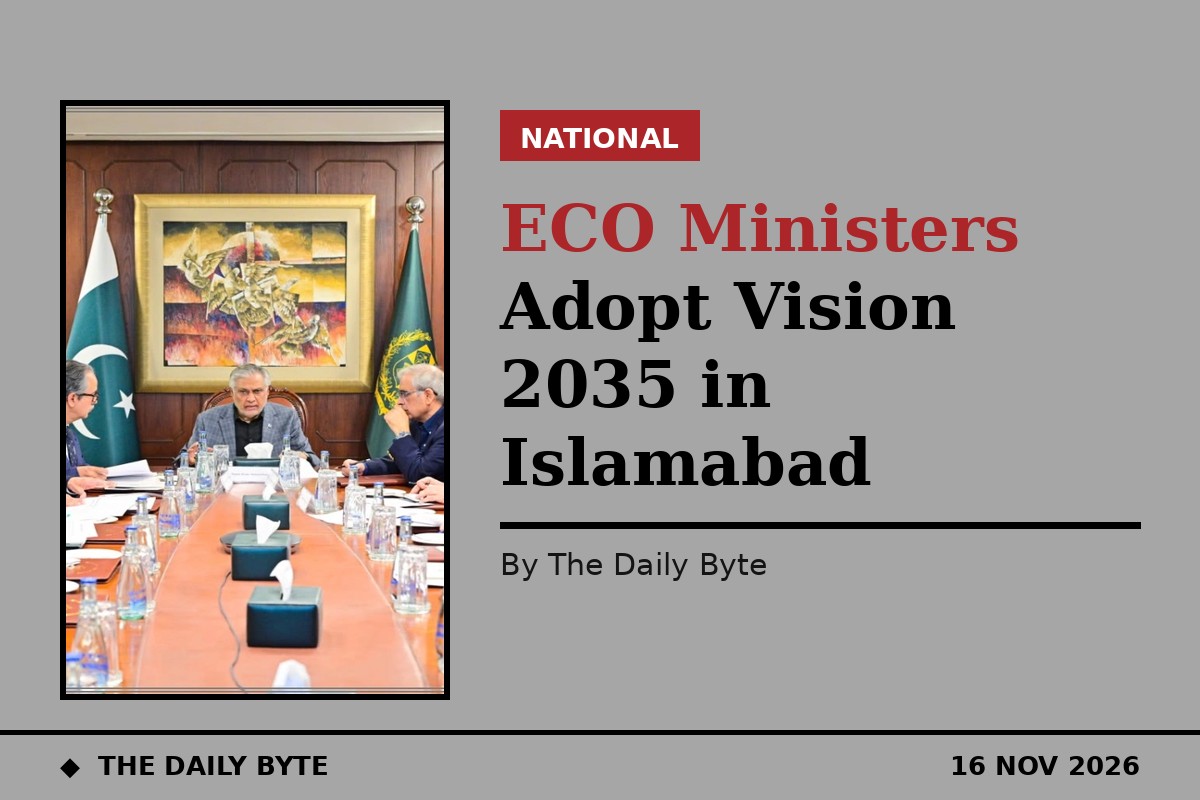
Foreign ministers of the Economic Cooperation Organization (ECO) have adopted a 10-year cooperation framework, the Strategic Goals of Economic Cooperation 2035, alongside the Islamabad Communiqué, at the close of their 30th Council of Ministers meeting in Islamabad on Monday, 16 November 2026. The meeting was chaired by Pakistan's Deputy Prime Minister and Foreign Minister, Ishaq Dar, as Pakistan holds the ECO chairmanship for 2026-27 under the theme "Reviving Regionalism for a Resilient ECO".
Closing the two-day meeting, which opened with a senior officials session on 15 November, Dar called on member states to translate their shared commitments into concrete action, describing the adoption of the 2035 framework as an important milestone in charting the organisation's course over the next decade. He said future success would depend on clear priorities, realistic timelines and robust follow-up.
Five priorities for the next decade
Dar set out five priorities for Pakistan's chairmanship: trade and investment, connectivity, modernisation of the ECO Trade Agreement, regional resilience and human development. He argued that closer cooperation could lower trading costs, attract investment and create jobs, and said Pakistan would back wider market access, stronger regional value chains and greater participation by the private sector, especially small and medium-sized enterprises.
Senior officials had finalised the agenda and the draft Islamabad Communiqué a day earlier, at a meeting on 15 November chaired by Foreign Secretary Asim Iftikhar Ahmad and attended by senior officials from member states, the ECO Secretariat and the organisation's specialised agencies.
Afghanistan and the security condition
The sharpest message of the meeting concerned Afghanistan. Dar told fellow members that the bloc's plans for deeper trade and connectivity depend on Afghanistan addressing its neighbours' security concerns, and that a secure environment is essential to lasting economic partnerships.
"Economic cooperation builds a shared interest in stability, while insecurity can derail even the most promising development projects," Dar said, according to The Diplomatic Insight. He said Pakistan wants a peaceful and stable Afghanistan that is fully integrated into the ECO framework and at peace with its neighbours, an outcome he said would benefit the Afghan people and the wider region through new trade and transit routes — but he made clear that progress is conditional on the Afghan authorities dealing with the legitimate security worries of neighbouring states.
Afghanistan, an ECO member, was absent from the meeting. Its Taliban administration said it was not invited to the Islamabad gathering, a point that underlines the difficulty of building regional connectivity without the country that links Central and South Asia.
Energy, mediation and the sidelines
Iranian Foreign Minister Abbas Araghchi, who travelled to Islamabad for the meeting, used his address to stress the need for a reliable and sustainable regional energy mechanism. The meeting was also attended by the secretary general of the Organization of Islamic Cooperation and by Türkiye's Deputy Foreign Minister Musa Kulaklikaya, among other heads of delegation.
Pakistan also used the occasion to reaffirm its offer to keep working diplomatically between the United States and Iran, according to reports from the meeting, with Dar stressing the peaceful resolution of disputes through dialogue, diplomacy and respect for international law. Dar confirmed that Pakistan expects to welcome delegates back for the 31st Council of Ministers meeting in 2027, and extended well-wishes to Iran for hosting the 18th ECO summit on 3-4 December.
Why it matters
The ECO groups 10 countries: Iran, Türkiye, Pakistan, Afghanistan, Azerbaijan, Kazakhstan, Kyrgyzstan, Tajikistan, Turkmenistan and Uzbekistan. Pakistan has presented the meeting as part of its effort to position itself as a trade and transit hub linking landlocked Central Asian states to world markets, arguing that the region sits at the crossroads of South, Central and West Asia, with major markets, abundant natural resources and historic commercial routes.
Whether the 2035 framework amounts to more than a statement of intent will now depend on delivery. Dar's own closing message was that the next meeting should be able to take stock of tangible progress — a test the chairmanship has set for itself over the coming year. Newsbeat reported that delegates formally adopted the Strategic Goals of Economic Cooperation 2035 alongside the Islamabad Communiqué.