AI Breast Screening Trial Opens in Cambridge
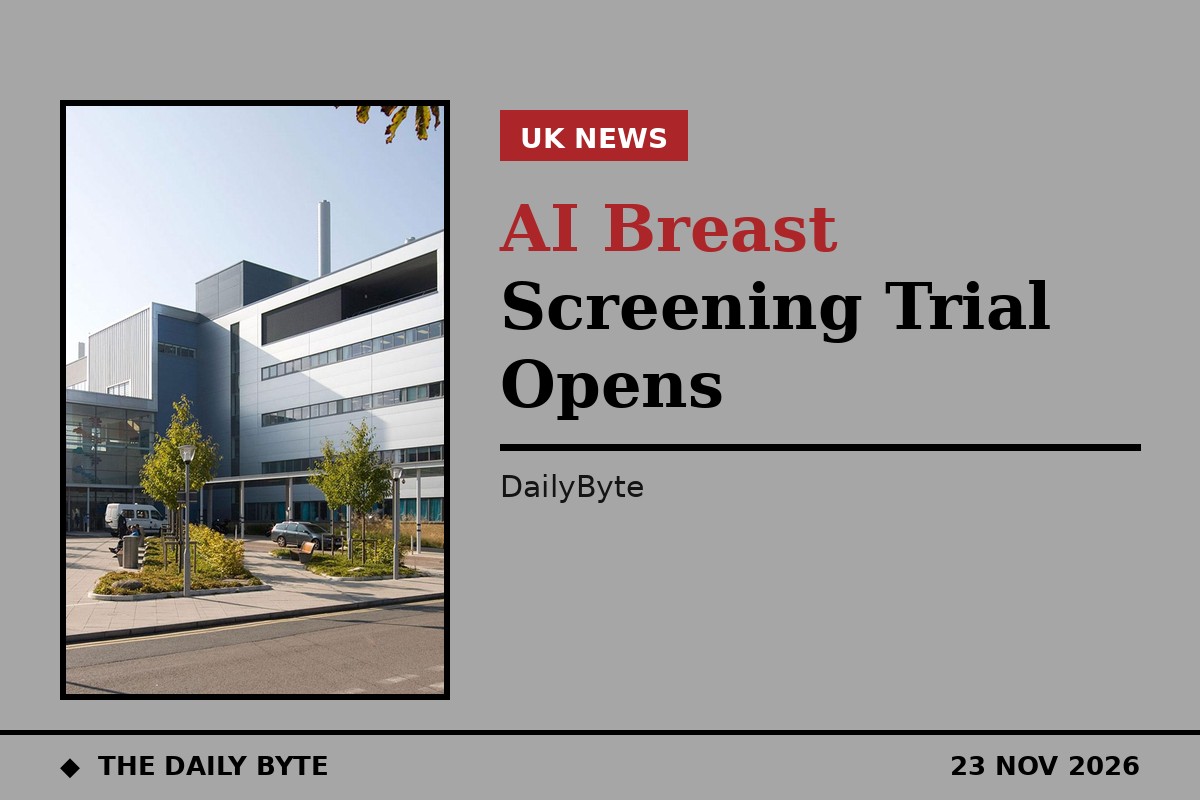
Women in Cambridgeshire are the first in the UK to be invited to take part in a landmark trial testing whether artificial intelligence can help spot breast cancer earlier. Recruitment for the study, known as EDITH, began on Monday 23 November 2026 at Cambridge University Hospitals, the first of 30 NHS breast screening sites across the country that will take part over the next three years. Nearly 700,000 women are expected to take part in the £10 million trial, which is funded by the National Institute for Health and Care Research (NIHR) and described by its organisers as the largest trial of its kind in the world.
How the EDITH trial works
At present, every mammogram taken through the NHS breast screening programme is checked by two specialists. The EDITH trial will test whether an AI-assisted reading tool can support that process, so that most images need to be checked by only one specialist, with the software acting as the second pair of eyes. Four AI systems have been tested for accuracy ahead of the trial, and the study will compare different ways of using the software to find the safest and most effective model. Professional oversight remains in place throughout: the aim is to help specialists review images more efficiently, not to replace their judgement. Professor Fiona Gilbert, from the University of Cambridge and a co-chief investigator of the trial, said: “EDITH will test whether an AI-assisted mammogram-reading tool can help experts review images more efficiently, while maintaining professional oversight and the standards women expect from NHS breast screening.”
Why earlier detection matters
Women aged 50 to 71 are invited for NHS breast screening every three years, and the scans can reveal cancers that are too small to see or feel. Finding cancer earlier generally means simpler treatment and better outcomes, so even a modest improvement in detection could make a real difference at the scale of a national programme. The trial also tackles a practical problem. Breast screening services face sustained pressure on specialist time, and if AI can safely take on part of the reading workload, it could free radiologists to focus on the most complex cases and help cut waiting lists. The study aligns with the NHS 10 Year Health Plan and the aims of the National Cancer Plan, according to the NIHR Cambridge Biomedical Research Centre.
Who is behind the study
The trial is led by the University of Warwick, the University of Cambridge and Cambridge University Hospitals NHS Foundation Trust, working closely with NHS England. The NIHR funded the study and worked with the UK National Screening Committee to shape its design. To mark the opening of the trial, Health and Social Care Secretary Yvette Cooper visited the breast unit at Addenbrooke’s Hospital in Cambridge to meet the trial team and Shirley, a 70-year-old from Cambridgeshire whose early-stage breast cancer was diagnosed after a routine screening appointment in October 2025. Cooper said: “This is the biggest AI breast cancer trial in the world, backed by £10m of government investment to speed up diagnosis and potentially deliver life-saving improvements.” More detail on the study is available from the NIHR announcement.
What happens next
Recruitment has started in Cambridgeshire, and the trial will expand to around 30 NHS breast screening centres over the coming months, running for about three years in total. Women attending routine screening appointments at participating sites will be able to choose whether to take part. The trial was first announced in February 2025, and researchers say it will take the full three years before they can judge whether AI-assisted reading is safe and effective enough to roll out more widely. If the results are positive, the approach could change how breast screening is delivered across the NHS — but the trial’s leaders are clear that no change will happen until the evidence is in.