El Niño floods kill 12 in Ecuador, Peru declares emergency
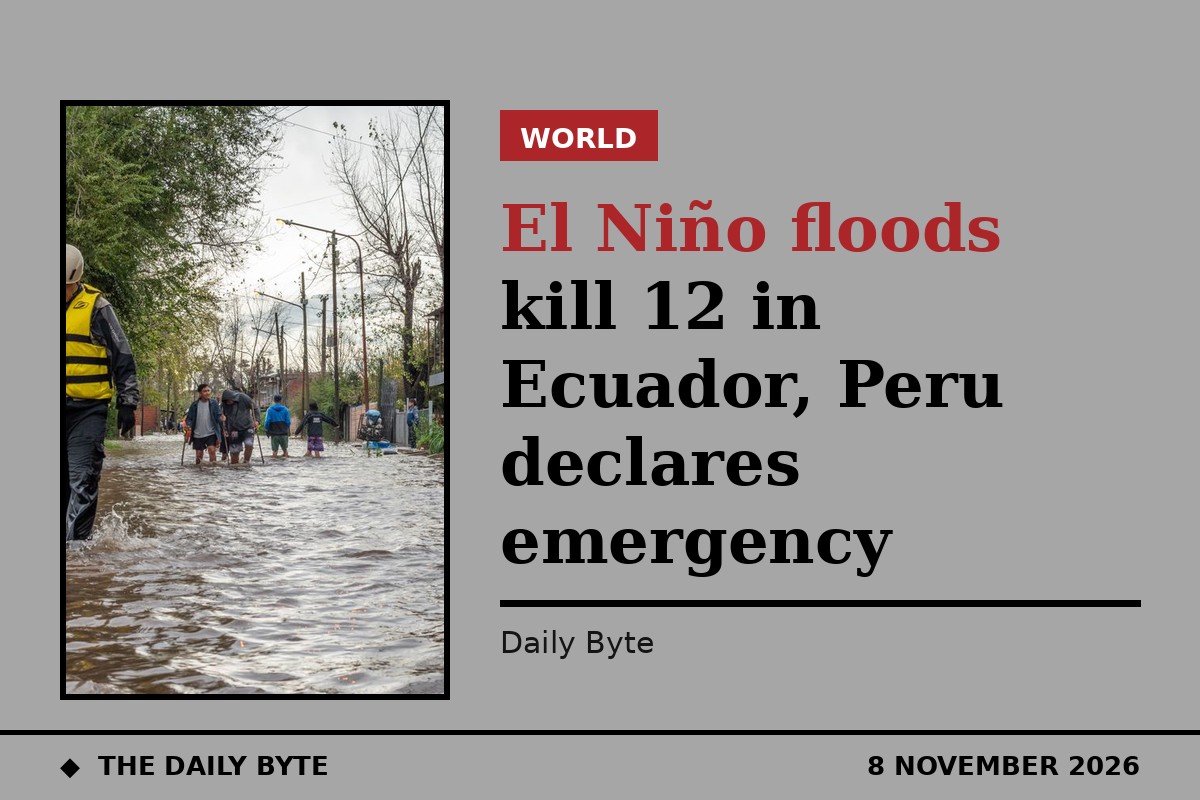
El Niño rains have killed 12 people in Ecuador and left more than 56,000 affected, the United Nations humanitarian office has reported, as Peru declares a 60-day state of emergency over flooding and landslides.
Ecuador's National Secretariat for Risk Management (SNGR) reported 56,323 people affected and 12 deaths as of 4 November, up from about 32,000 affected a week earlier. Thirty rivers and streams have overflowed in five coastal provinces, and Guayaquil, the country's largest city, flooded twice in a week. On 31 October authorities declared an emergency on Santa Cruz island in the Galápagos, where torrential rain affected about 2,000 people, 11 per cent of the island's population, according to the UN Office for the Coordination of Humanitarian Affairs.
In Peru, the government declared a 60-day state of emergency on 3 November in 1,380 districts across 25 departments, with the northern regions of Tumbes and Piura the most affected. The national meteorology service, SENAMHI, estimates that more than 9.3 million people, nearly a third of Peru's population, could be affected by floods and landslides.
Ecuador's government has declared a national red-alert emergency and promised financial "recovery bonuses" for victims. Infrastructure Minister Roberto Luque said the $600 million set aside for El Niño relief would not be enough, adding: "By the time this is over, I expect that we will spend much, much more."
The country's meteorology institute, Inamhi, has described the current El Niño as the most intense on record and warned the flooding rains could continue into February 2027. In its report to the emergency committee, Risk Management said 11,449 homes had been severely damaged, 38 destroyed and 90 hospitals and health clinics damaged, while more than 5,000 hectares of crops were lost.