Energy price cap forecast to rise 27% to £2,190 in January
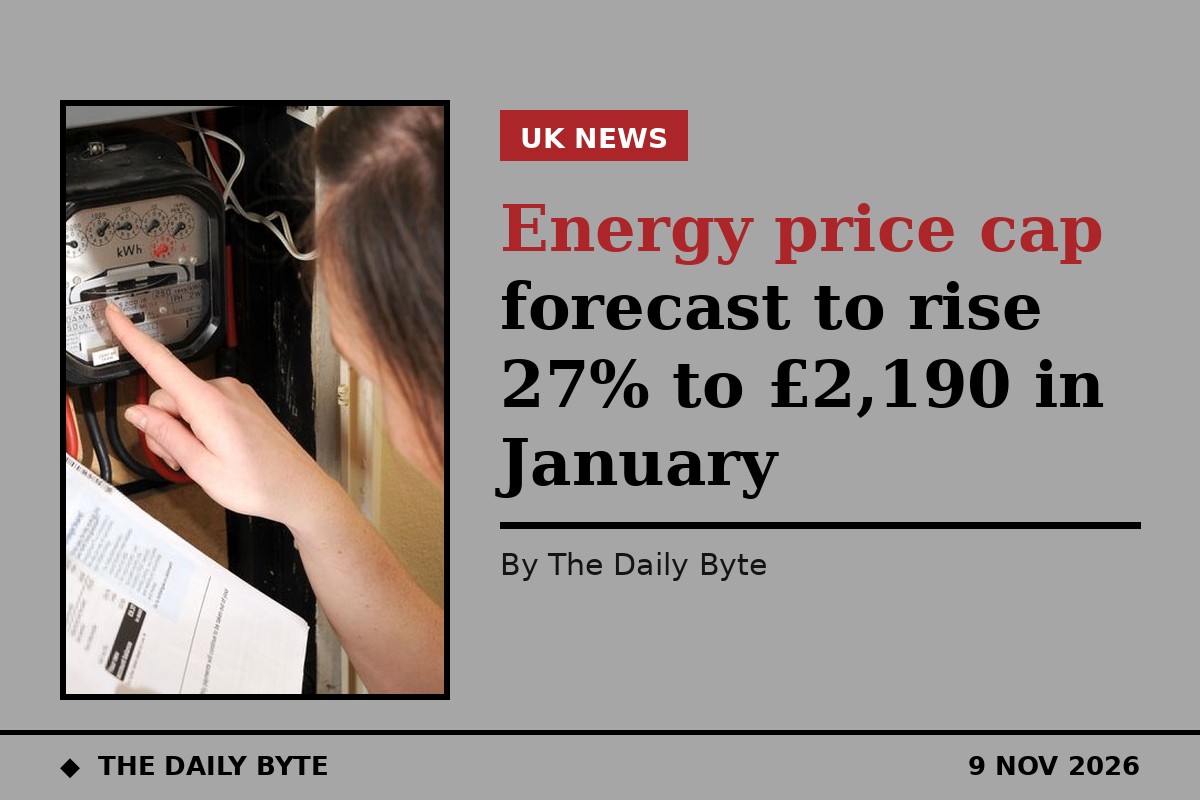
Household energy bills could rise sharply in January, with the latest forecasts from major suppliers pointing to the energy price cap climbing by about 27% to nearly £2,190 a year for a typical home. The figure is a forecast, not a confirmed price, and the regulator Ofgem will not announce the real cap until 25 November.
The current cap, which runs from 1 October to 31 December 2026, stands at £1,723 a year for a typical dual-fuel household paying by Direct Debit. If the suppliers' forecasts prove right, that would mean an increase of roughly £460 a year from January.
What the forecasters predict
The three big suppliers now publishing forecasts are closely bunched. EDF put the January cap at £2,189 in its update of 28 October, a rise of £466. British Gas forecast £2,185 on 30 October, and E.ON Next forecast £2,183 on 26 October. Taken together, the average of the three points to a rise of about 28%, according to Uswitch.
Not every forecaster agrees. Cornwall Insight, the energy consultancy most often quoted on the cap, forecast £1,999 on 28 September prices, a rise of about 16%. Its figure has moved by more than £100 in a single update in the past, which shows how much uncertainty remains while wholesale prices are still moving.
Why the forecasts differ
Ofgem sets each quarterly cap from wholesale gas and electricity prices observed over a fixed assessment period. For the January to March 2027 cap, that period runs from 19 August to 17 November 2026, so the window is still open and the final figure will depend on wholesale prices through mid-November.
Wholesale prices have stayed high, pushed up in part by the war in the Middle East and its effect on global oil and gas markets. That is why the suppliers, whose forecasts use the most recent wholesale data, are now higher than Cornwall Insight's earlier estimate. The suppliers themselves rate their confidence in the forecasts as low, and the numbers have swung by hundreds of pounds within weeks before.
What is confirmed so far
Only two things are certain. The cap for October to December 2026 is £1,723 a year for a typical household, and Ofgem has said it will announce the cap for 1 January to 31 March 2027 by 25 November 2026. Until then, every January figure in circulation is a forecast.
It is also worth remembering what the cap does and does not do. It limits the rate suppliers can charge per unit of gas and electricity, and the standing charge, for households on standard variable tariffs in England, Scotland and Wales. It does not cap a household's total bill, which still depends on how much energy is used. A home that uses more than the typical amount will pay more than the headline figure, and a home that uses less will pay less.
What it means for households
For households on standard variable tariffs, January would bring the first big test of winter bills under the new cap. The government's £100 energy payment and the removal of VAT from household electricity bills are intended to soften the blow, but neither changes the underlying direction of wholesale prices.
Households can check whether they are on a standard variable tariff or a fixed deal, and compare what is available, but fixed deals are priced on the same wholesale market, so there is no guaranteed saving. The clearest picture will come on 25 November, when Ofgem publishes the confirmed figure and households will know exactly what they face from the new year.