EU Opens Second Fraud Probe into Spanish Rail Safety Funds
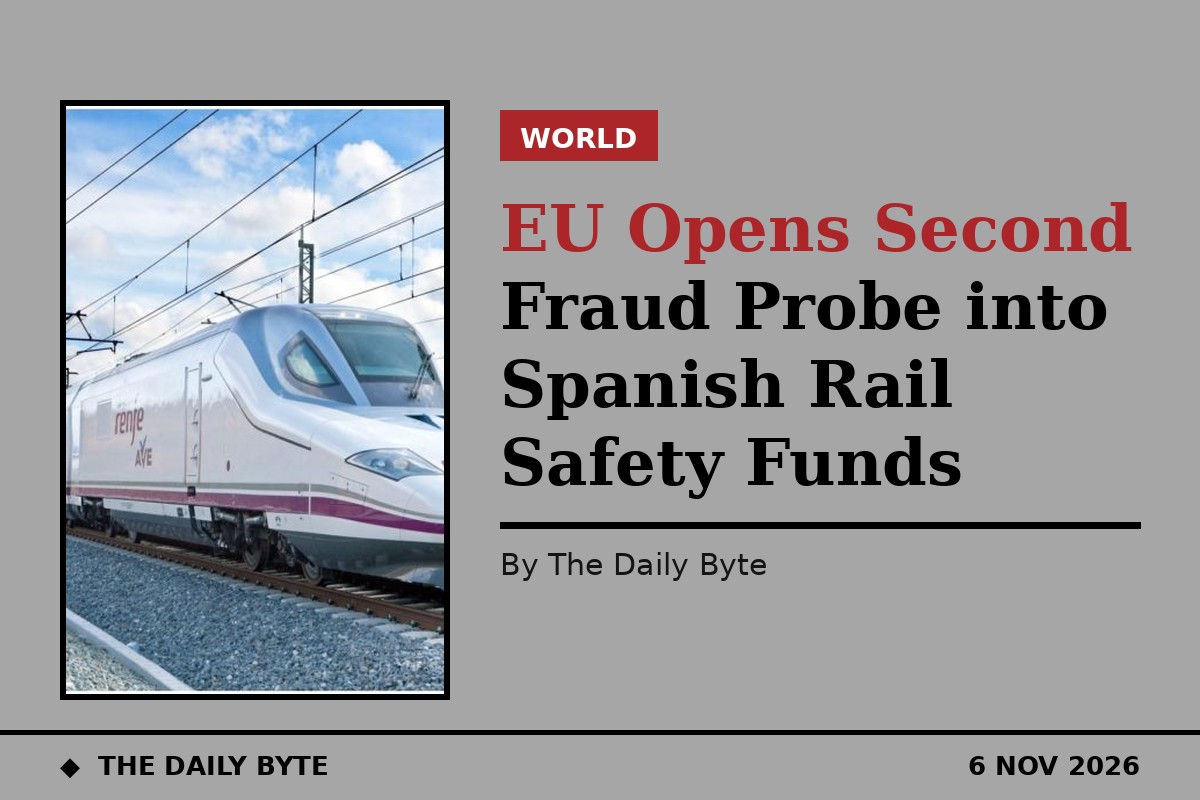
The European Public Prosecutor's Office (EPPO) has opened a second investigation into possible fraud involving European Union funds allocated to safety systems on Spain's Madrid–Seville high-speed railway line, following the crash near Urda that killed 69 people on 28 October.
The EPPO said on Friday that its Madrid office was carrying out investigative measures at the Administrator of Railway Infrastructure (ADIF), the State Railway Safety Agency (AESF) and the Court of Auditors in Spain, supported by the Guardia Civil's Central Operational Unit (UCO). The investigation was opened on the EPPO's own initiative. The office said it was confirming the action because of high public interest and that no further details would be made public at this stage.
The new inquiry concerns possible fraud affecting EU funds allocated to the renovation and upgrading of safety, signalling and communications systems on the line. Investigators are examining whether diverted funds compromised infrastructure upgrades or led to substandard work on key safety infrastructure, according to reporting of the case. The EPPO has not established that funds were misused, and the fraud inquiry runs on a separate legal track from the investigation into the cause of the crash itself.
It is the second EPPO investigation into the same line. The first was opened in March 2026 into possible fraud involving EU funds for maintenance of the line, after a separate derailment near Adamuz in January that killed 46 people. In September 2021, Adif awarded three contracts worth more than 136 million euros to renew installations on the line, including signalling, telecommunications, train protection, track circuits and switches — though it has not been confirmed which specific contracts form part of the new inquiries.
The Urda collision, near the town of Urda in Toledo province, killed 69 people and injured about 180 more, intensifying scrutiny of the state rail manager and the Spanish transport ministry.
Sources: European Public Prosecutor's Office; Brussels Signal; Demócrata.