Erbil Floods Kill Seven Across Northern Iraq
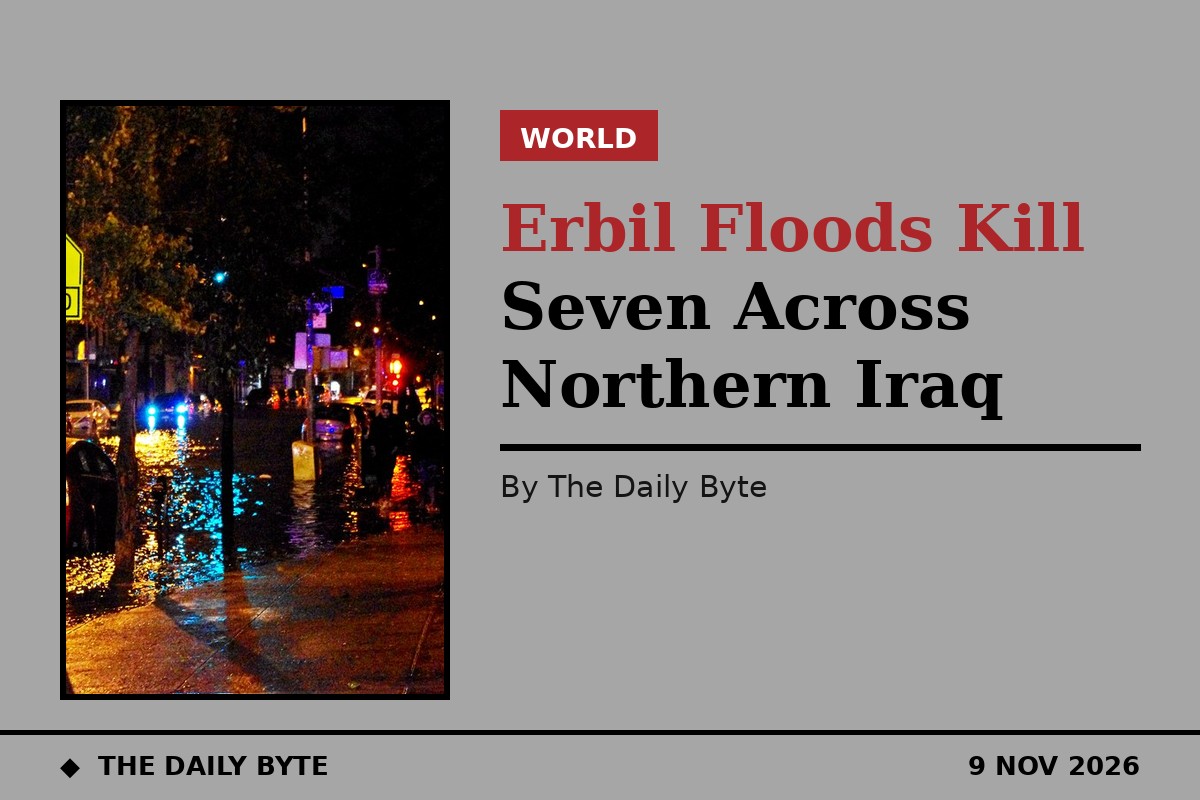
Flash floods in Erbil have killed seven people across northern Iraq, after a storm dropped far more rain than forecast on the Kurdistan Region's capital on Saturday evening.
Erbil received close to 80 millimetres of rain, against a forecast of around 30 millimetres, according to Erbil Governor Omed Khoshnaw. Floodwater swept through streets in the east of the city, washing away vehicles, flooding homes and bringing traffic to a standstill.
Two people were killed in Erbil itself. A 25-year-old volunteer operating heavy machinery was swept away by floodwaters in the Sebardan neighbourhood while helping emergency teams with his own construction equipment. In a separate incident, a five-year-old boy went missing after a vehicle carrying him and his father was swept away; his father escaped, and the boy's body was later recovered, his uncle confirmed to local media.
Five further deaths were reported outside Erbil. On the Kirkuk to Salahaddin highway, near Rashad, four members of the same family were killed when their vehicle collided with a fuel tanker. Traffic authorities attributed the crash to excessive speed and slippery road conditions. In Zakho, 32-year-old livestock trader Kifah Hassan Khidr was killed after being struck by lightning at a livestock market at about 11 a.m.
The flooding caused widespread damage across Erbil. Sections of the city's 100 Meter Road and the area around Family Mall were submerged, while the Zilan and Sebardan neighbourhoods were among the worst hit. At Tayrawa Market, merchandise was soaked or submerged, and traders raised concerns about inadequate drainage. In Qaryatagh village, within Erbil Governorate, more than 40 homes were reportedly flooded.
Schools and universities were closed on Sunday, 8 November, in Erbil, Sulaymaniyah and Kirkuk, and the Kurdistan Regional Government's electricity ministry said power would be temporarily cut in neighbourhoods where floodwater posed a safety risk. Kirkuk recorded 29.2 millimetres of rain in 24 hours, while Rawanduz recorded 50 millimetres, the highest total within the Soran administration.
Flooding is a recurring problem for Erbil. According to the Kurdistan Regional Government's Joint Crisis Coordination Centre, flash floods in 2025 claimed five lives, injured 19 people and damaged 2,225 homes across the Kurdistan Region and Kirkuk. In December 2021, another flood killed 11 people in the city. Experts have pointed to blocked drainage systems, obstructions in natural water catchment areas and design shortcomings as factors behind the repeated flooding.
Civil defence units across nine directorates had been placed on standby since Friday in anticipation of severe weather, with personnel on leave recalled to duty. Residents were urged to avoid unnecessary travel and remain indoors until conditions improved.


