Erythritol linked to higher stroke risk in new study
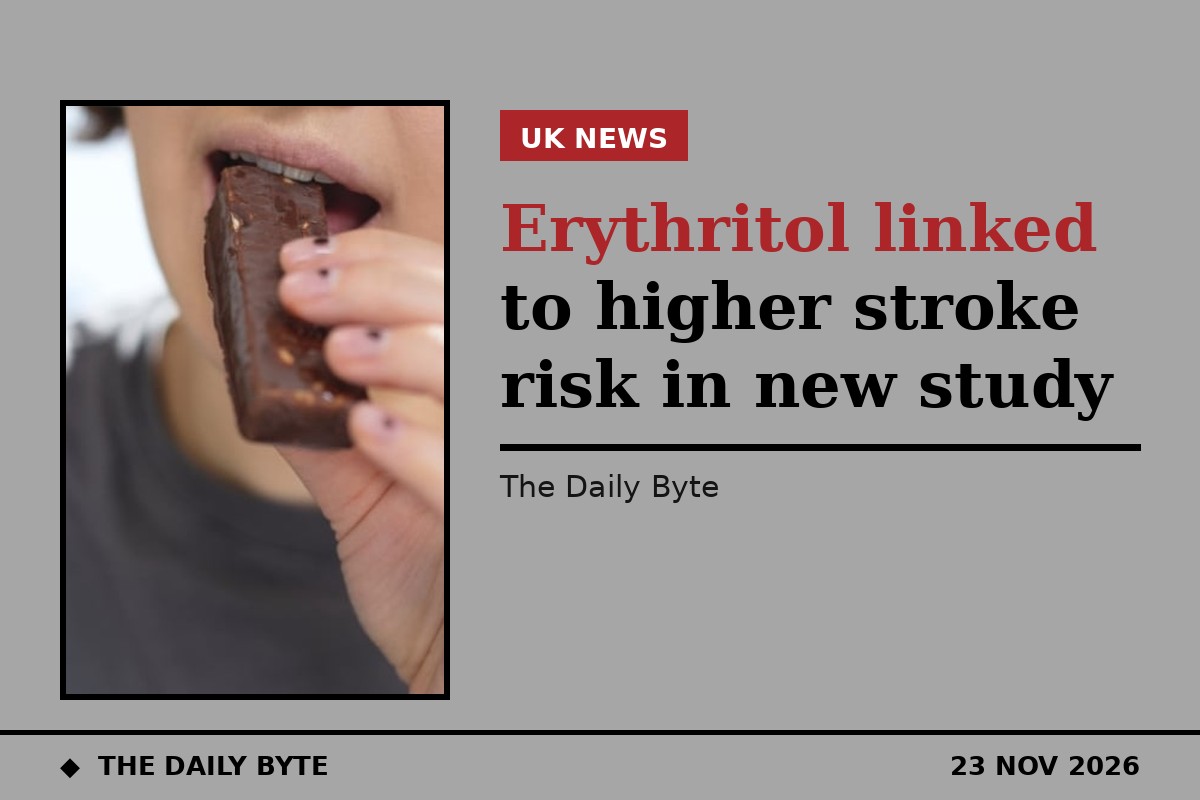
People genetically predisposed to higher levels of the sweetener erythritol in their blood face nearly 25 percent higher odds of an ischemic stroke, according to new research published in The International Journal of Molecular Sciences. The finding, reported on 23 November 2026, adds to a growing body of evidence linking the widely used low-calorie sweetener to cardiovascular risk.
The study, led by endocrinologist Ao Zhong of Huazhong University of Science and Technology, used Mendelian randomisation — a method that analyses genome-wide associations — to compare genetically predicted erythritol levels with stroke risk. People with genes predicting higher circulating erythritol had an odds ratio of 1.246 for ischemic stroke, the type caused by a blockage cutting off blood flow to the brain. The association remained after adjustment for blood pressure, blood sugar and cholesterol-related traits. The full paper is published in PubMed.
What is erythritol?
Erythritol is a sugar alcohol used as a low-calorie sweetener. It is almost as sweet as table sugar, delivers barely any calories and does not spike insulin, which is why it is popular in keto-friendly products such as protein bars, sugar-free drinks and low-carbohydrate foods. It occurs naturally in some fruits, including pears and grapes, and the human body makes small amounts of it from glucose. Since the 1990s it has become a widespread ingredient, yet little is known about its long-term health effects.
What the new study found
Zhong and colleagues compared erythritol with aspartame and sucralose, and erythritol showed the strongest association with stroke among the sweetener-related traits tested. In further computational analyses, the authors identified inflammation, oxidative stress, hypoxia and vascular injury as possible biological pathways linking erythritol and stroke. They also identified three genes — MMP9, TLR4 and HIF1A — that repeatedly emerged in their analyses as potentially important to stroke risk.
Crucially, the authors stress that their results should not be interpreted as direct evidence that eating erythritol causes stroke. The study looked at genetically predicted circulating levels, not at how much erythritol people actually consumed, and circulating levels can also reflect how the body produces, processes and clears the compound. As the authors put it, because dietary erythritol can raise circulating concentrations, the observed association raises a potential safety signal that deserves further investigation.
Earlier evidence on erythritol and the heart
The new work builds on earlier findings. In 2023, a study of more than 2,000 adults in the United States found that those with high circulating levels of erythritol had nearly double the risk of major adverse cardiovascular events, such as a heart attack or stroke, over three years. In a small pilot trial, eight healthy participants consumed 30 grams of erythritol, and their blood levels rose around 1,000-fold and stayed elevated for more than two days.
In 2024, researchers tested erythritol against glucose in 20 healthy volunteers. The erythritol group, but not the glucose group, saw a greater than 1,000-fold increase in erythritol concentrations in their blood plasma, and their platelets became more reactive, potentially making blood more prone to clotting. Then in 2025, researchers at the University of Colorado, Boulder, found in laboratory tests that erythritol damaged the cells lining the brain's blood vessels, reducing nitric oxide, which helps vessels relax, and increasing endothelin-1, which tightens them, while also blunting the cells' ability to break down clots.
What happens next
A clinical trial designed to establish direct evidence is already under way at the University of California, Davis. In a randomised crossover design, participants will drink beverages sweetened with erythritol or aspartame for two weeks each, while researchers measure whether consuming erythritol affects platelet activation and adhesion, as well as markers of vascular inflammation. Unlike the genetic and observational studies so far, that trial should get closer to showing what actually happens when people consume the sweetener.
For now, the researchers behind the new study and the earlier laboratory work advise caution rather than alarm. The evidence is accumulating, but it does not prove that an occasional sugar-free drink causes a stroke, and more research in people is needed before any firm guidance can be given.
Frequently asked questions
Does erythritol cause strokes? No — this has not been proven. The new study found an association between genetically predicted circulating erythritol levels and ischemic stroke, but the authors state this should not be interpreted as direct evidence that dietary erythritol intake causes stroke.
How much higher was the stroke risk in the study? People genetically predisposed to higher circulating erythritol faced nearly 25 percent higher odds of an ischemic stroke, an odds ratio of 1.246.
Where is erythritol found? It is used as a low-calorie sweetener in keto-friendly products such as protein bars, sugar-free drinks and low-carbohydrate foods, and it also occurs naturally in some fruits.
What research is still to come? A randomised crossover trial at the University of California, Davis, is testing whether drinking erythritol-sweetened beverages affects platelet activation and vascular inflammation.