Ethiopia Accuses Eritrea, Sudan of Backing Armed Groups
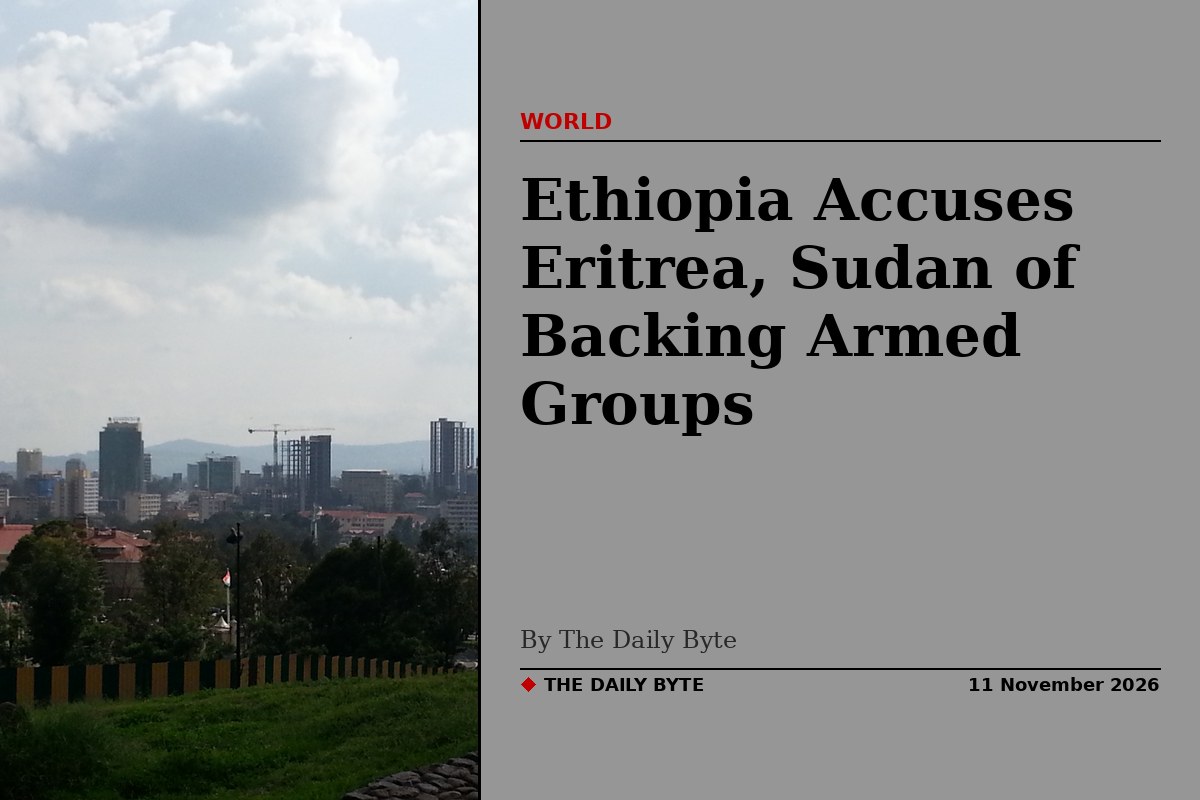
Ethiopia has accused Eritrean President Isaias Afwerki and Sudan's army chief, General Abdel Fattah al-Burhan, of supporting, arming and coordinating armed groups operating inside Ethiopia, including through repeated drone attacks. The accusations were raised by Getachew K. Reda, Prime Minister Abiy Ahmed's adviser on Horn of Africa affairs, in a meeting on Wednesday, 11 November 2026, with Guang Cong, the United Nations Secretary-General's Special Envoy for the Horn of Africa.
Getachew disclosed the accusations after the meeting, in which the two men also discussed the conflicts in Sudan and Somalia and what he described as Eritrea's destabilising role in the region. In a statement posted on his official social media account, Getachew said he had presented Ethiopia's position on the activities of the Eritrean and Sudanese leadership in equipping and coordinating armed elements inside Ethiopia, and accused them of carrying out repeated drone attacks inside the country.
He said he had urged both governments to stop supporting and arming the groups, arguing that doing so was necessary for meaningful dialogue and to prevent further escalation. The discussions also addressed prospects for de-escalating the conflict in Sudan, although Getachew gave no further details of the envoy's response and identified no specific agreements reached. He said he and the envoy agreed that dialogue rather than military confrontation offered the best path forward, concluding that "talking, not shooting is the best game in town".
Allegations not independently verified
The allegations against the Eritrean and Sudanese leadership have not been independently verified, and the report of the meeting contained no responses from Asmara or Khartoum. Both countries have previously denied similar accusations from Addis Ababa. Eritrea has denied supporting the opposition alliance fighting Ethiopian government forces, while Sudan has denied backing rebels in northern Ethiopia. Ethiopia, for its part, denies supporting the paramilitary Rapid Support Forces (RSF) in Sudan's civil war.
The accusations come amid a rapid deterioration in relations across the Horn of Africa. On 4 November, Ethiopia ordered six Sudanese diplomatic staff to leave the country within 48 hours, following the closure of Sudan's consulate in Assosa, in the Benishangul-Gumuz region. The following day, Sudan closed Ethiopia's consulate in the eastern city of Gedaref and ordered Ethiopian diplomatic staff to leave in retaliation.
Competing accusations over drone attacks
The diplomatic expulsions followed Sudan's announcement that it had lodged formal complaints against Ethiopia with the United Nations Security Council and the African Union's Peace and Security Council, accusing Addis Ababa of allowing the RSF to use Ethiopian territory to launch drone attacks against civilian infrastructure in Sudan. Sudan says the RSF has launched scores of drone attacks from Ethiopian territory since February, a claim Ethiopia rejects as baseless.
Ethiopia, meanwhile, accuses Khartoum of backing Tigrayan rebels involved in renewed fighting in northern Ethiopia, where federal forces have been battling a coalition of seven armed groups, the Ethiopian Peoples' Forces Alliance for Survival, which says it aims to remove Prime Minister Abiy Ahmed's government. Addis Ababa has also accused Egypt and Eritrea of supporting the Tigrayan rebels who launched an offensive against government forces in September. All three countries have denied the accusations.
Tensions with Eritrea have also escalated sharply. On 1 October, Ethiopia's foreign ministry announced the closure of its embassy in Asmara and declared 10 Eritrean diplomats in Addis Ababa persona non grata, ordering them to leave within 48 hours, citing what it described as Eritrea's "direct and indirect acts of hostility and belligerence against Ethiopia". Eritrea responded by severing diplomatic ties.
The competing accusations have raised fears that Sudan's war and Ethiopia's renewed internal conflict could bleed into each other, producing a wider regional war in the Horn of Africa. Sudan's war, which began in April 2023 between the army and the RSF, has killed tens of thousands of people and displaced more than 14 million, according to the United Nations. For now, both sides say they want to avoid open war, but each new accusation and expulsion narrows the space for the dialogue that Ethiopia's adviser and the UN envoy both say is the only way forward.
Who is Guang Cong?
Guang Cong is the United Nations Secretary-General's Special Envoy for the Horn of Africa, a role covering regional conflicts including the wars in Sudan and Ethiopia, tensions between Ethiopia and Eritrea, and instability in Somalia and South Sudan.
What happens next?
No agreement or timetable for talks was announced after the meeting. Attention now turns to whether the rival governments step back from further expulsions and accusations, and whether the UN and African Union can open a channel for de-escalation before the disputes harden into open confrontation.
Sources: Addis Standard and Al Jazeera.


