65 killed in armed attack in western Ethiopia
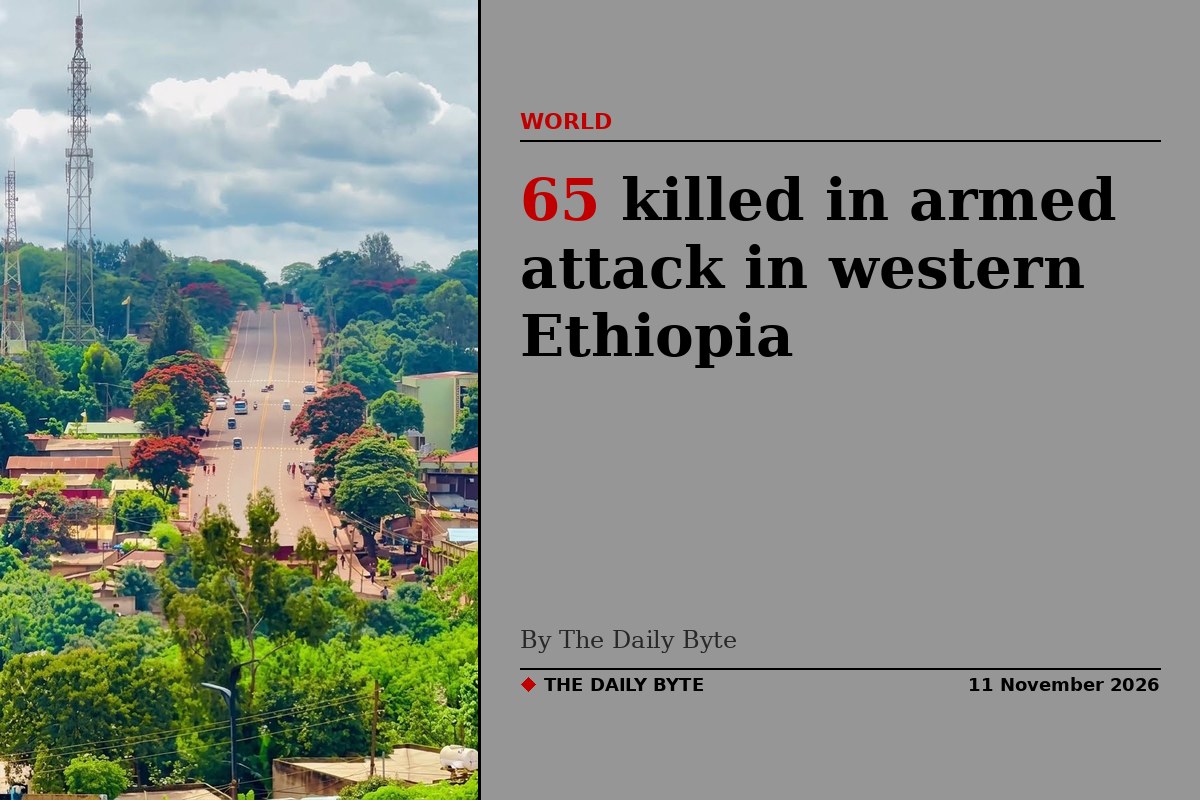
More than 65 people, including at least 27 civilians, were killed in a heavily armed attack on a locality in western Ethiopia, residents have told the Addis Standard newspaper, in one of the deadliest episodes of violence reported in the Benishangul-Gumuz region this year.
The attack struck Dalati locality in Buldiglu Woreda, in Assosa Zone, near Ethiopia's border with Sudan. Residents said the assaults took place on Thursday and Friday, 5 and 6 November, and targeted members of the regional anti-riot police, local militias and special forces, as well as civilians, including women and children. About 45 of those killed were members of the region's various security forces, according to the residents.
One eyewitness told Addis Standard by telephone that the attackers were heavily armed men, some of them wearing the former security uniform of the region. Another witness said the fighting lasted almost two days and that there was no intervention from federal forces during that time. A 65-year-old farmer who lost his younger brother in the attack said it took several hours before families could begin collecting the bodies of victims because of the intensity of the fighting.
Benishangul-Gumuz Regional State Police Commission Commissioner Mohammed Idriss confirmed the attack in an interview with BBC Amharic. He said it began in the early hours of Thursday, at about 5 a.m., and attributed the assault to the armed group known as OLF-Shene. His breakdown of the casualties was 21 civilians, 18 anti-riot police officers and 13 local militia members, accounting for 52 deaths, below the toll given by residents.
Several local reports have put the death toll at more than 100, including dozens of civilians, but those higher figures have not been independently verified. The regional government had not issued an official statement on the assault at the time the accounts were published, and the circumstances of the attack and the gap between the official and resident casualty figures remain unclear.
A region hit by repeated violence
Benishangul-Gumuz, which borders Sudan, has faced repeated armed violence in recent years, along with counterinsurgency operations, civilian displacement and several attempts at negotiated settlements. Although the Metekel and Kamashi zones have historically been among the areas worst affected by armed conflict, insecurity has also spread to other parts of the region, including Assosa Zone.
The region's conflict landscape has involved several armed and political actors, including the Gumuz People's Democratic Movement and the Benishangul People's Liberation Movement, as well as local armed factions which the Ethiopian government refers to as OLF-Shene. The Oromo Liberation Army has repeatedly denied military involvement in the conflicts in Metekel and Kamashi.
Regional authorities have pursued peace agreements with some armed groups. In October 2022 the regional government signed an agreement with the Gumuz People's Democratic Movement, followed by a peace accord with the Benishangul People's Liberation Movement in Khartoum, Sudan, in December 2022. In June 2024 regional authorities declared the successful conclusion of peace agreements with remaining elements of the two groups, but sporadic attacks and clashes have continued.
Less than three weeks before the Dalati attack, the regional police commission announced on 22 October that it had carried out a coordinated security operation against what it described as anti-peace forces in Benishangul-Gumuz, working alongside the 404th Grand Ethiopian Renaissance Dam Corps of the Ethiopian National Defense Forces. Addis Standard said it could not independently establish whether the latest incident was connected to the armed faction cited in that announcement.
Why the death toll is disputed
The difference between the residents' account of more than 65 dead and the police commissioner's figure of 52 reflects the difficulty of verifying casualty numbers from a remote area where access is limited and no official statement has been issued. Residents' accounts, gathered by telephone, form the basis of the higher toll, while the commissioner's breakdown is the only official figure so far.
Regional outlets, including France 24, carried news of the Dalati assault on Wednesday 11 November as concern grew over the security situation along Ethiopia's western frontier. Federal forces are also contending with insurgencies and renewed fighting in the Amhara, Oromia and Tigray regions, adding to pressure on the government in Africa's second most populous nation.