EU climate resilience law unveiled for extreme weather
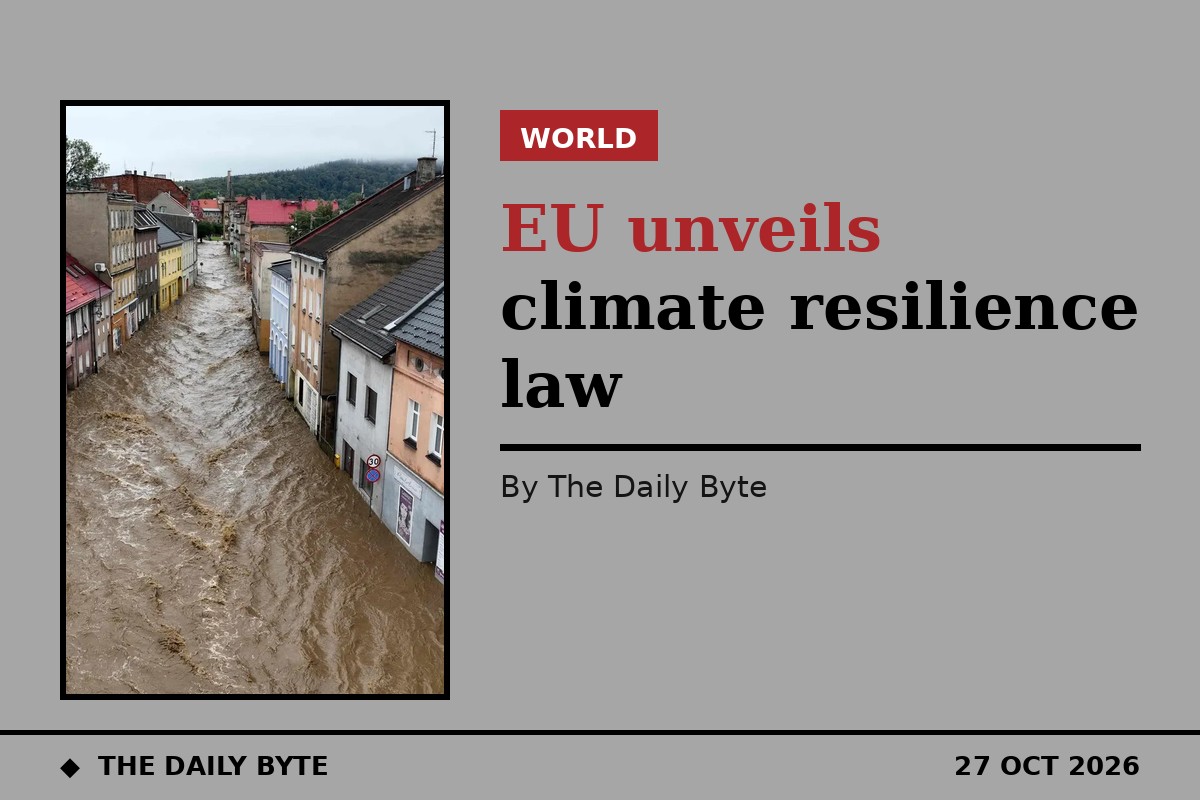
The European Commission unveiled a proposed European Climate Resilience Law on Tuesday, 27 October, aimed at preparing Europe for worsening heatwaves, floods, droughts and wildfires. The proposal is not yet law: it would still need approval from EU governments and the European Parliament. Its central idea is that cutting emissions, while still essential, is no longer enough on its own to protect people and infrastructure.
A plan built around a warmer future
At the heart of the proposal is a common warming trajectory for assessing risk: 1.5°C above pre-industrial levels by 2030, 2°C by 2050 and 3°C by 2100. Member states would be required to carry out climate risk assessments by June 2029 and adopt national resilience plans by December 2030, and to name clearly which authorities are responsible for each risk. The Commission also announced plans for a European Heatwave Plan to protect public health and a European Water initiative covering drought, flooding, efficiency and reuse.
The cost of recent extremes
Climate Commissioner Wopke Hoekstra described last summer as another "summer of truth", saying extreme weather had claimed more than 35,000 lives, burned roughly 700,000 hectares and disrupted shipping on major rivers. "Our society and economy need to become 'resilient by design' or we'll risk disaster by default," he said. The Commission estimates climate extremes caused €200 billion in economic damage between 2022 and 2025, averaging €50 billion a year. Commission Executive Vice-President Teresa Ribera said: "The first and most effective adaptation measure to climate change is to fight its root causes."
Nature's role questioned
Not everyone is satisfied with the draft. BirdLife International says member states are only asked to "promote" nature-based solutions, with no binding language or dedicated funding, even though healthy ecosystems are among Europe's best defences against floods, droughts and wildfires. The group wants that commitment written into the law itself. The debate now moves to EU governments and MEPs, who will decide how strong the final obligations should be.
Sources: EU Reporter and BirdLife International.