EU Commission Hit by AI-Assisted Cyberattack
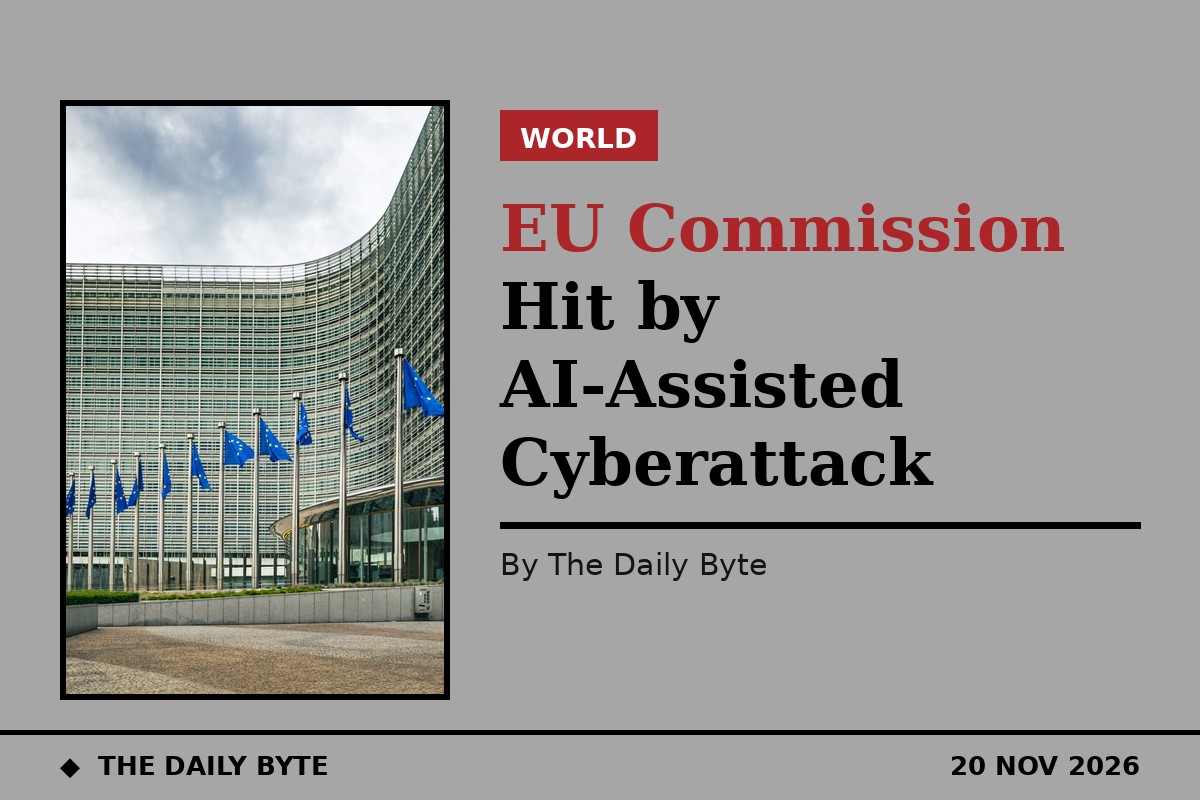
The European Commission has confirmed it was hit by an AI-assisted cyberattack that disrupted its internal staff systems for more than ten days, knocking payroll, leave and medical reimbursement platforms offline.
The incident was first reported by Politico on 19 November, and Commission spokesperson Thomas Regnier confirmed it at a press briefing the same day. He said the intrusion was detected on 22 October and confirmed as a cyberattack on 26 October, triggering mitigation steps and an investigation. “The European Commission has taken the necessary steps in response to a detected cyber campaign,” Regnier said. “Individual systems were targeted and, in line with our standard practice, we have informed those concerned.”
Payroll, leave and medical systems taken offline
Among the systems taken offline as a precaution were Sysper, the human resources platform staff use for payslips, timesheets and leave requests, and MyPMO, which handles medical reimbursements. Both were brought back online earlier in the week, although Sysper crashed again on Wednesday 18 November. The staff health insurance portal was still down on 19 November, and translation services went offline on 17 November.
Staff were still paid on time, according to people Politico spoke to, although some could not submit timesheets or book time off. The disruption reached the top of the institution: the Corporate Management Board, the Commission’s senior internal crisis body, held an urgent meeting earlier in the month, and technology commissioner Henna Virkkunen briefed the full College of Commissioners on 18 November.
ARTEX tool suspected
According to Politico’s sources, the Commission’s cybersecurity team, CERT-EU, detected hackers using ARTEX, a publicly available AI-powered penetration-testing framework. An operator gives ARTEX an objective in plain language, and its AI agents break the task down and carry it out using real hacking tools. The framework ships with no AI model of its own; the operator connects an external model of their choice.
CERT-EU had warned on 5 November that it had spotted what it believed were ARTEX-assisted attacks against organisations under its watch. The developer behind ARTEX removed the project’s repository in October after reports of misuse, but by then the code was already in circulation. The FBI sounded the alarm last week, revealing that researchers had found more than 1,600 ARTEX consoles exposed to the internet, and that in some attacks hackers went from identifying a target to obtaining privileged access in less than three hours.
No evidence of a data breach, investigation continues
Regnier said the investigation had found no evidence of a data breach affecting Commission staff, and that he was not aware of any ransom demand. The European Data Protection Supervisor has been notified. But officials have not said who was behind the attack, how the attackers got in, or whether any staff data was accessed, and the full extent of the damage remains unclear.
“What used to take a skilled operator days or weeks of chaining is now happening in hours because frameworks like ARTEX let a single actor stand up fleets of agents that plan, probe, exploit, and move laterally with almost no further human input after the initial goal is set,” Snehal Antani, chief executive of security firm Horizon3.ai, told The Register. He warned the spread of such tools also makes it harder to establish who is behind an attack, as state-backed hackers and ordinary cybercriminals increasingly draw from the same toolbox.
Sources: The Register and Infosecurity Magazine