EU Debt for Ukraine May Pass €200 Billion, Report Says
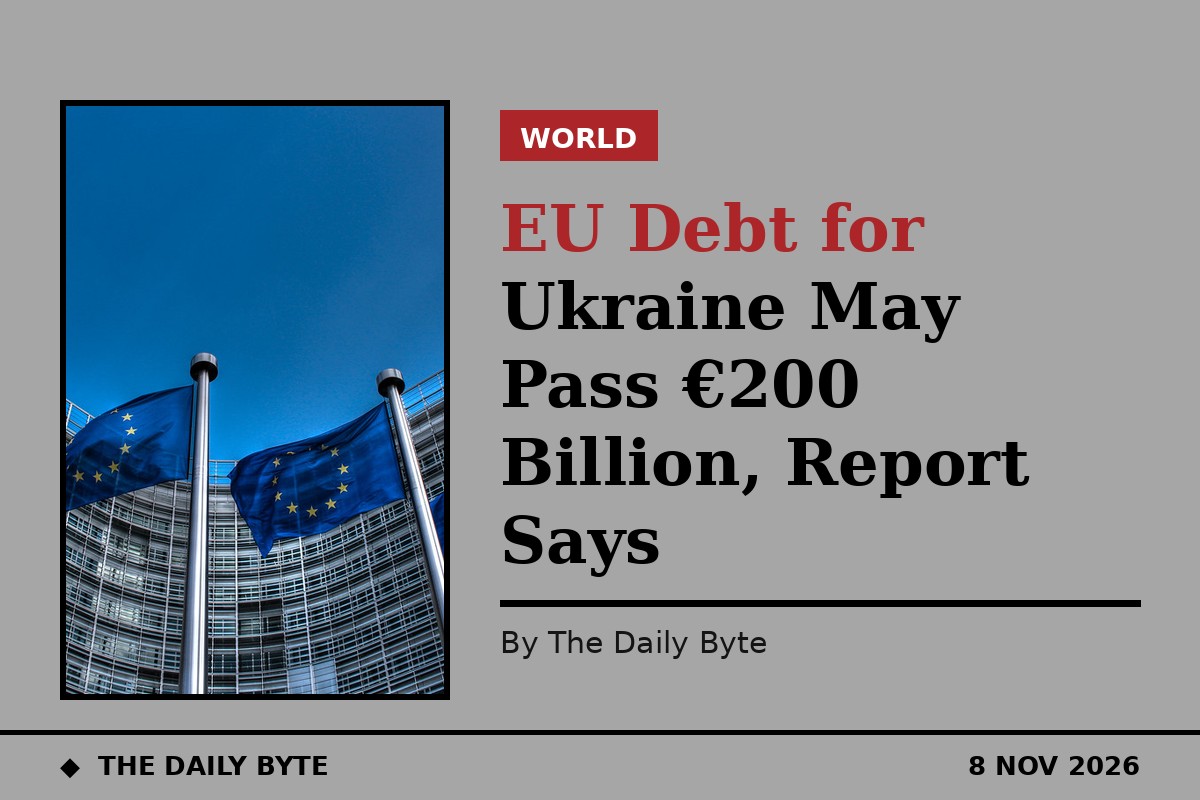
The European Union may need to raise more than 40 billion euros through new joint borrowing to keep financing Ukraine, pushing the total amount of European aid to Kyiv above 200 billion euros, according to calculations by Germany's Welt am Sonntag based on European Commission data.
The newspaper's estimate says the extra borrowing would come on top of the 166 billion euros that appears in its calculations so far. The need for fresh funding follows President Volodymyr Zelenskyy's request for at least 70 billion euros in additional aid next year. Speaking at an EU summit on 16 October, he said the war would cost about 155 billion euros in 2027. Under current plans, EU countries are expected to provide 46 billion euros of the amount Ukraine is seeking.
The figures come against the background of the 90-billion-euro Ukraine Support Loan approved in February 2026, which is designed to cover 2026 and 2027. On 5 November, the European Commission transferred 4.36 billion euros to Kyiv under the programme, including 3.7 billion euros in macro-financial assistance and 658 million euros for defence needs.
Brussels had hoped that revenue from frozen Russian assets could help cover part of the cost, but that route remains blocked. About 200 to 210 billion euros of Russian central bank assets are frozen in EU countries, including about 185 billion euros held at Belgium's Euroclear, yet use of the principal sum is legally restricted and the income it generates falls well short of Kyiv's needs. Welt am Sonntag therefore describes new joint EU borrowing as the most realistic option for closing the gap.
The question has exposed divisions among member states. Hungary, Slovakia and Czechia are exempt from taking part in the 90-billion-euro loan, and Slovakia and Hungary have said they will not take part in any new mechanism either, narrowing the circle of countries that would bear responsibility for the debt. Germany, Sweden, the Netherlands, Spain, Poland, the Nordic and Baltic countries and Ireland support using the frozen assets, while Belgium is opposed: Prime Minister Bart De Wever fears Russian retaliatory measures and demands full mutual responsibility for the risks. The positions of France and Italy are ambiguous, and Zelenskyy has proposed creating a special custodian for the assets under EU control.
Opposition to further funding is also growing among European politicians. Dietmar Bartsch, a member of the Bundestag from the Left Party, said citizens should not have to bear the financial burden of the war, and that aid to Ukraine was acceptable only if it did not lead to cuts in social spending at home. Euronews estimates put Kyiv's request at about 32.6 billion dollars for the budget and 45 billion dollars for the army, together roughly the 70 billion euros Zelenskyy has asked for, and Brussels is reported to have recognised that estimate after technical consultations. So far, Norway is the only partner outside the EU reported to have helped, and Austria's chancellor has reproached Kyiv over what he described as an unclear presentation of its needs.
The headline figure needs careful reading. When the report speaks of EU debt, it means the European Union's own joint borrowing, not Ukraine's debt, and the total cannot be equated with all aid, because it does not include bilateral assistance from individual countries or military supplies. The newspaper does not specify exactly how its 166-billion-euro figure was calculated, and disbursed and committed funds are different measures.
No final decision has been taken. EU leaders have instructed the European Commission to study the options, and the question of how to finance Ukraine's future needs is expected to be discussed next week by representatives of EU institutions and member states, including at the level of heads of state and government. The EU's ambassador to Ukraine, Katarina Mathernova, does not expect a decision on the frozen assets to come any time soon.