EU Leaders to Weigh Russia Negotiator at Dublin Summit
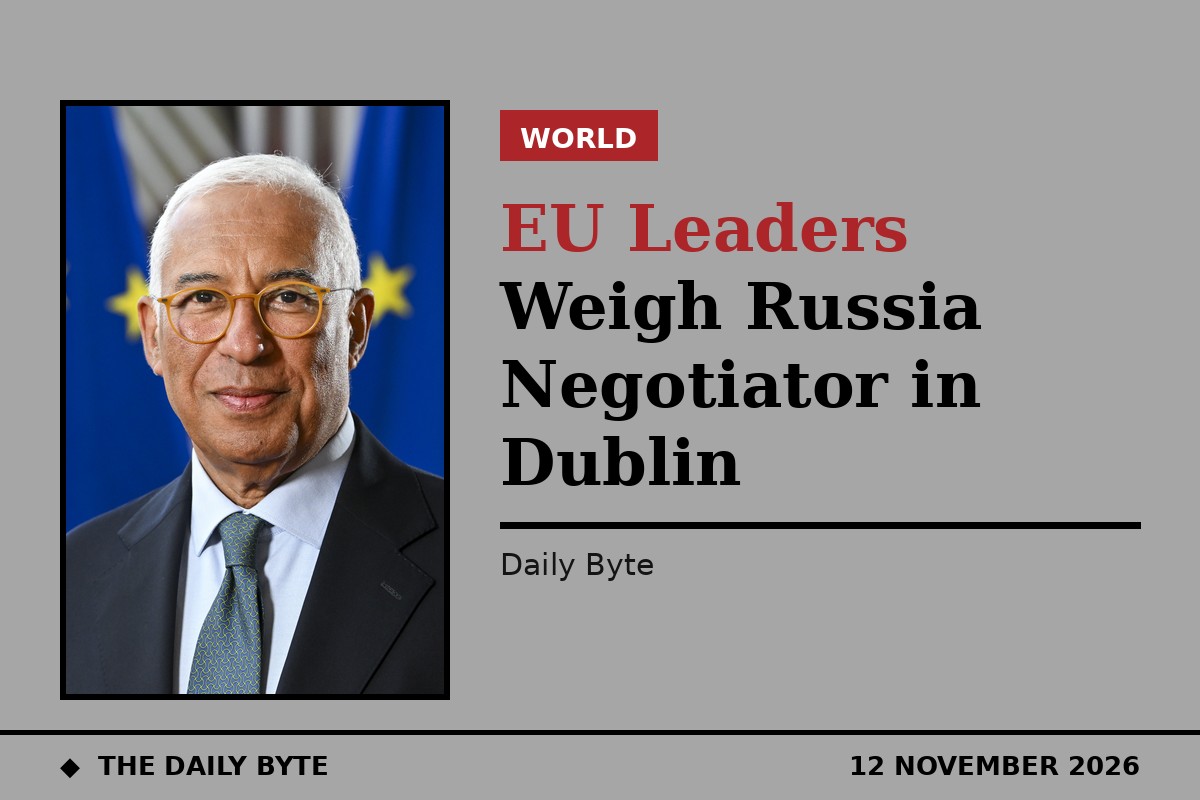
European Union leaders will discuss appointing a single negotiator to represent them in talks with Russia at an informal summit in Dublin on Friday, 13 November, after Italy's prime minister complained that European diplomacy on Ukraine was in disarray. The debate will be an initial one about the structure and mandate of the role, and no name is expected to be announced in Dublin.
European Council President Antonio Costa has agreed to put the creation of a potential EU envoy for the peace process on Friday's agenda, EUobserver reported. The nomination of any individual candidate would be left until the next formal summit in December, according to an EU source quoted by the outlet.
Why Europe wants a single voice
The push for a single representative follows two days of US-mediated talks between Russia and Ukraine in Abu Dhabi on 10 and 11 November, at which Europe was represented by at least seven different officials from France, Germany, Italy, the UK, the European Commission, the European Council and NATO. The EU also sent a joint team led by Bjoern Seibert, chief of cabinet to Commission President Ursula von der Leyen, and Anna-Maria Boura, foreign policy adviser to Costa.
Italian Prime Minister Giorgia Meloni wrote to Costa complaining about the confusion in diplomatic formats and demanding the appointment of a special European envoy. Ukrainian President Volodymyr Zelensky has said Europe should choose its representative this month, and US envoy Jared Kushner has urged Europe to "identify one person to speak on their behalf" in the negotiations.
A source in Brussels told the Russian news agency TASS that the EU had yet to hold any substantive discussions about a potential candidate, and that the bloc currently had "no negotiator, no mandate for talks and no negotiating position that includes possible compromises". That, the source said, was among the reasons the EU had been left out of the negotiating process.
Not everyone agrees a new envoy is needed
Estonian Prime Minister Kristen Michal told AFP on Wednesday that Europe did not need to pick a new envoy at all. The matter was already settled, he said, because senior leaders in Brussels could take part in talks in line with their portfolios. He named Costa, as head of the European Council, and the EU's top diplomat, Kaja Kallas, saying she held "the role to represent us in the matters of foreign affairs".
That view does not enjoy unanimous support. Some European capitals believe Kallas, a former Estonian prime minister, is too strong a critic of Russia and President Vladimir Putin to act as Europe's envoy in negotiations with Moscow. Others argue that a dedicated negotiator, with a clear mandate from all 27 member states, would carry more weight than the existing institutional leaders.
EUobserver reported that any envoy would need to meet demanding criteria, including having no border with Russia, no conflicts of interest and no fear of Moscow. The same reporting said the 27 leaders aimed to appoint a more senior Russia negotiator, or group of negotiators, at their next formal summit on 17 December, amid US President Donald Trump's promise of an imminent peace deal.
What happens in Dublin
The Dublin meeting comes at a crowded moment. On Thursday, 12 November, around 50 European leaders gather in the Irish capital for the European Political Community summit, chaired by Costa, with Ukraine, European security and hybrid threats on the agenda. US envoys Steve Witkoff and Jared Kushner are due to meet Putin in Moscow and then Zelensky in Dublin as they try to build on the Abu Dhabi talks, where negotiators agreed a major prisoner exchange but left differences on territory unresolved.
On Friday, the EU's own leaders meet informally in Dublin. Costa is expected to ask the capitals that have raised the need for a common mandate, including Rome, to put their proposals on the table. The question is not only who should speak for Europe, but what that person should be allowed to concede. Until the leaders agree a negotiating position, any envoy would arrive at the table with little to offer, and the debate in Dublin is likely to expose how far apart the member states still are on that point.
Sources: GeoXAxis, reporting EUobserver and Bytes Europe, reporting AFP.