EU unveils new Arctic strategy focused on security
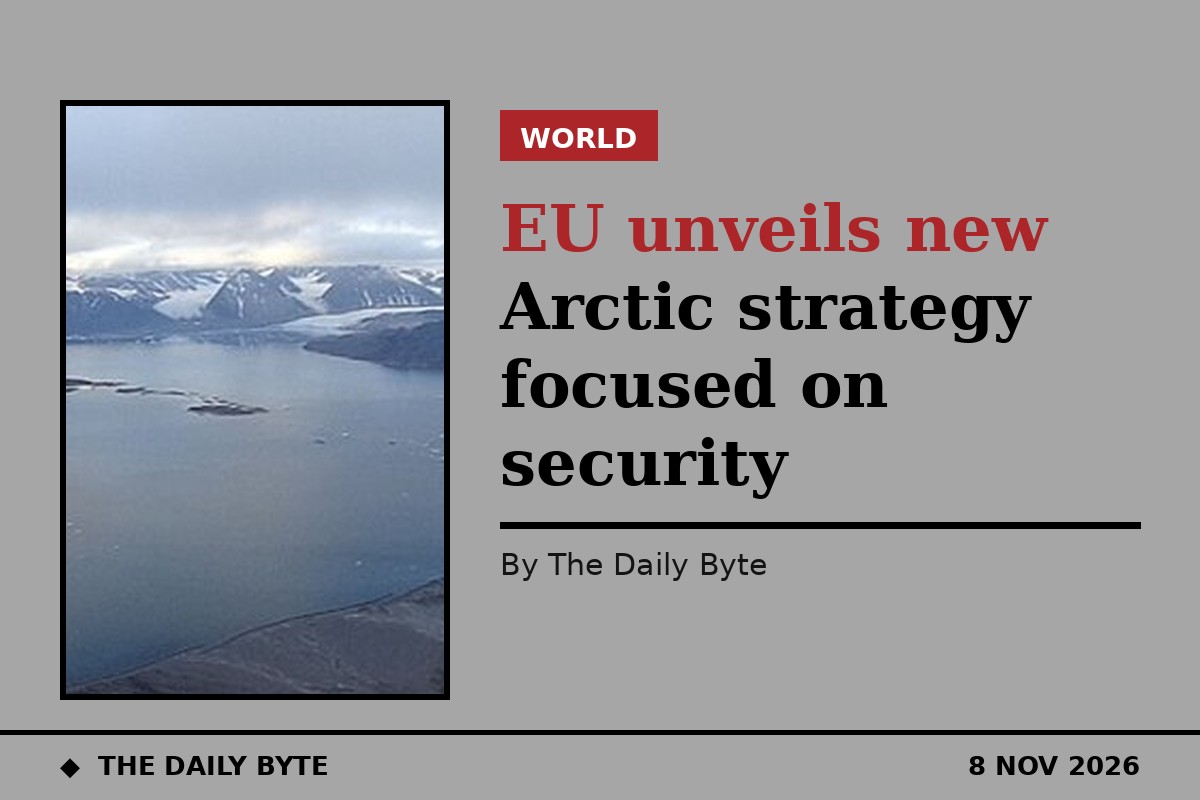
The European Commission and the EU's foreign policy chief have presented a new strategy for the Arctic, the bloc's first since 2021 and its fifth since 2008. The document puts security and resilience at the centre of Europe's approach to the far north, alongside climate action, economic development and support for Arctic communities, according to the European Commission.
The strategy introduces a "Northern Neighbourhood", a political framework for closer and more structured cooperation between the EU, its member states, Arctic partners and other like-minded countries, including Greenland, Norway, Iceland, Canada and the UK. It is designed to align shared priorities, improve connectivity and support joint projects, while complementing existing structures such as the Arctic Council.
The shift in tone is stark. Analysis of the text shows the word "security" appears 52 times, more than double the 23 mentions in the 2021 strategy, while mentions of "climate change" fall from 30 to 14. Climate change is now framed as amplifying security risks and a defining threat from which Arctic inhabitants need protection. The strategy also states that multilateral cooperation "can no longer be the sole foundation" of the EU's Arctic approach.
The change follows Russia's full-scale invasion of Ukraine, which disrupted Arctic governance: work in the Arctic Council, which includes Russia among its eight members, was paused, and Moscow has since engaged in hybrid activity in the region, from disinformation and GPS jamming to the targeting of pipelines and undersea cables. The strategy also points to growing interest in Arctic shipping, energy, digital links and critical raw materials, and includes developing Europe's capacity to build icebreaker vessels.