EU signs Nigeria migrant returns deal after decade
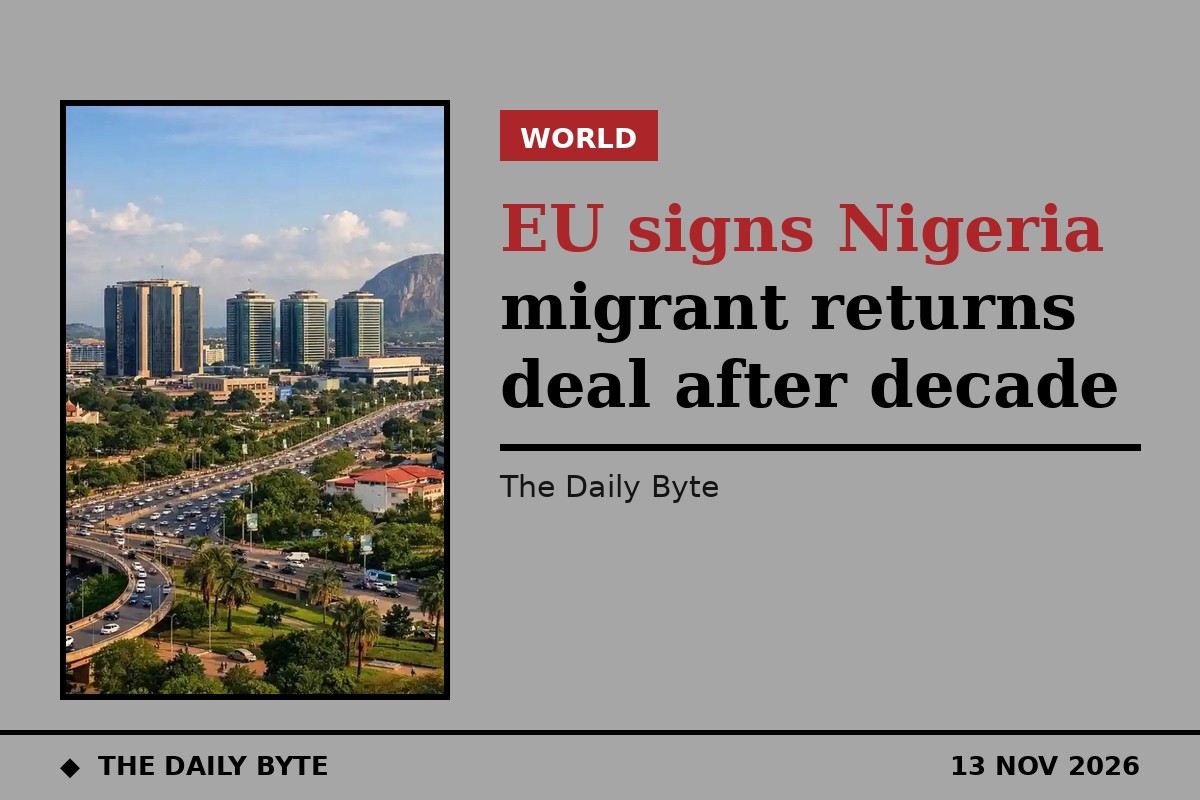
The European Union and Nigeria have signed a readmission agreement in Abuja after nearly ten years of negotiations, making it easier for European countries to return Nigerians who have no legal right to remain in the EU. The deal was signed on Tuesday 10 November by European Commissioner for Internal Affairs and Migration Magnus Brunner and Nigeria’s Minister of Foreign Affairs, Bianca Odumegwu-Ojukwu. The European Commission described it as an important step forward in the two sides’ partnership on migration and security.
The agreement sets out rapid and effective procedures for identifying and returning people who do not, or no longer, meet the conditions for entry, presence or residence in an EU member state or in Nigeria. It is reciprocal: it also covers EU citizens who have no legal right to remain in Nigeria. People with valid visas or residence permits are not affected, and individual returns must follow the applicable legal procedures and protections.
What Nigeria gets in return
The agreement was not signed in isolation. The Commission confirmed that Nigeria would receive €112 million in funding to strengthen cooperation, Agence Europe reported. The package includes €66 million for migration management projects, €26 million for security work, notably against the spread of small arms and drug trafficking, and €20 million under the European Peace Facility to support counter-terrorism efforts.
Further discussions are also planned on border management, human trafficking and migrant smuggling, as well as on legal migration pathways, which remain unresolved. Nigeria has been modernising its migration and identity systems so that the nationality of people being returned can be verified through integrated databases.
Negotiations began in 2016, when the Council authorised the Commission to open talks, and gained renewed momentum during the eighth Nigeria-EU ministerial dialogue in March 2026. The text was submitted to member states for approval in July before the signing ceremony in Abuja.
What happens next
The agreement is not yet in force. It must be approved by the European Parliament and ratified by the EU Council, and will enter into force on the first day of the second month after both sides notify that they have concluded the process. The Commission has not said how many Nigerians currently in the EU without legal status would be affected.
For the EU, the deal is part of a broader approach to migration that pairs returns with funding and cooperation with countries of origin. For Nigeria, it closes a decade of talks and brings fresh funding, while leaving the question of legal routes to Europe for further negotiation. How quickly the agreement takes effect will now depend on the approval process in Brussels.