EU launches second migration management cycle
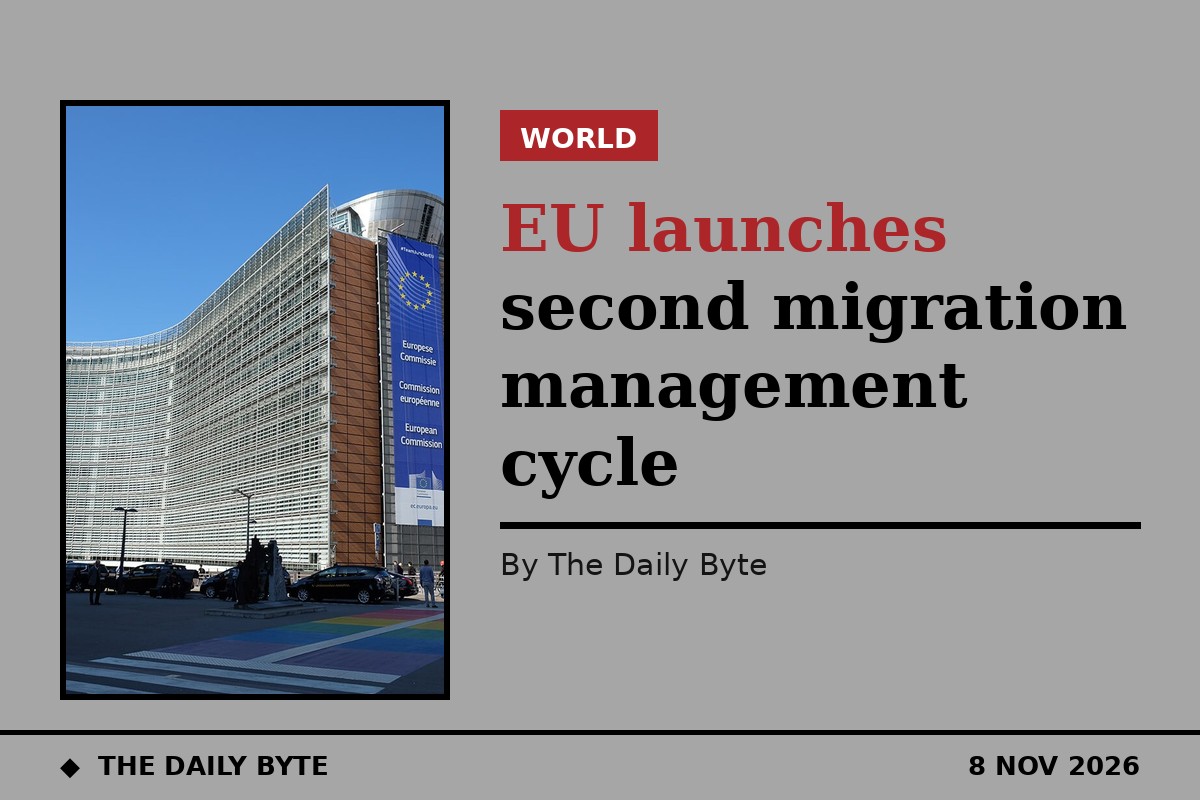
The European Commission has launched its second Annual Migration Management Cycle, naming Greece, Cyprus, Italy and Spain as the member states under migratory pressure and proposing a new Solidarity Pool for 2027 to share the burden.
Commissioner for Internal Affairs and Migration Magnus Brunner presented the package in Brussels on Friday, 6 November, as part of the yearly cycle established under the EU's Pact on Migration and Asylum. The cycle brings together an annual overview of asylum and migration in the EU, a decision assessing each member state's situation, and a proposal for the solidarity pool for the coming year.
Greece and Cyprus are under migratory pressure because of the disproportionate level of arrivals over the past year. Italy is also under pressure because of arrivals following search and rescue operations at sea, while Spain qualifies in view of the overall migration situation, including the incident in Ceuta. The four states will be eligible to draw on the Solidarity Pool, subject to their continued application of the rules that assign responsibility for asylum cases.
Fifteen states at risk of pressure
The Commission also identified 15 member states as at risk of migratory pressure: Belgium, Czechia, Germany, Estonia, Ireland, France, Croatia, Latvia, Lithuania, Luxembourg, the Netherlands, Poland, Romania, Slovenia and Finland. That is up from 12 in the first assessment, with Romania, Czechia, Luxembourg and Slovenia added. Those states will have priority access to the Permanent EU Migration Support Toolbox.
A further six countries — Bulgaria, Czechia, Estonia, Croatia, Austria and Poland — were found to face a significant migratory situation because of the cumulative effect of migration over the past five years. They will be able to ask the Council to grant them a full or partial deduction from their contributions to the pool for the coming year.
The Commission's proposal for the 2027 Solidarity Pool itself has not been made public, in line with the rules of the pact. It is now for the Council to agree on the size of the pool and how each member state will contribute. States will be able to contribute through the relocation of asylum applicants, financial support, responsibility offsets, alternative measures, or a combination of these. Once the Council adopts its decision, the contributions will be public and legally binding.
Crossings down by more than half
The Commission's assessment points to a sharp fall in irregular arrivals. Illegal border crossings into the EU have fallen by more than half over the past two years, with a further decline of more than one-third during the first six months of this year. Asylum applications decreased by 19 per cent in 2025, unauthorised movements fell by 22 per cent, and the EU-wide return rate rose to more than 30 per cent.
The Commission said implementation of the first Solidarity Pool, for 2026, was on track, while more work was needed before every part of the pact was fully operational. The Council must now agree the 2027 pool by the end of the year.