EU set to approve Hungary's €10bn recovery funds
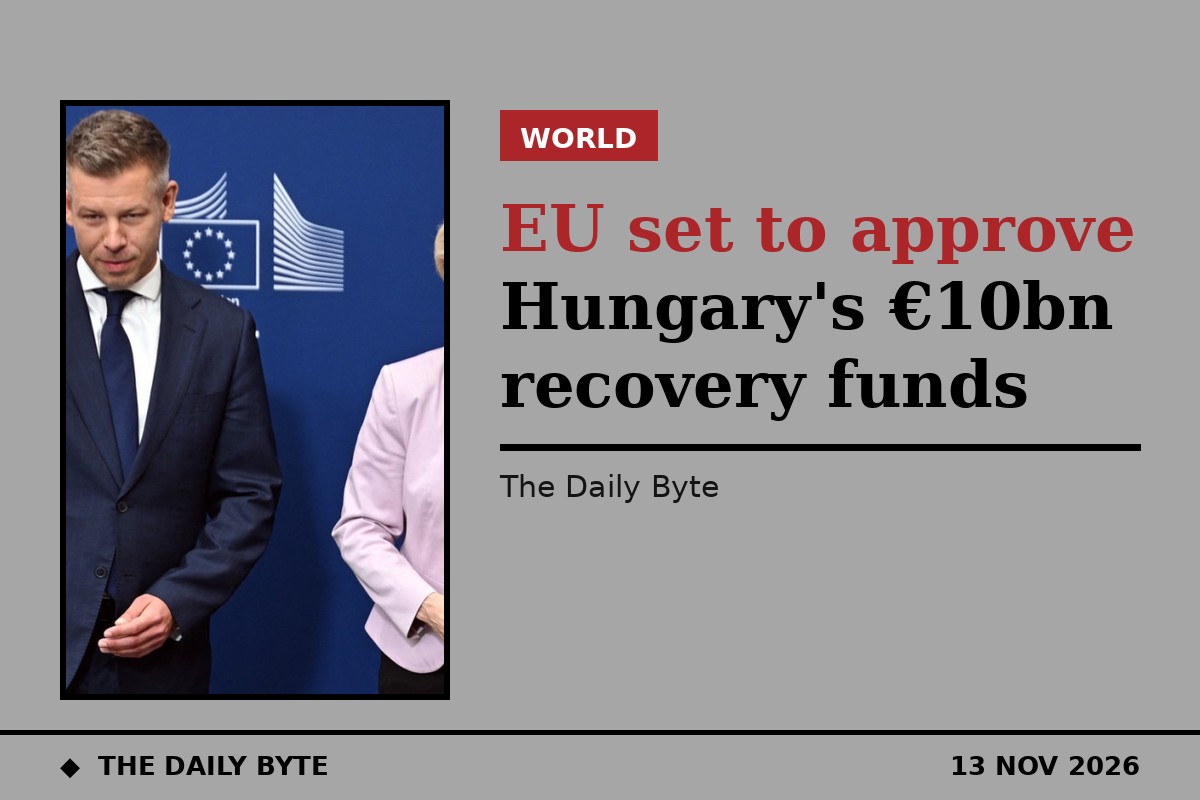
The European Commission is set to approve almost all of Hungary's €10 billion allocation from the EU's post-pandemic Recovery and Resilience Facility (RRF), with the assessment expected to be published as early as next week. Commission officials confirmed the timetable to Brussels Reporter, saying the Commission has "not identified major obstacles" in Hungary's file.
The money is part of a wider thaw in relations between Brussels and Budapest. Prime Minister Péter Magyar, who took office in April after promising to unlock EU funds frozen under Viktor Orbán, campaigned on restoring the flow of money. In May, Magyar and Commission President Ursula von der Leyen agreed to release €16.4 billion withheld over rule-of-law and corruption concerns, of which €10 billion comes from the RRF. Hungary announced in late August that it had met the EU's conditions for payment.
Reforms behind the release
Under its revised recovery plan, adopted in August, Hungary redirected €3.6 billion — more than a third of the total — towards capital injections into the Hungarian Development Bank and a newly created, fully state-owned railway company, the Rolling Stock Company. The country still had to fulfil 27 so-called "super milestones" and more than 100 other milestones, and parliament amended more than 100 laws over the summer, most of them concerning judicial independence and the fight against corruption. According to the European Parliament, the plan is worth €10 billion in total, made up of €6.5 billion in grants and €3.5 billion in loans.
Time is short. The RRF expires later this year, and all payments must be authorised by the end of November to be paid before the end of the year. In September, the Commission approved €4.2 billion in frozen cohesion funds for Hungary, while €2.2 billion more stays blocked over academic freedom and LGBTI+ rights.