EU Tobacco Tax Deal in Doubt as Sweden Blocks ECOFIN Plan
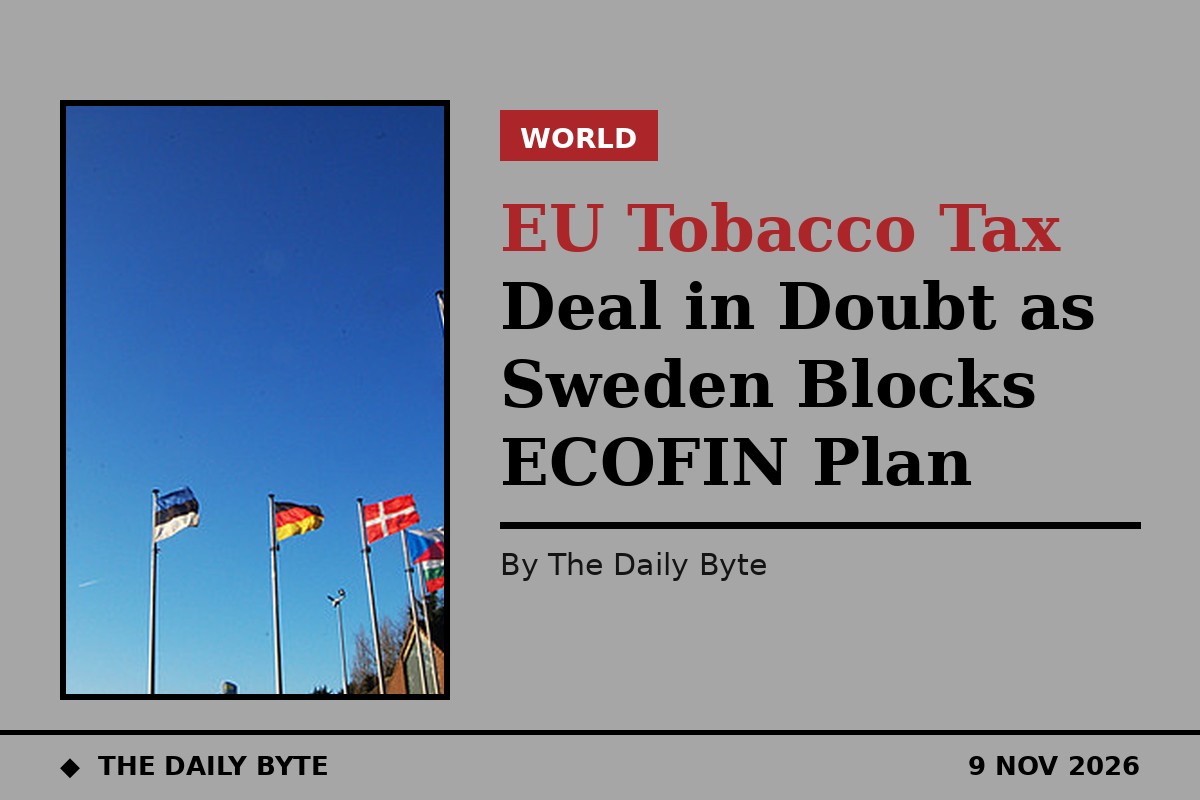
European Union finance ministers meet in Brussels today, Monday 9 November, to try to reach agreement on a long-delayed overhaul of tobacco taxation, but Sweden's refusal to accept the proposed duty on nicotine pouches threatens to block the entire package.
The Irish presidency of the Council of the EU, which chairs the meeting, believes a deal could be reached, and has put the tobacco taxation package at the top of the agenda for the Economic and Financial Affairs Council, known as ECOFIN. Ministers are being asked to agree a general approach on the reform, which would update rules that have not kept pace with newer products such as vapes, heated tobacco and nicotine pouches.
The European Commission first proposed the overhaul in July 2025. It would raise minimum excise duties on conventional tobacco products and, for the first time, set EU-wide minimum taxes on vaping liquids, heated tobacco and nicotine pouches. The Council of the EU says ministers will be invited to reach political agreement on the package, which aims to update the current outdated rules.
Sweden is the main obstacle. The country does not currently have a government in place, and its caretaker government has said it cannot support the latest compromise. Under the compromise drawn up by the Irish presidency, the minimum duty on nicotine pouches would rise gradually: 30 euros per kilogram in 2028 and 2029, 40 euros per kilogram in 2030 and 2031, and 50 euros per kilogram from 2032 onwards. Sweden wants the duty to stay close to its own level of around 20 euros per kilogram, and says it is unacceptable for nicotine pouches to be taxed at the same rate as some forms of smoking tobacco.
That gap matters because EU tax law requires the unanimous agreement of all 27 member states. A single country can therefore stop the reform in its current form, even if every other member state supports it. Sweden blocked an earlier version of the package in June, when the item was pulled from the ECOFIN agenda for lack of unanimous consent.
The compromise already represents a large climb-down from the Commission's original proposal, which would have set the minimum duty on nicotine pouches at 143 euros per kilogram. Months of negotiation have cut that figure by roughly two-thirds, to 50 euros per kilogram from 2032. Sweden's current national tax on nicotine pouches is about 209 Swedish kronor per kilogram, roughly 19 euros. Traditional Swedish snus, a tobacco product, would remain outside the directive; only tobacco-free nicotine pouches would face the new EU-wide minimum.
Spain is also reported to be prepared to block the package unless the proposed minimum tax on fine-cut tobacco used for rolling cigarettes is reduced significantly, adding a second obstacle to Monday's talks. Bilateral negotiations continued into the weekend, with new proposals from the Irish presidency expected before ministers sat down.
The tobacco file is only one item on a crowded agenda. Ministers will also review macrofinancial assistance to Ukraine, which is covered for 2026 but faces a funding gap of nearly 70 billion euros next year, with the EU expected to provide two-thirds of the amount. They will take decisions under the stability and growth pact, including Italy's request to activate the pact's national escape clause until 2028 to raise military spending, and they will adopt without debate a VAT change linked to customs reform that removes the exemption for parcels worth less than 150 euros.
If ministers cannot agree on Monday, the tobacco file will return to officials for further negotiation, and the presidency will have to decide whether to bring it back to a later ECOFIN meeting. With unanimity required, the outcome in Brussels today will show whether months of compromise have been enough to bring Sweden, and Spain, on board.


