EU and UK Seal Reset Deals at Brussels Summit
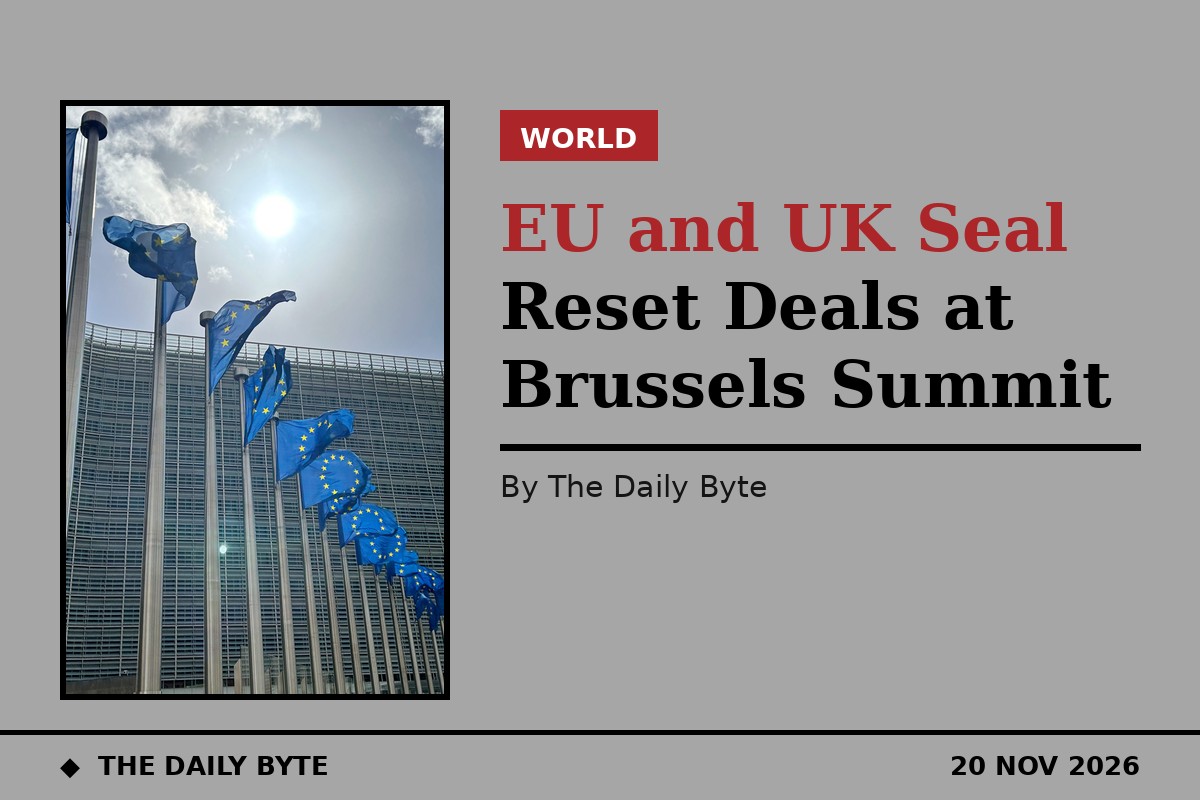
Britain and the European Union have agreed a package of deals on food trade, youth mobility and carbon markets at only their second summit since Brexit, in the most substantial reset of the relationship since the United Kingdom left the bloc.
European Council President António Costa, European Commission President Ursula von der Leyen and British Prime Minister Andy Burnham met in Brussels on Friday 20 November 2026 and signed off a joint statement covering the three agreements, alongside closer cooperation on defence and the United Kingdom's return to the Erasmus+ student exchange programme in 2027.
Burnham described the summit as a step towards undoing a decade of damage from the divorce, ten years after Britons voted to leave the EU. The war in Ukraine, and Britain's military strength, have drawn the two sides back together, with security and defence high on the agenda alongside trade.
What the three deals do
The first agreement covers food, animals and plants. It will remove export health certificates and "Not for EU" labels on goods moving between Britain and the EU, cutting red tape for British food exporters. Reuters reported the deal could deliver up to £5.1 billion a year in economic benefits.
The second creates a Youth Experience Scheme for people aged 18 to 31. Each year, up to 100,000 EU citizens will be able to live, work, study, volunteer or work as an au pair in the United Kingdom, and the same number of Britons will be able to do so in participating EU countries, for stays of up to three years. The scheme is expected to apply no later than 2028, with the first participants travelling by January 2030 at the latest.
The third links the British and EU emissions trading systems from March 2028, with mutual exemptions from carbon border charges. Reuters reported the linked market could be worth £3.8 billion a year.
Erasmus returns, but tuition fees unresolved
Von der Leyen confirmed that the United Kingdom will take part in Erasmus+ again from 2027, with the funding call for institutions having opened on 18 November. The youth scheme is separate from Erasmus+, which supports exchanges through schools, universities and other organisations.
One question remains open. The two sides have not agreed what EU students should pay to study at British universities, or what British students should pay in the EU. The joint statement gives them six months to negotiate a separate agreement on tuition fees, and the implementation of the three flagship deals is conditional on that negotiation concluding.
Defence, Gibraltar and what happens next
The leaders also agreed to keep implementing the EU-UK Security and Defence Partnership, and welcomed the signature and provisional application of the agreement on Gibraltar. Von der Leyen said the two sides were also launching a Digital Partnership, and the summit agreed a framework for British participation in EU civilian crisis management missions.
The first EU-UK summit was held on 19 May 2025. The agreements reached on Friday still need to be turned into legal texts and ratified, and most will not take effect until 2028, but the summit marks the clearest sign yet that both sides want a closer relationship than the one left behind by Brexit.