Europe Steel Recovery Delayed Until 2027 Despite Curbs
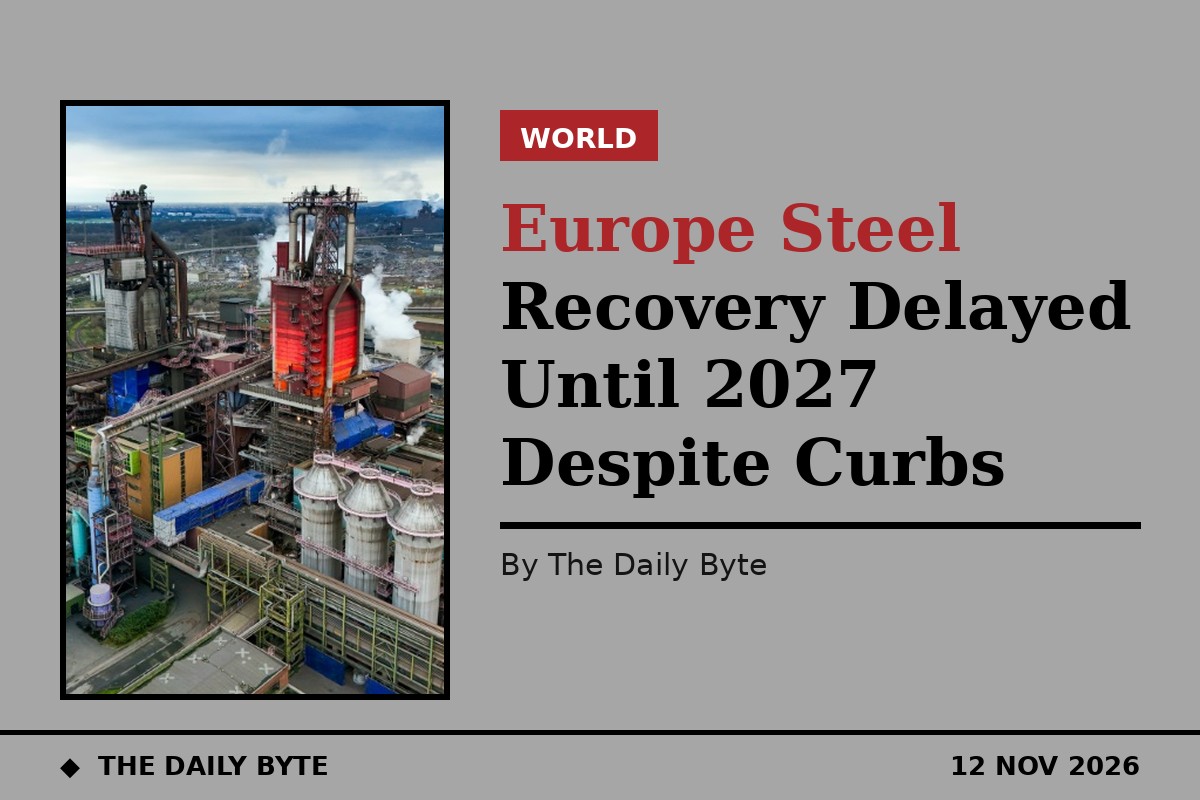
Europe’s steel industry faces a prolonged crisis, with a meaningful recovery now not expected until 2027 despite the European Union’s tough new limits on cheap imports.
Third-quarter results published on 6 November by Luxembourg-based Aperam and Finland’s Outokumpu showed deliveries still falling, and industry executives increasingly expect the wait for a rebound to stretch into next year, according to Reuters.
The EU introduced a strengthened steel protection framework on 1 July, capping duty-free imports at 18.3 million tonnes a year — 47 per cent below 2024 levels — and doubling the duty on imports above the quotas from 25 per cent to 50 per cent.
Curbs cannot create demand
But import restrictions can only reduce competition; they cannot generate orders. Weak demand from carmakers and appliance manufacturers, high inventories and elevated energy costs continue to weigh on producers.
The measures operate alongside the EU’s Carbon Border Adjustment Mechanism, whose definitive regime began in January 2026, pricing the carbon embedded in imports.
Costs rise for steel users
The protection comes at a price for the industries that buy steel. The European Commission projects a 3.25 per cent rise in average steel prices, while industry associations have estimated the measures could add €5 billion to €9 billion a year in tariff costs if imports stay at 2024 levels. Some buyers warn of increases of up to 30 per cent in certain categories.
Energy costs remain the deeper problem, with European producers paying far more for power and gas than rivals overseas — a disadvantage no import quota can fix. Sources: EU Today and Scrap Monster.


