European Gas Falls Below 82 Euros as Oil Slides
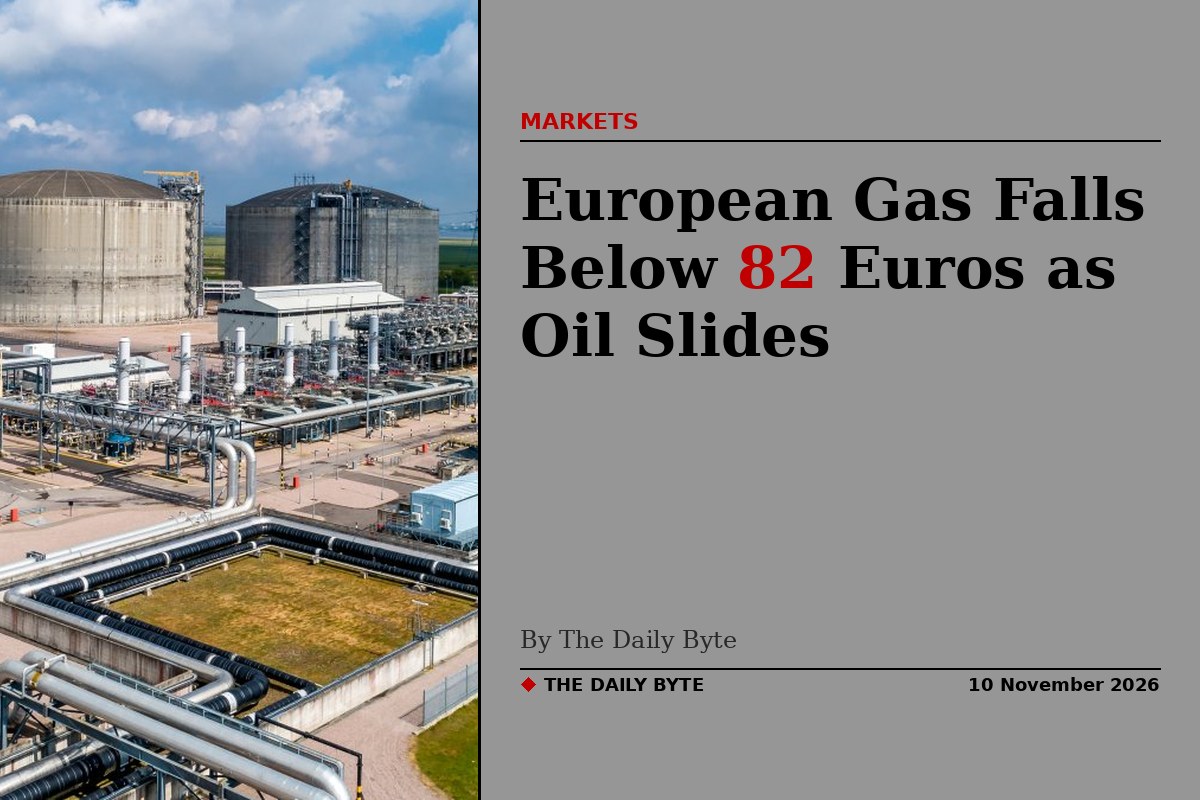
European natural gas prices fell sharply on Monday, tracking oil lower as hopes of a diplomatic end to the conflict between the United States and Iran eased fears of disruption to energy supplies.
Dutch TTF gas, the European benchmark, fell 3.8% to €82.33 per megawatt-hour during Monday's session, according to a market report, and was quoted at €80.10 in early trading on Tuesday.
The fall extends a steep slide for the benchmark. TTF averaged €103.56 per megawatt-hour on 1 November and €85.40 on 8 November, meaning the price has dropped by more than a fifth in nine days.
Oil slide sets the tone
The move followed oil sharply lower. Brent crude settled $5.75 lower on Monday, down 5.85%, at $92.57 a barrel, after US President Donald Trump said military action against Iran was not necessary, and it slipped further to $92.33 early on Tuesday. US West Texas Intermediate fell to $86.50 a barrel.
Energy markets have been driven for weeks by the risk of a wider war, attacks on shipping near the Strait of Hormuz and a blockade of Iranian crude exports. Trump's comments, and signs that talks to end the conflict are continuing, have stripped much of that fear premium out of prices.
European shares felt the shift on Monday. The pan-European Stoxx 600 rose 1.3%, while London's FTSE 100 added 1% to close at 10,782.87, helped by lower oil prices easing inflation worries.
From above €100 to near €80
TTF rose above €100 per megawatt-hour on 28 October, the first time since December 2022, as the escalation over Iran pushed energy prices higher. Before the war began in late February, the benchmark traded at about €32.
Even after the recent fall, gas remains more than twice that pre-war level, and Europe heads into winter with storage below the usual target. EU storage was about 75% full on 21 October, according to energy regulator ACER, against a rule requiring storage to reach 90% by 1 November.
What lower gas prices mean
Cheaper gas eases pressure on inflation and on household energy bills, and it was one of the factors behind Monday's rally in European shares. Lower energy costs also reduce the pressure on central banks to keep raising interest rates, with markets watching the European Central Bank's December meeting closely.
But the market remains sensitive to any setback in the diplomatic track. A fresh escalation could quickly restore the premium that has just been stripped out, while cold weather would test storage levels that are already below the seasonal norm.
Traders will now watch US inflation data due later on Tuesday, which could shape expectations for interest rates, and the pace of withdrawals from European storage as the winter heating season gets under way.