European Gas Prices Fall 17% From Peak as Storage Lags and Winter Supply Risks Persist
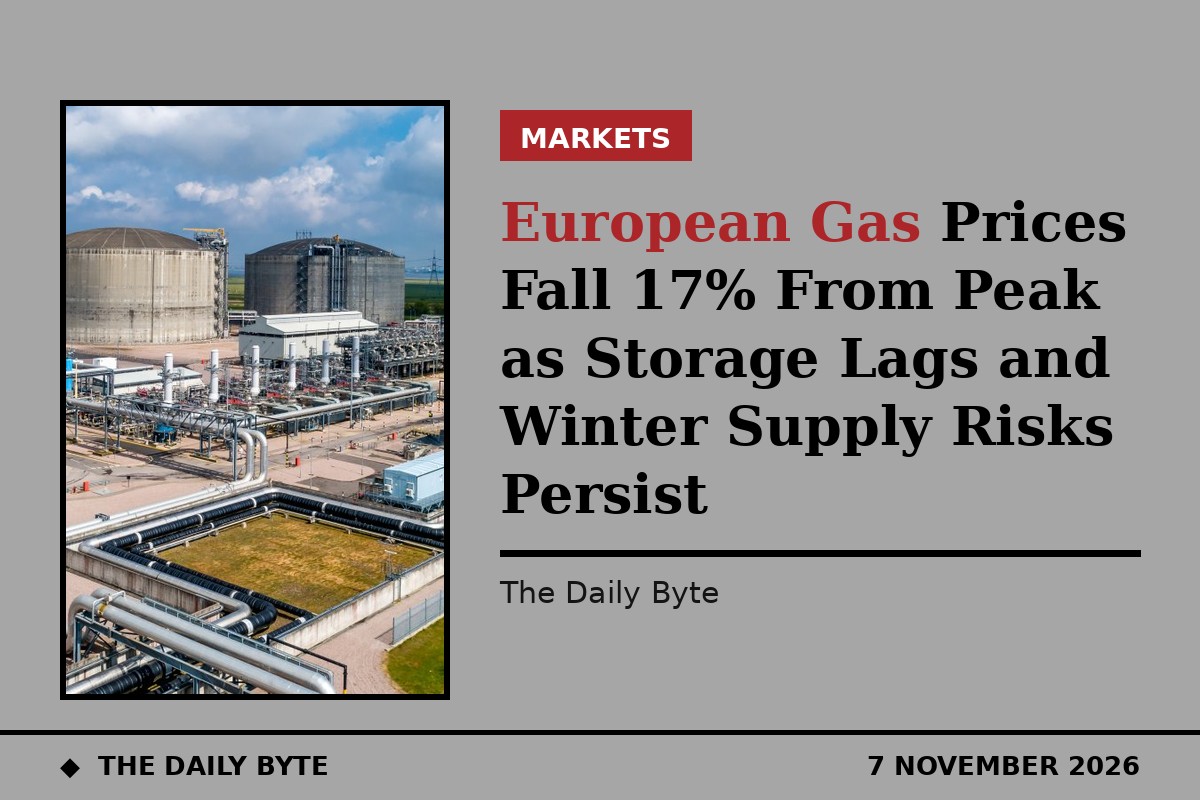
European natural gas prices have fallen about 17% from their late-October peak, but the region is heading into winter with storage well below normal levels and liquefied natural gas supplies still constrained.
The Dutch TTF front-month contract, Europe's benchmark, fell 2% to €86.36 a megawatt-hour in early trading on Thursday 5 November, its lowest in more than two weeks, Dow Jones Newswires reported. Prices had topped €100 a megawatt-hour at the end of October for the first time since 2022. Saxo Bank strategist Ole Hansen put the peak at about €104 and the retreat since at roughly 17%.
The fall mirrors oil, which also slid after the Democrats' midterm gains raised hopes Washington would press for a diplomatic end to the war on Iran rather than renewed strikes. A deal could reopen LNG flows through the Strait of Hormuz, but traders remain braced for either outcome, and another escalation could push the benchmark back above €100.
Storage well short of the norm
Lower prices do not mean more gas has reached European consumers. EU storage sites were only 74.3% full, against a five-year seasonal average of about 90%, and LNG imports ran at just 84% of their pre-war average in October, according to Kpler. Saxo estimates Europe faces an LNG shortfall equal to roughly 100 large carrier cargoes, and QatarEnergy has extended its force majeure on deliveries until at least the end of December 2026.
Underlying conditions remain tight, with Middle East LNG flows still constrained and storage facilities beginning to draw down as the heating season gets under way. Imports of Russian LNG are set to stop completely by 1 January, with remaining pipeline gas imports ending no later than 1 November.