European Parliament backs proxy voting for new mothers
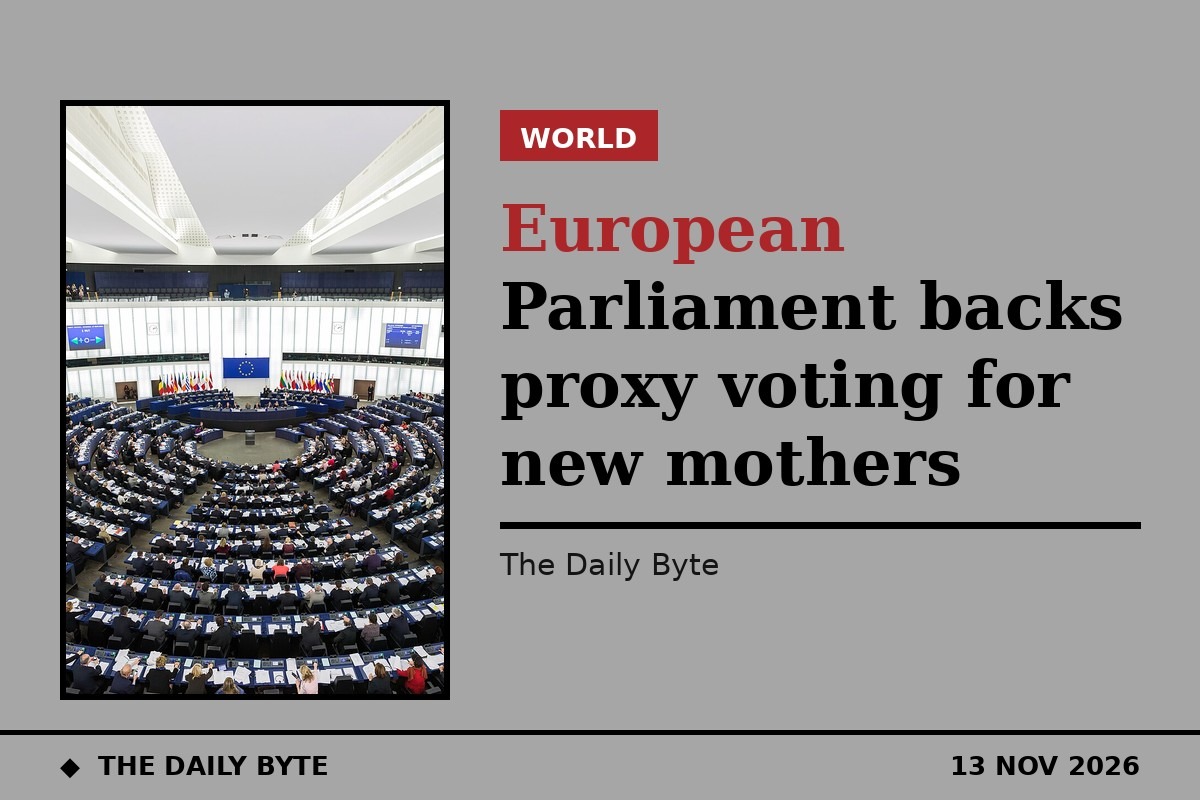
The European Parliament has approved proxy voting for pregnant MEPs and new mothers, in a move supporters say will stop women having to choose between motherhood and their democratic mandate.
Members voted by 578 in favour, 25 against and four abstentions on Thursday 12 November to approve the rules for proxy voting, according to Agence Europe. The change creates a temporary exception to the rule that MEPs must vote in person during plenary sessions in Strasbourg and Brussels.
Under the new rules, an MEP who is pregnant or has recently given birth will be able to ask a colleague to vote on her behalf. The arrangement is designed to make sure that voters in her constituency do not lose their voice in Parliament while she is away from the chamber around the birth of her child.
How proxy voting will work
A pregnant MEP will be able to delegate her vote from up to three months before her expected delivery date until six months after the birth of her child. The proxy must be another MEP, and the European Parliament says the delegating member should choose a colleague from her own political group.
The proxy vote will apply only in plenary sittings, and it will count when calculating the quorum and majorities. A proxy will be limited to one delegated vote, and the delegation can be revoked at any time. The Parliament has also made clear that the proxy will not be allowed to act for the delegating MEP in any other way, such as signing documents, lodging objections or moving procedural motions.
Published voting results will show which votes were cast by proxy, and the proxy vote will apply to all forms of voting in plenary, including secret ballots. The proxy and the delegating MEP may vote differently, and any disagreement expressed by the MEP who delegated her vote will not change the result of the ballot.
Why fathers are not covered
The new right applies only to mothers, and that limitation has proved contentious. Fathers in the Parliament will not be able to delegate their votes in the same way, even though the Parliament’s existing leave rules already cover both parents, with any MEP entitled to a justified absence from two months before the birth until four months afterwards.
Dutch Socialist MEP Lara Wolters, who steered the file through the chamber, said: “I wish we could be doing the same for young fathers, or those adopting children.”
Spanish Socialist MEP Juan Fernando López Aguilar, who drafted a parallel amendment to the European Electoral Act needed to change the in-person voting rule, told Euronews that members had wanted to extend the measure to male lawmakers but had to adopt a pragmatic approach. He said the process was extremely complex because it required the backing of all 27 EU member states as well as ratification by national parliaments, and that including fathers could have sunk the whole provision.
An amendment that would have covered fathers was rejected by MEPs in November 2025. Marieke Ehlers, a Dutch MEP with the Patriots for Europe group, told Euronews the amendment only dealt with mothers who were physically unable to cast their vote because they were about to give birth or had to nurse their newborn, and argued that the rule addressed the physical consequences of childbirth, which affect only women.
When the change takes effect
The proxy voting rules will not take effect immediately. They will apply once all member states have ratified the amended European Electoral Act through their national parliaments, and after the corresponding amendments to the Statute for Members of the European Parliament enter into force. So far, only ten countries have completed the ratification process.
The reform was initiated by European Parliament President Roberta Metsola in November 2025, with the aim of helping mothers take part in politics and improving gender equality. The Council agreed to amend the electoral law in March 2026, and the Parliament approved the reform in April 2026 before starting work on the detailed rules of procedure and the members’ statute.
Rapporteur Juan Fernando López Aguilar said: “This is about ensuring no woman has to choose between motherhood and exercising her democratic mandate, and that our citizens’ votes are not lost.”
Sources: Agence Europe and European Parliament