FBR Counts 400,000 Untaxed Vehicles in Ex-Tribal Areas
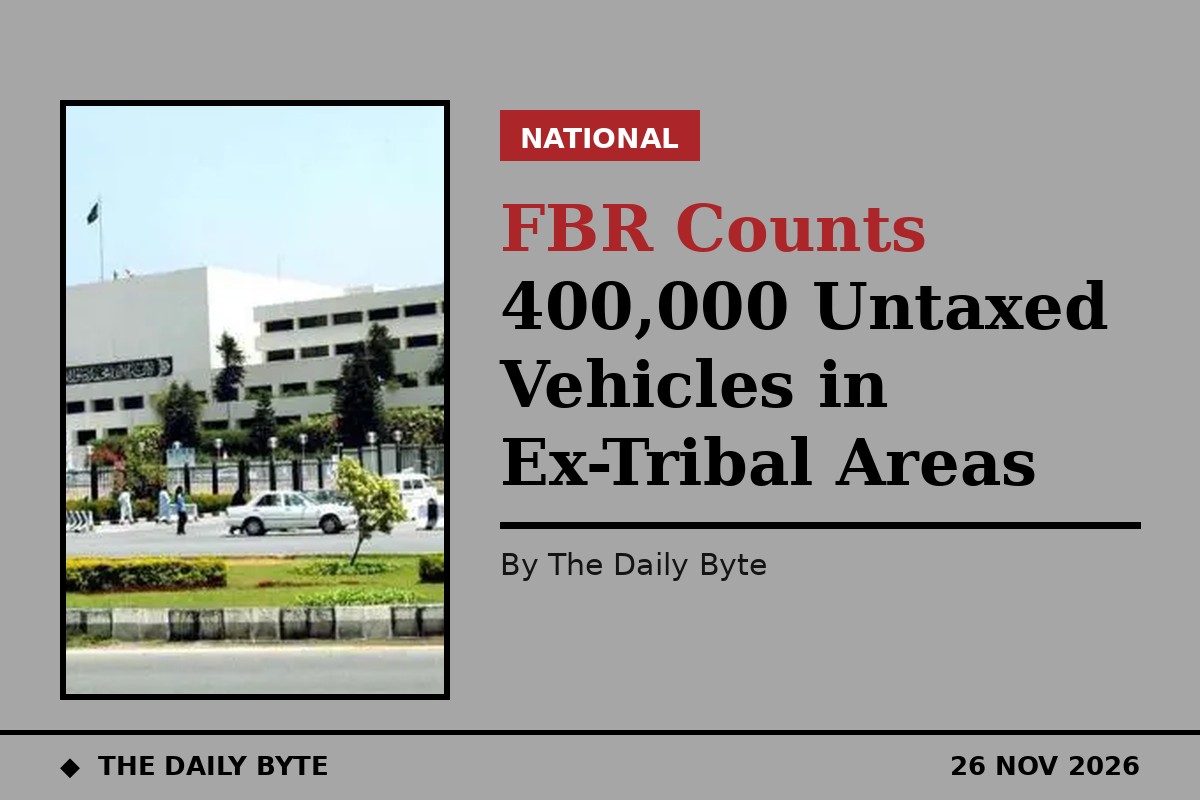
The Federal Board of Revenue has told a Senate committee that about 400,000 non-customs-paid vehicles are in circulation in Pakistan's former tribal areas, and only about 125,000 of them have been registered with the Excise Department.
The figures were presented to the Senate Standing Committee on Finance and Revenue at a meeting in Islamabad on Tuesday, 25 November, chaired by Senator Saleem Mandviwalla. The FBR said the vehicles are in the erstwhile Federally Administered Tribal Areas and Provincially Administered Tribal Areas, which were merged into Khyber Pakhtunkhwa in 2018.
Registration has stalled even though the five-year exemption period that followed the merger has expired. That leaves about 275,000 vehicles without registration, according to the FBR's own figures, and no agreed policy for bringing them into the tax and registration system.
Enforcement faces security threats
Officials told the committee that enforcement is difficult on the ground. Government officials face operational difficulties in some areas when they try to act against non-customs-paid vehicles, and customs officials and police personnel face serious security threats, including life-threatening attacks, during confiscation operations, the FBR said.
Senator Mandviwalla called for a practical and comprehensive solution. He directed the FBR to provide detailed information and to propose workable measures at the committee's next meeting, in consultation with the relevant stakeholders, and indicated that the matter could be taken up as a formal agenda item.
Customs corruption also examined
The same meeting also examined corruption inside the customs service. Committee members expressed concern that officials facing established allegations had received relatively light penalties, including censure and the withholding of annual increments, and asked why stronger punishments had not been imposed.
The FBR chairman pointed to limitations under the Civil Servants Act, 1973, particularly around disciplinary proceedings and major penalties, and suggested that the law might need to be reviewed and amended. Senator Mandviwalla directed the FBR to submit details of pending inquiries, along with expected completion timelines, at the next meeting.
The committee was also briefed on the consumption certificates case, in which tax exemptions for the former tribal areas were allegedly misused. A Grade-20 officer and a deputy director at the Regional Tax Office in Peshawar have been suspended, and a four-member fact-finding committee is investigating irregularities in the issuing of consumption quotas and exemption certificates. The committee was told that disciplinary proceedings inside the FBR had improved over the past two years.
Members also took up the Gerry's scandal at Karachi airport, in which goods were removed through fake goods declarations, resulting in the detection of Rs353 million in tax evasion. FBR officials told the committee that one officer had been demoted and a customs officer's annual increment withheld, and that cases had been registered against the company's employees, who were arrested. No FBR officials were found to be involved in that scandal, the committee was told.
The committee separately questioned the FBR about the timing of tax notices issued to parliamentarians ahead of elections. The chairman urged the tax authority to ensure that notices were served and cases decided well before scheduled elections to prevent unnecessary complications.
No policy on the non-customs-paid vehicles has been agreed yet. The committee will expect the FBR's detailed proposals at its next meeting, but no date for that meeting has been announced.