FCC proposes Cyber Trust Mark rules for smart devices
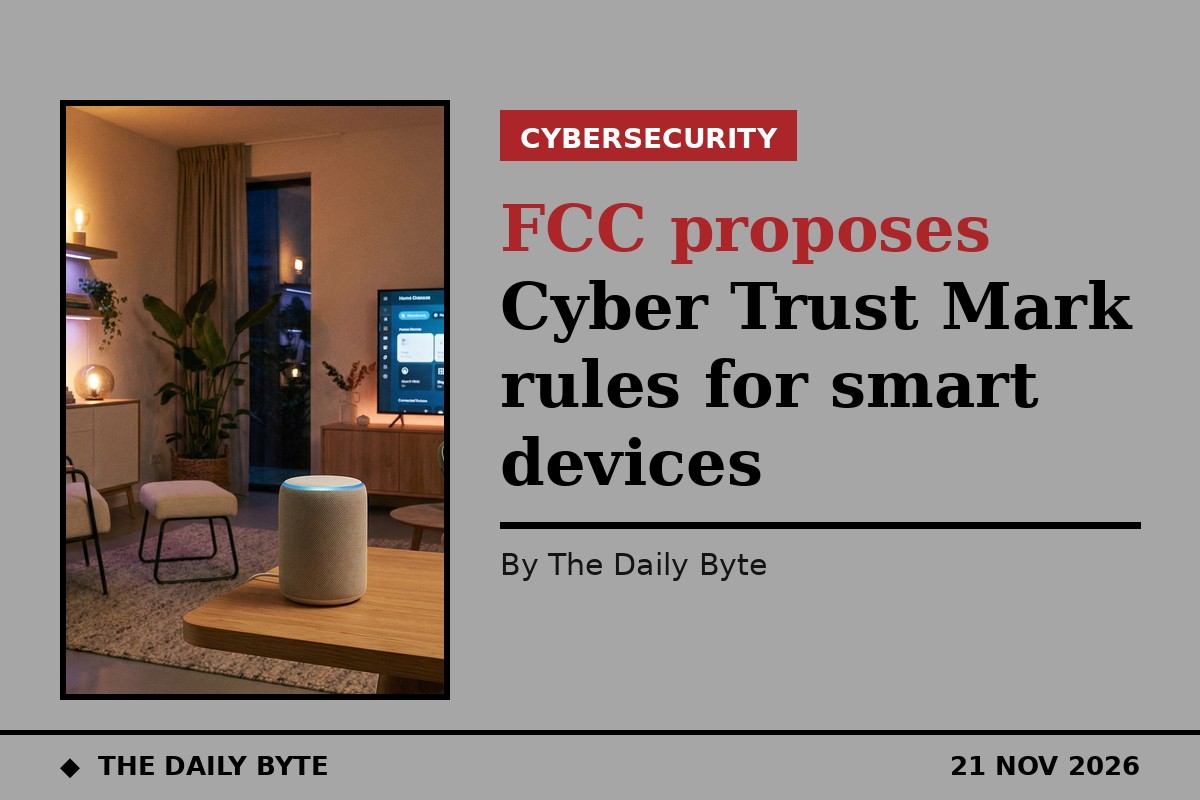
The Federal Communications Commission will on Monday propose the detailed rules for its US Cyber Trust Mark, a labelling scheme meant to tell shoppers how secure a smart device is before they buy it. The move is the clearest sign yet that the long-delayed programme is moving towards launch.
Cybersecurity Dive reported on 20 November that the commission's proposal will appear in a Federal Register notice scheduled for publication on Monday 23 November, with public comments open through 23 December. The scheme is designed to give buyers of internet-connected products more information about the devices' digital security features.
What the label would show
Products that pass tests run by government-accredited laboratories would be allowed to display the Cyber Trust Mark, a label carrying a QR code that points to security details about the product in a government registry. The online information has been described as a "cyber nutrition label" for connected devices.
The proposed rule covers the design and placement of the label, how product registry information is displayed, certification renewal, post-market surveillance, and procedures for complaints, noncompliant products, and programme administrators that withdraw or lose their authority.
Under the proposals, manufacturers would need to renew their certifications every three years, rather than the five-year period recommended by industry groups, and submit renewal applications at least 90 days before their certifications expire. The administrators that review applications and authorise use of the mark would have 90 days to complete their evaluations.
Checks after products reach the shops
The FCC is also proposing a system of "ad-hoc surveillance" to investigate potentially systemic weaknesses in connected devices after a major cyberattack involving hacked products. At the commission's direction, programme administrators would develop a testing plan, collect devices from vendors, test them and report back to the FCC. The proposal asks commenters whether administrators should be able to start such checks without instruction from the commission.
Certified products would face ongoing checks rather than a one-off test. Surveillance testing would be carried out by a recognised laboratory rather than the manufacturer's own lab, and products that no longer meet the requirements could lose their authorisation to display the mark.
A programme years in the making
The Cyber Trust Mark has been in development since 2023, and it gained initial approval in the final year of the Biden administration. It then hit a roadblock in January 2026, when the lead administrator withdrew over concerns about its ties to the Chinese government. In April, the FCC signalled renewed support by picking a new organisation to lead the effort, the ioXt Alliance, and on 27 October it issued a public notice seeking comment on the labelling and certification requirements.
Last month, FCC chair Brendan Carr tapped his Republican colleague Olivia Trusty to oversee the programme's rollout, working with the commission's homeland-security bureau, which will manage it. "Our goal is a program that is practical for manufacturers, credible to consumers, and effective in encouraging better security across the marketplace," Trusty said.
The programme is voluntary, and the FCC still has to finalise its requirements before it can become operational. Trusty has signalled that the mark could begin appearing on consumer products within a year. For now, shoppers still have no label to look for — but the rules that would create one are about to be published.