FDA Investigates Tumour Risk Linked to Novartis Gene Therapy Zolgensma
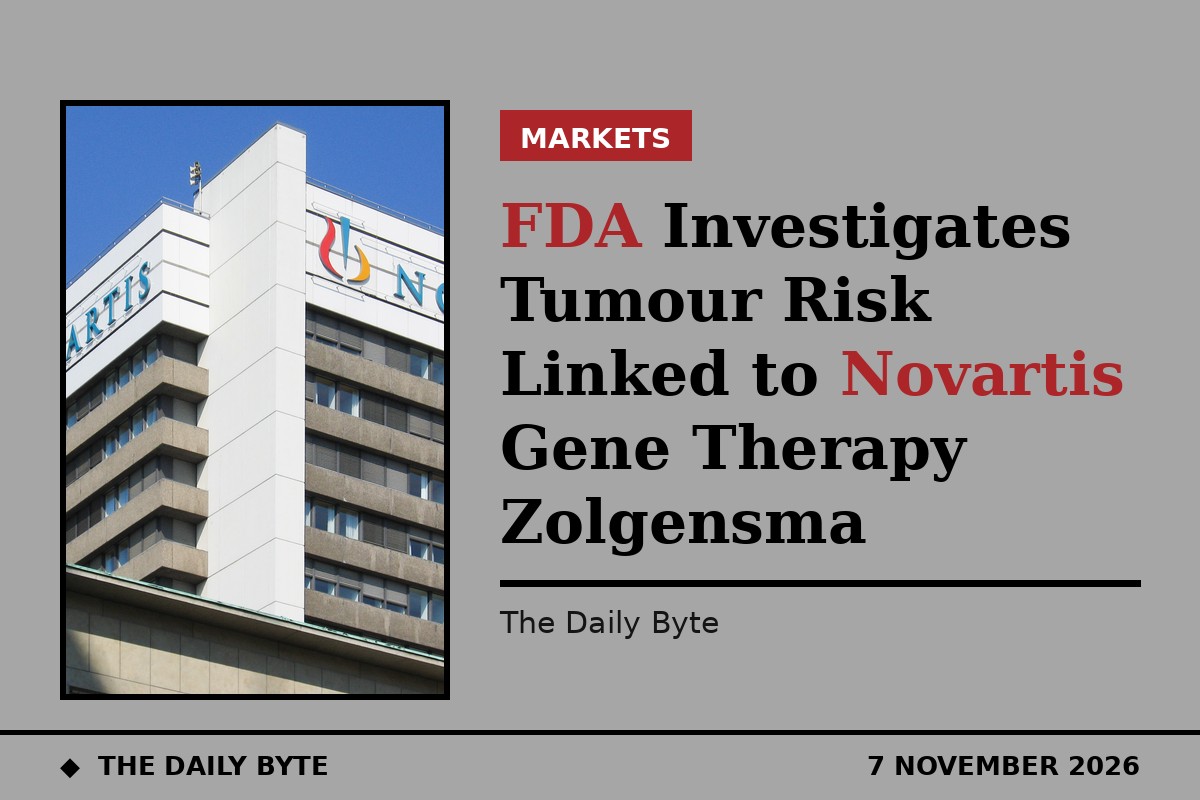
The US Food and Drug Administration is investigating a risk of tumour formation linked to Novartis gene therapy Zolgensma, after two cases in children linked the treatment to the tumours.
The FDA said on 6 November it had received postmarketing reports of malignancies in patients treated with Zolgensma, including confirmed cases of product-related insertional oncogenesis involving the GLI1 gene, which can cause cancer when abnormally activated. In two cases, molecular analysis showed DNA from the therapy's viral vector had integrated into the patients' own genomes. Three cases involved GLI1 tumours.
Novartis said it had received nine reports of tumours in patients treated with Zolgensma since its first US approval in May 2019. The one-time treatment, given to children under two with spinal muscular atrophy, has been given to more than 6,000 children, the company said.
Risk applies to both therapies
The FDA said the risk applies to both Novartis products using the same vector and construct: Zolgensma, given by intravenous infusion to children under two, and Itvisma, given by injection into the spinal fluid to patients aged two and older. No tumour cases have been reported after Itvisma so far. Reported tumours include growths of the central and peripheral nervous systems, spinal and paraspinal regions, and the kidney.
The FDA said the overall benefits of both treatments continue to outweigh their potential risks for their approved uses, but it was investigating the risk and weighing regulatory action. The current prescribing information describes the tumour risk from vector integration as only "theoretical", and the FDA said it was evaluating whether that wording and the long-term follow-up studies are adequate.
Novartis said it had notified health authorities in a timely and appropriate manner and that the risk is included in the prescribing information. Patient advocates had urged fuller disclosure.