Fed December Hike Odds Hit 100% After Hot Inflation
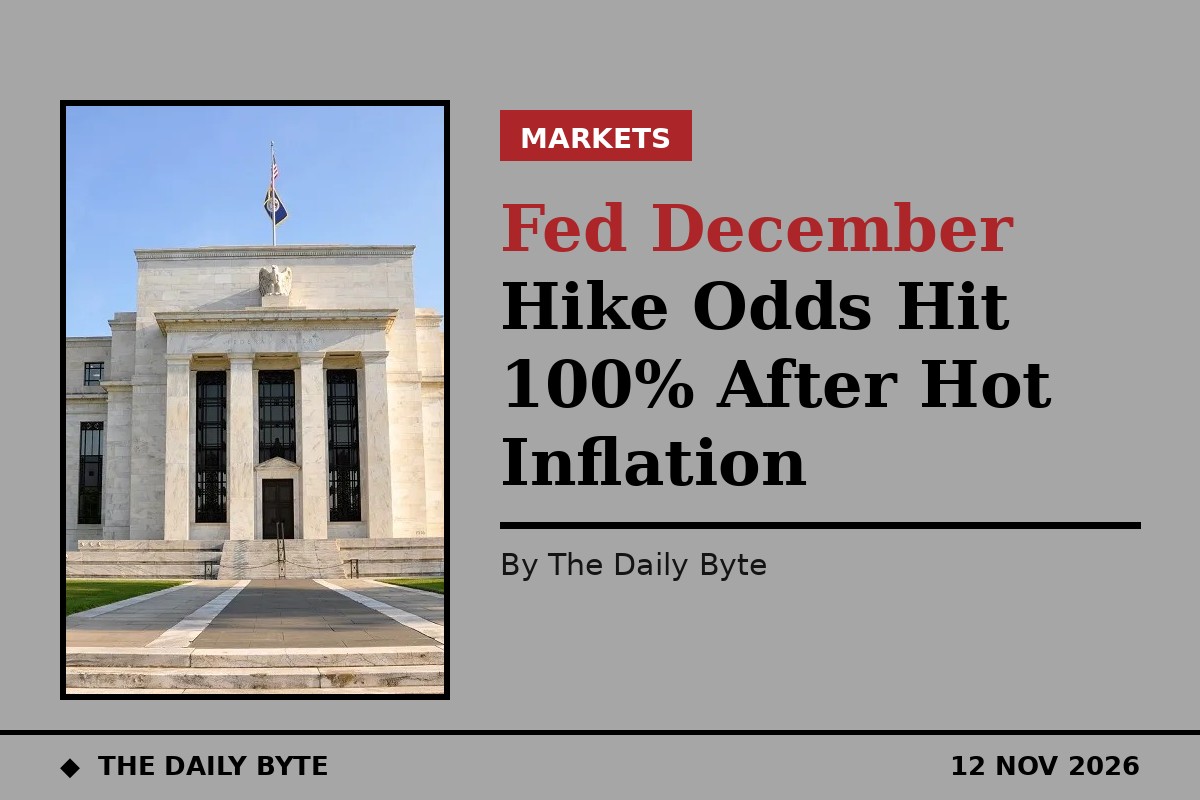
The US Federal Reserve will raise interest rates in December, according to every economist in a Reuters poll, and futures markets now put the chance of a move at 100 percent after October inflation came in hotter than expected. All 101 economists surveyed between 6 and 10 November forecast a quarter-point increase at the 8 to 9 December meeting, taking the federal funds rate to a range of 4.00 to 4.25 percent.
The central bank raised the rate in September but held it unchanged in October, leaving the current range at 3.75 to 4.00 percent. The December move, if it happens as forecast, would be the second increase in the current cycle. Around 55 percent of forecasters, 56 of the 101, expect December's move to mark the end of that cycle. A strong minority of 45, including more than half of the primary dealers surveyed, still see at least two more increases ahead, in line with market pricing. If the majority view proves correct, two rate rises would be the shortest Federal Reserve hiking campaign in more than a decade.
Hot inflation data moved the odds
October's consumer prices rose 0.4 percent from the previous month, above the 0.3 percent forecast by economists polled by Dow Jones. Core prices, which exclude volatile food and energy, climbed 0.3 percent from a month earlier, exceeding market expectations of 0.2 percent. Futures markets raised the probability of a rate increase at the December meeting to 100 percent from 84.0 percent a day earlier, according to the CME Group's FedWatch tool. The odds of a larger half-point increase rose to 9.8 percent from zero the previous day.
Federal Reserve Governor Christopher Waller, speaking at a conference in London on 10 November, said he was leaning towards supporting a quarter-point increase in December even if monthly inflation improved as he expected. Waller, seen as relatively dovish, added that if October core inflation came in near or above 0.3 percent, similar to the prior two months, stronger action might be warranted and the committee should then consider raising the benchmark rate by half a percentage point. Raising rates by only a quarter point could put the Fed's credibility at risk, he said, adding that he did not want to take that risk. The October figures, released after his speech, met the condition he had set for considering the larger move.
Waller also said the Fed was not planning sharp rises of 1.50 to 2.00 percentage points, but would need to reverse at least the three insurance cuts made last year, and that policy had not been as restrictive as he had thought. Dallas Federal Reserve Bank President Lorie Logan, one of the Fed's leading hawks, said at a conference in Houston the same day that the pace of increases could quicken. Given the current outlook, she said it was clear the committee should raise rates by at least two more quarter-point moves, and signalled that it could move faster this winter than it did this autumn. Richmond Fed President Tom Barkin struck a different note a day earlier, saying monetary policy should be moved only with care.
Inflation seen staying above target until 2028
The Reuters poll found little sign that the midterm elections had changed the inflation outlook. A majority of economists who answered an additional question, 29 of 37, said the risk to their medium-term inflation views had not changed since the elections, in which voters focused on the rising cost of living handed solid majorities in both houses of Congress to the Democratic Party. A strong jobs market, resilient growth and inflation stuck above the Fed's 2 percent target for nearly six years all point to further tightening, the poll found.
The Personal Consumption Expenditures Price Index, the Fed's preferred inflation gauge, will remain more than a percentage point above 2 percent over the coming quarters and will not return to target until at least 2028, the poll medians showed. It is expected to average 3.5 percent this year and 2.6 percent next year, slightly higher than forecast last month. The economy is expected to grow 2.2 percent this quarter after expanding at a 3.4 percent annualised pace in the third quarter, powered largely by investment in artificial intelligence. On an annual basis, growth is forecast at 2.4 percent this year and 2.2 percent in 2027, slight upgrades from last month's forecasts.
A majority of economists, 27 of 41, said their view on AI capital spending had not changed since the midterm elections. Societe Generale's Jan Groen said he did not expect a sudden hit to AI-related business investment next year, although higher rates should slow it, with more of the buildout financed through corporate bonds. Sources: SRN News and Seoul Economic Daily.