UK Economy Grew 0.7% in Third Quarter, ONS Says
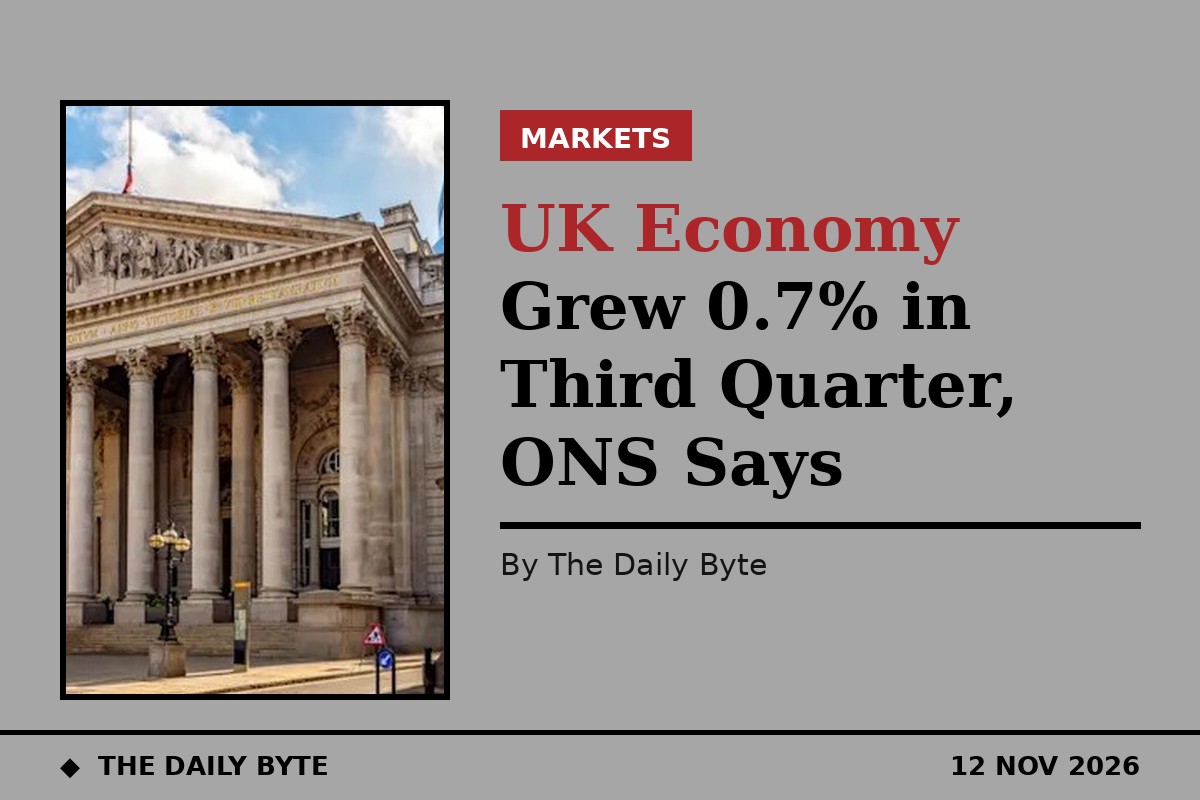
The UK economy grew by 0.7% in the third quarter of 2026, official figures showed on Thursday, matching forecasts and quickening from 0.5% in the second quarter.
The Office for National Statistics said real gross domestic product rose 0.7% in the three months to September, in line with the market consensus and with the Bank of England's November projection. Compared with the same quarter a year earlier, the economy grew by 1.9%, up from 1.4% in the second quarter. Real GDP per head rose 0.7% on the quarter and was 1.7% higher than a year earlier.
September growth of 0.2%
The monthly figures published alongside the quarterly estimate showed output grew by 0.2% in September, after no growth in August and growth of 0.4% in July. August was revised down from the 0.1% increase first reported, while July was left unrevised. The ONS cautioned that early estimates of GDP are subject to revision.
Economists had pointed to spending on artificial intelligence and defence as a support for growth in the quarter, helping to offset pressure on households from the cost of living. The Bank of England's own survey-based model, however, puts the economy's underlying momentum at only 0.2% for the quarter, half a point below the headline figure, a gap that suggests the official number may flatter the true pace of activity.
What the Bank of England will make of it
The figures land a week after the Bank of England raised Bank Rate to 4% on 5 November, by a vote of eight to one, its first increase since August 2023. The Bank expects inflation, which reached 3.5% in September, to climb to around 5% by the middle of next year, and several policymakers have signalled that further rises may be needed.
Deputy Governor Clare Lombardelli said this week that she would not rule out another increase in December, while Governor Andrew Bailey has suggested the Bank might need to raise rates further to bring inflation back to target. A stronger-than-expected growth reading would have endorsed that hawkish case; a figure in line with forecasts leaves the December decision finely balanced, with the Bank's next meeting due on 17 December.
A cooler final quarter?
There are already signs that the pace may not last. Sanjay Raja, chief UK economist at Deutsche Bank, cautioned before the release that growth is set to slow over the final quarter of 2026 as higher inflation and interest rates begin to weigh. Looking ahead, he said, the UK growth story is expected to have cooled a bit.
The International Monetary Fund has nevertheless raised its projection for UK growth in 2026 to 1.3%, from 1% previously, after a run of figures that has proved more resilient than many forecasters expected. Sterling was trading at about $1.33 before the figures were released, with the pound caught between a stronger dollar and the prospect of further Bank of England tightening.
With the third-quarter figure matching forecasts, attention now turns to the final three months of the year and to whether the economy can sustain its momentum into 2027.