Five EU States Start Rwanda Return Hub Talks, Eye 2027 Deportations
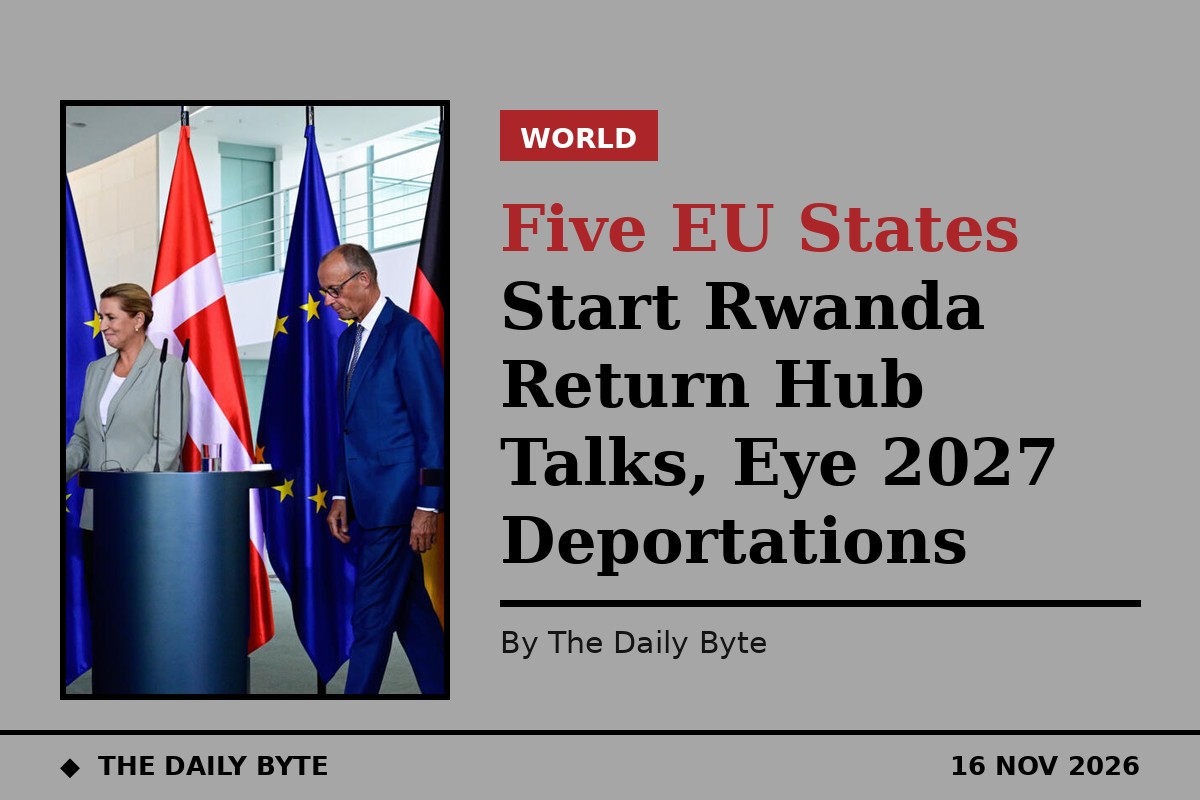
Five European Union countries have begun formal talks with Rwanda on setting up a migrant deportation hub there, the Austrian government said on Monday, in the first concrete step towards sending rejected asylum seekers to a centre outside Europe.
Austria, Germany, the Netherlands, Denmark and Greece are immediately starting negotiations with Rwanda under a new European Union framework, according to a statement issued in Vienna. The five countries said the talks should move quickly so that the first deportations of rejected asylum seekers who cannot be sent back to their home countries can take place in 2027.
The announcement came at the start of a press conference in Vienna by Austrian Chancellor Christian Stocker and his Danish counterpart, Mette Frederiksen. Rwanda had confirmed in August that it had begun preliminary discussions with several European states, and it sent a delegation to a migration conference in Vienna, where the agreement was unveiled.
The five countries, working together under the informal name the Group of Implementers, said in September that they were working towards a deal with a non-EU country to host so-called return hubs, as part of a broader European push to increase deportations and curb irregular migration.
Only people with final return decisions
The scheme differs from Britain's abandoned Rwanda deportation plan in that it would only apply to migrants who have exhausted all legal avenues to remain in the European Union, rather than people whose asylum claims are still being processed. A return hub would hold people whose claims have been finally rejected but who cannot be returned to their countries of origin, while European governments arrange their removal.
The plan became legally possible under the EU's new Returns Regulation, which entered into force on 16 October 2026. The regulation replaces the 2008 Return Directive and allows member states to transfer people subject to return decisions to a third country with which they have an agreement, even where the person has no prior connection to that country. Unaccompanied minors are excluded, and agreements must set out transfer procedures, conditions of stay and independent monitoring.
Greece's migration minister, Thanos Plevris, has described the planned facilities as "open" rather than closed centres, and the governments involved say responsibility for the people transferred would remain with the participating EU states. Earlier reporting suggested the pilot could involve roughly 100 people, with each participating state sending about 20 rejected asylum seekers.
Critics raise human rights concerns
The announcement is the culmination of an EU push to boost deportations launched in 2024, on the back of souring public opinion on migration across the bloc. But rights groups have warned that return hubs carry serious risks, including arbitrary detention, inadequate legal assistance, poor medical care and indirect refoulement, the return of people to places where they face persecution or serious harm.
The United Nations human rights office has warned about the risks, and the Council of Europe, a pan-European human rights body, raised concerns in July. The head of the Dutch rights group Vluchtelingenwerk has said independent human rights monitoring is "virtually impossible" in Rwanda, and the Dutch immigration service does not classify Rwanda as a safe third country.
Britain's earlier attempt to send asylum seekers to Rwanda collapsed in 2024 after the UK Supreme Court found substantial grounds to believe people transferred there could face a real risk of refoulement. The British government spent 715 million pounds on the policy, while only four people voluntarily relocated. Italy has also run into difficulties with its agreement to process migrants in Albania, after Italian courts blocked early transfers.
Supporters of the new plan argue the model is narrower, because it covers only people with final return decisions, but critics say the same questions about safety, legal status and accountability remain unanswered. Austria's Interior Minister, Gerhard Karner, has pushed hard for speed, saying the government hoped to present concrete results by the end of this year and to begin sending people to a return centre outside Europe in 2027.