Fragrance Giants Fined £85m Over Price Collusion
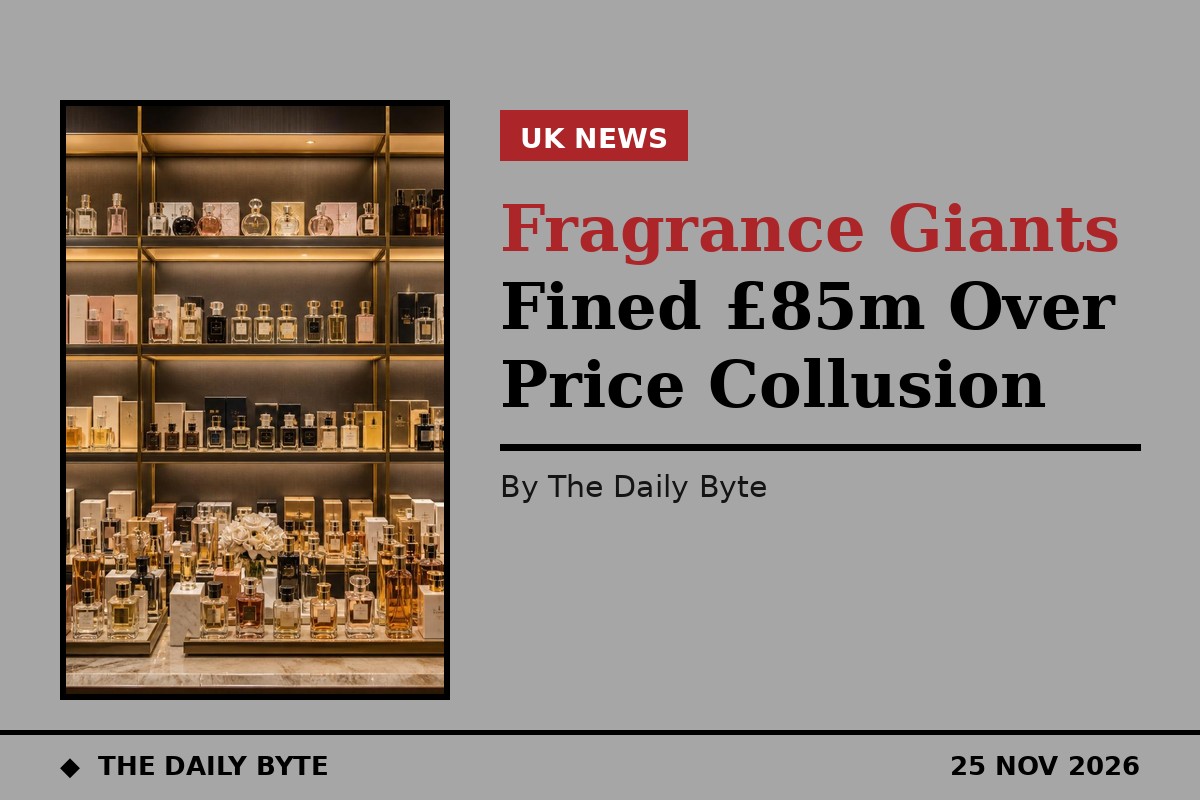
Three of the world's biggest fragrance suppliers have been fined a total of £85 million by the UK's competition watchdog for illegally coordinating their prices and commercial strategies. Firmenich, Givaudan and International Flavors & Fragrances (IFF) all admitted breaking competition law, the Competition and Markets Authority (CMA) said on Tuesday 25 November.
The companies supply the scents used in branded everyday products found in homes across the UK, including laundry detergent, washing-up liquid, cleaning products and shampoo, as well as fine fragrances used in popular perfumes and colognes. The CMA said their conduct risked leaving business customers paying more for key ingredients, with the extra cost potentially feeding through to the prices shoppers pay.
What the companies did
The CMA found that the three suppliers coordinated their pricing and commercial strategies when dealing with a major customer, the consumer goods group Unilever. That coordination included sharing sensitive information in order to refuse commercial requests from Unilever, including requests for price decreases. The companies also agreed not to recruit staff from each other's teams working on the Unilever account, an arrangement the CMA said reduced the risk of disruption to their teams and reinforced the coordination.
Separately, Givaudan and IFF exchanged commercially sensitive information and coordinated the level and timing of their general price increases across their fragrance businesses. The CMA said the firms discussed proposed price changes and how to respond to commercial negotiations through WhatsApp messages, telephone calls and other communications, rather than deciding their approaches independently. Some of those discussions took place at in-person meetings in London which the regulator described as "beer and curry" meetings.
How the investigation unfolded
During its investigation the CMA carried out unannounced inspections at the companies' premises, gathered documents and information, and interviewed witnesses. All three companies approached the CMA for leniency and were granted it before settling with the regulator. That cooperation reduced IFF's fine by 65 per cent and the fines for Givaudan and Firmenich by 40 per cent, and each company also received a further 20 per cent reduction for settling. Because they settled, the companies cannot appeal the decision.
The penalties imposed were £39,960,000 for Givaudan, covering two infringements; £24,570,000 for IFF, also covering two infringements; and £20,640,000 for Firmenich, covering one infringement. The CMA said the case was brought under the Competition Act 1998, which bans agreements and concerted practices that prevent, restrict or distort competition within the UK.
Why it matters for shoppers
The CMA's executive director of competition enforcement, Juliette Enser, said suppliers must set their prices and commercial strategies independently of each other, and warned that exchanging sensitive information with competitors can weaken competition and leave business customers facing higher costs, with possible knock-on effects for consumers buying the final product. She said the fines should be a clear warning to all businesses that competitors must compete, and not coordinate behind closed doors.
The watchdog also worked closely with international counterparts during the investigation, including the Swiss Competition Commission and the US Department of Justice. The European Commission launched a parallel investigation alongside the CMA and issued its own decision on the same day, imposing fines of 471.9 million euros for breaches of EU law.