France Protests: 1.6m March as PM Calls Wage Talks
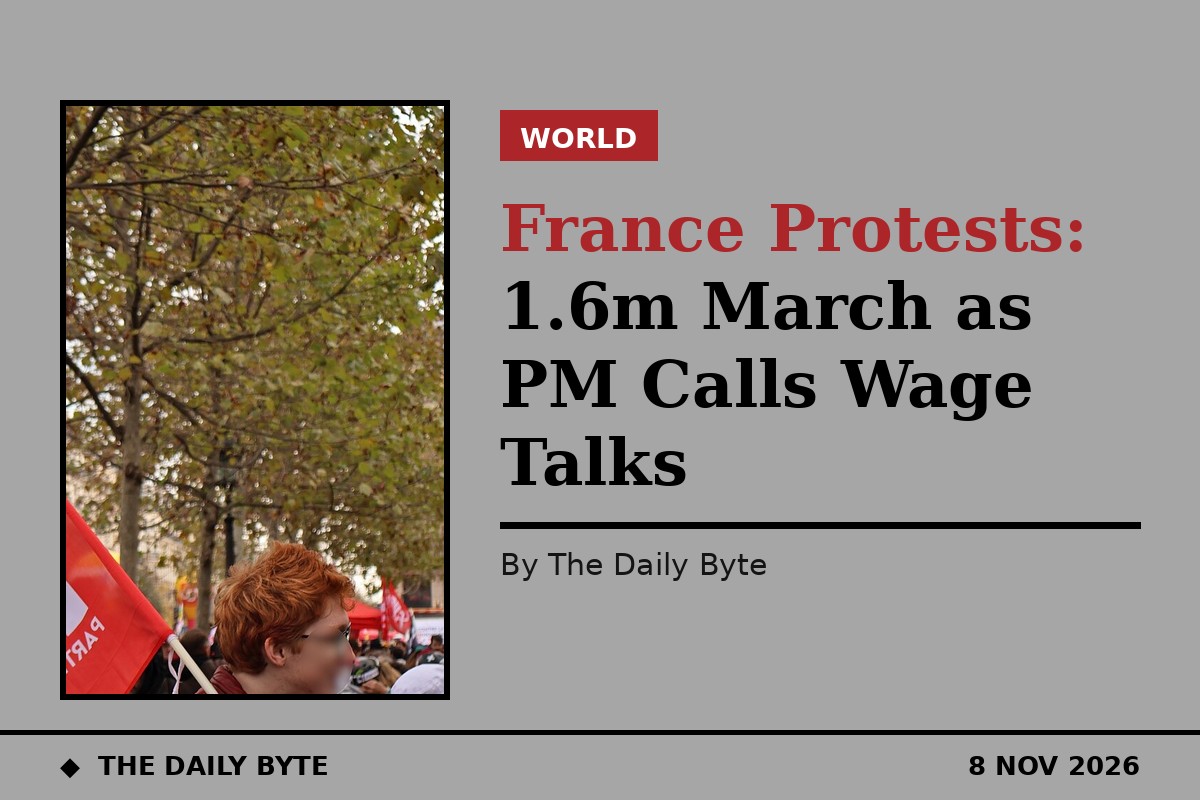
France saw its biggest day of protests this autumn on Thursday, 5 November, as hundreds of thousands of people marched in cities across the country over wages, the cost of living and cuts to public services. The Interior Ministry counted 575,000 demonstrators nationwide, while the CGT union, one of the organisers, put the figure at 1.6 million.
The day brought together workers, students and pensioners in 193 marches, according to Le Monde. In Paris, the ministry counted 55,000 people and the CGT counted 350,000. The mobilisation was called by the main union confederations — the CGT, CFDT, Force Ouvrière, UNSA and FSU — alongside student organisations.
Demonstrators demanded higher pay and pensions and more funding for schools, hospitals and other public services, arguing that the cost of food, energy, housing and transport has risen faster than wages. The CGT is seeking a 10 percent rise in the national minimum wage, while the CFDT wants an additional 100 euros a month in take-home pay.
The protests follow weeks of unrest that began in September with students demonstrating over school conditions, and that turned violent on 17 October, when marches in Paris were marred by looting and clashes with police. The 5 November turnout passed the ministry's count for 17 October.
Prime Minister Sébastien Lecornu responded by calling a social conference with unions and employers for Monday, 9 November, devoted to wages and purchasing power. Labour Minister Jean-Pierre Farandou was instructed to complete preliminary consultations by Sunday, 8 November. He has said a minimum-wage increase is open for discussion but warned the government must weigh its effect on employment.