Free School Meals: Who Qualifies and How to Apply
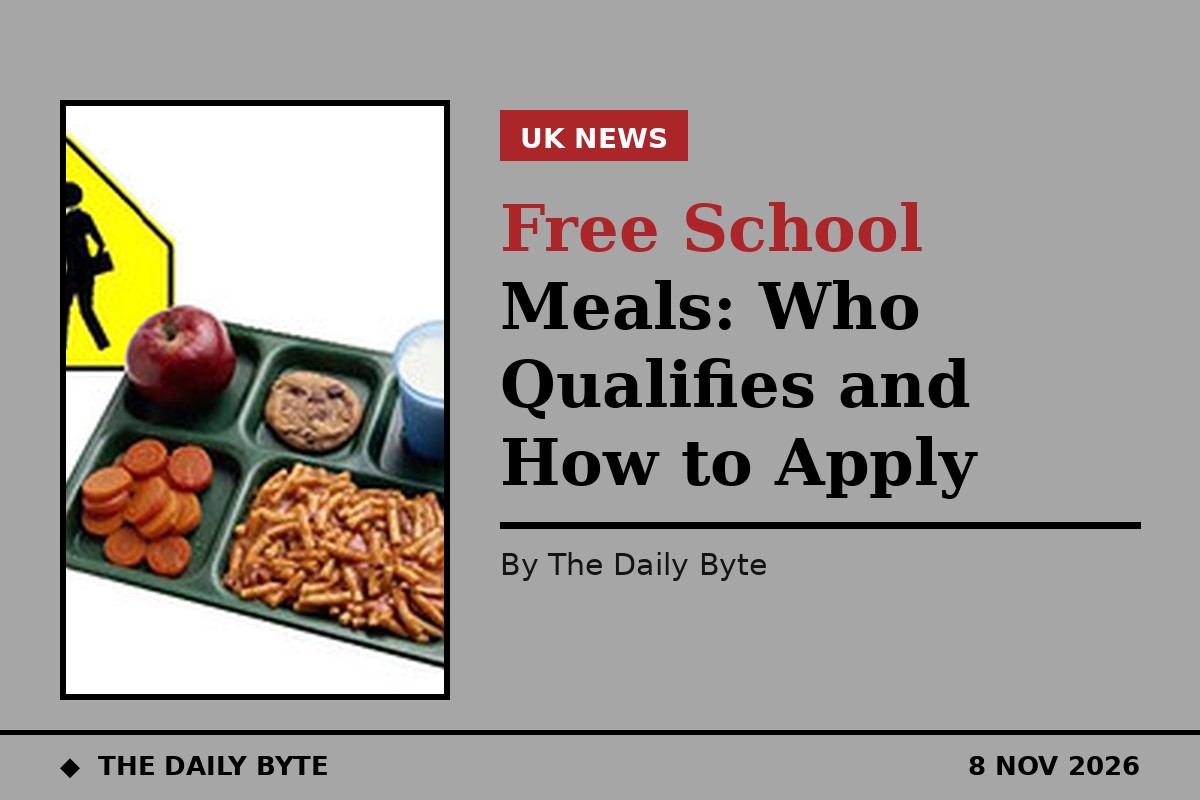
A free school meal is exactly what it sounds like: a hot, nutritious lunch at school, paid for by the state, at no cost to the family. For a household watching every pound, it is one meal a day that does not have to be found from the weekly budget. For a child, it is the difference between sitting through afternoon lessons hungry and being able to concentrate. And in England, the rules changed in a big way at the start of the 2026 to 2027 school year, so families who did not qualify before may qualify now. This guide explains who can get free school meals in England, what changed in September 2026, how the rest of the UK differs, and how to apply.
Two different kinds of free school meal. The first thing to understand is that England has two separate routes to a free lunch, and people often mix them up. The first is universal infant free school meals. Every child in reception class, year 1 and year 2 at a government-funded school gets a free school meal, whatever the family earns. No application is needed for the meal itself, and no benefit claim is involved. The second route is benefits-related free school meals. These are available to older children, and to younger children beyond the infant years, when the family receives one of a list of qualifying benefits. It is the benefits-related route that has the eligibility rules, the application form, and the September 2026 change described below.
Who qualifies for benefits-related free school meals? According to GOV.UK, your child may be able to get free school meals if you receive any of the following: Universal Credit; income-related Employment and Support Allowance; support under Part VI of the Immigration and Asylum Act 1999; or the guaranteed element of Pension Credit. Children who receive these benefits directly, instead of through a parent or guardian, can also qualify. Your child may also qualify if you receive one of these benefits and your child is both younger than the compulsory age for starting school and in full-time education. Other benefits can also bring eligibility, including Income Support, income-based Jobseeker's Allowance and Child Tax Credit below a set income where you do not also receive Working Tax Credit. The full list is on the GOV.UK page, and it is the official list that counts.
The Universal Credit income limit — and what changed in September 2026. For many years, the Universal Credit route came with an earnings test. If you applied on or after 1 April 2018, your household income had to be £7,400 a year or less, after tax and not counting any benefits you receive. That threshold kept a large number of working families on Universal Credit outside the scheme: earning a little more than £7,400 a year was enough to lose the meals. From the start of academic year 2026 to 2027, that changed. GOV.UK now states plainly that your child will qualify for free school meals if you get Universal Credit, regardless of household income. The earnings test has gone for Universal Credit households in England. The government estimates the change will extend eligibility to around 500,000 more children. Because the new school year began in September 2026, the wider rule is already in force at the time of writing, and families who were turned down before on earnings grounds can apply again.
Why registering still matters, even for infants. If your child is in reception, year 1 or year 2, the meal is already free, so you might wonder whether there is any point in applying. There is, and it is worth real money to the school. GOV.UK advises parents to tell their local authority if they also receive any of the qualifying benefits, because the school could get extra funding if they do. That funding is called pupil premium in England, and it is worth over a thousand pounds per pupil. Schools use it to support disadvantaged children directly, for example with extra tuition, trips or equipment. Registering for free school meals is therefore not only about lunch: it is the trigger that brings the extra funding into your child's school, even when the meal itself would have been free anyway.
How to apply in England. There is no single national application form for free school meals in England. You apply through your local authority, and the GOV.UK page is the starting point. Go to the GOV.UK page called Apply for free school meals and enter your postcode. The service sends you to your own council's website, where you complete the application. Before you start, it helps to have the following ready: your National Insurance number; details of the benefit you receive, such as a recent award letter or statement; your child's full name, date of birth and school; and your Universal Credit earnings figure from your most recent assessment period, if that applies. The school or council checks your details against the Department for Education's eligibility checking service. Most local authorities respond within a few weeks, and some backdate the award. There is no fee, and no private company needs to be paid to apply on your behalf.
Families with no recourse to public funds. If you do not qualify for most benefits — sometimes described as having no recourse to public funds — your child may still be eligible for free school meals. GOV.UK advises these families to ask the child's school or local authority directly whether they are eligible, rather than assuming the answer is no. The rules for this group are set out in separate Department for Education guidance, and schools and councils can advise on the family's individual circumstances.
What about Scotland, Wales and Northern Ireland? Free school meals are a devolved matter, and the rules are not the same everywhere in the UK. In Scotland, every child in primary 1 to primary 5 gets a free meal, with primary 6 and 7 covered if the family receives a qualifying benefit such as the Scottish Child Payment or Universal Credit within an earnings limit. In Wales, every primary school pupil now gets a free meal, and from September 2026 years 7 and 8 also qualify on Universal Credit alone, with no income threshold, with further year groups to follow. In Northern Ireland there is no universal scheme, and the Universal Credit household earnings limit is £15,900 a year for the 2026/27 school year. If you live outside England, check your devolved government's website or your local council before applying, because thresholds and rollout dates change.
School holidays and extra help. Free school meals only cover term-time school-day lunches, so many families feel the gap most sharply during the holidays, when the cost of feeding children at home falls entirely on the household budget. Help during the holidays varies by area. In England, many councils and schools run holiday provision for eligible families through the government-funded Holiday Activities and Food programme, and some areas provide supermarket vouchers during half term and the summer holidays, funded through local Household Support Fund schemes. Scotland typically pays holiday support directly into the same account used for other school grants. Your council's website or your child's school can tell you what is available in your area.
Common questions. Does claiming Universal Credit mean your child is automatically put on the free school meals register? No. A parent, carer or another responsible adult must make a claim, and the school or local authority must verify it. Assuming the change happens automatically is the most common reason children miss out. Can eligibility change? Yes. Eligibility is now rechecked every year, so a family should respond to the annual recheck and re-apply if their circumstances change. Is it worth applying if you are not sure you qualify? Yes. Applying costs nothing, councils check eligibility for you, and registering can unlock pupil premium funding for the school even where the meal is already free. And if your child moves school, tell the new school and your council so the award follows them.
The bottom line. In England, every infant gets a free lunch, and since September 2026 every child in a household receiving Universal Credit qualifies for a free school meal, whatever the household earns. The old £7,400 earnings test no longer stands in the way. If you receive Universal Credit, income-related Employment and Support Allowance, asylum support, or the guaranteed element of Pension Credit, check your eligibility and apply through your local authority. The GOV.UK page is the official starting point, and rules and thresholds can change, so the official page always wins over any guide, including this one. A single application can mean a hot lunch every school day for your child, and extra funding for their school.