Gandhara Dialogue Ends With Buddhist Visa Proposals
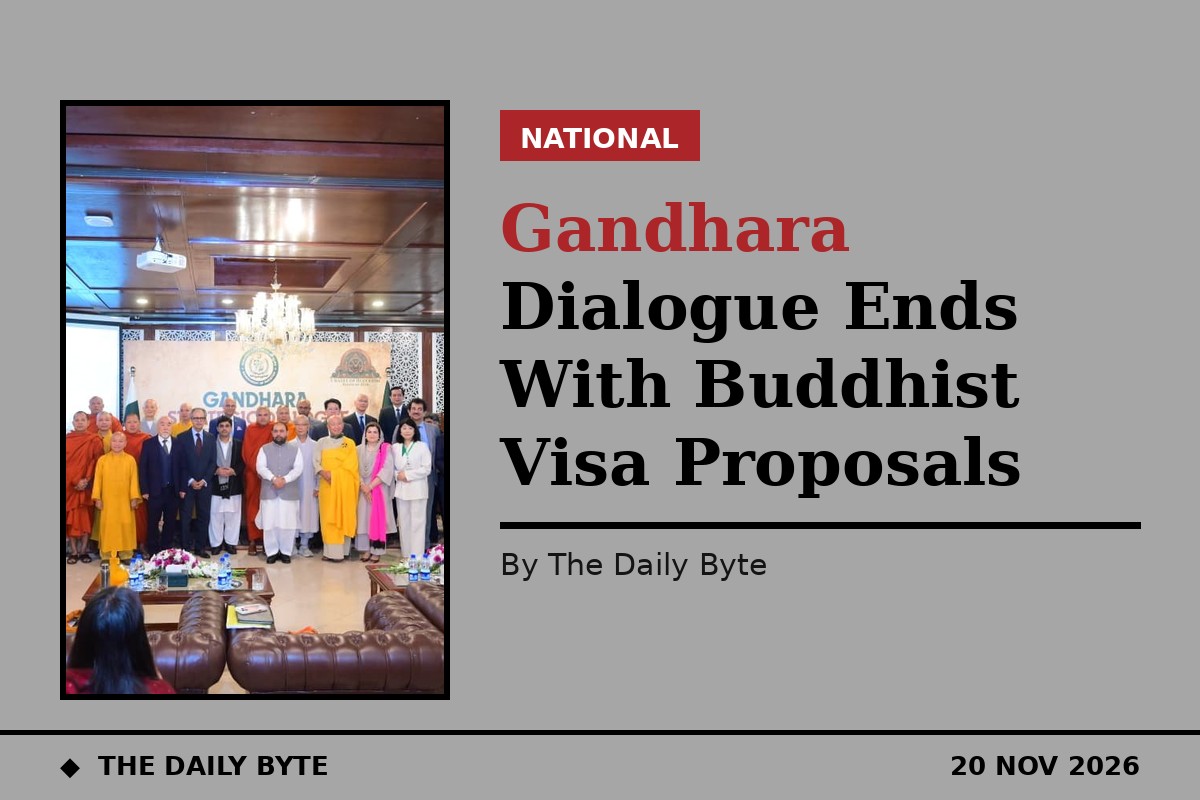
Buddhist monastics and scholars from eight nations have offered recommendations for strengthening Pakistan's Gandhara Strategy, calling for better infrastructure, meditation halls and easier access for pilgrims, as the four-day Gandhara Strategic Dialogue 2026 concluded in Islamabad on Friday, 20 November.
The recommendations were shared during the concluding session of the dialogue, held at the Ministry of National Heritage and Culture Division. The dialogue, held under the theme "Towards a Shared Future", brought together senior Buddhist monastics from Thailand, Laos, Vietnam, Japan, Cambodia, Sri Lanka, the Republic of Korea and Bangladesh, along with ministers, parliamentarians, diplomats and heritage experts.
The visiting delegates stressed that developing Gandhara as a sustainable religious and cultural destination required improved transportation, visitor facilities, meditation halls and better arrangements for Buddhist pilgrims. They emphasised that religious pilgrims had distinct requirements from ordinary tourists, which should be considered in planning infrastructure and pilgrimage facilities.
What the monastics asked for
The participants highlighted the importance of involving local communities in heritage preservation, saying they should not only benefit economically from heritage-related activities but also understand the cultural and spiritual significance of historical sites and take pride in their legacy. They also suggested exploring ecological restoration of selected Gandhara areas to reflect aspects of their historical natural environment.
Calling for stronger international engagement, the monastics emphasised diplomatic facilitation and closer connections with Buddhist communities, particularly in Laos and Bangladesh. They observed that Pakistan's Gandhara heritage offered significant opportunities to strengthen spiritual and cultural ties across South Asia, East Asia, the Himalayan region and Europe.
A monk from Thailand shared that he had dreamed of visiting Pakistan for nearly two decades, adding that his experience had given him a much more positive impression of the country than the limited references in Thai literature and perceptions formed abroad. The delegates thanked the Government of Pakistan for hosting the dialogue and said it had broadened their understanding of the country.
Visa and access proposals
Imran Shauket, Coordinator of the Prime Minister's Task Force on Gandhara, outlined proposals for introducing a dedicated Buddhist visa category, granting long-term multiple-entry visas to monks, simplifying requirements for no-objection certificates, establishing meditation and learning facilities near heritage sites and creating Gandhara Corners at international universities. He said the aim was to position Gandhara as a sacred Buddhist pilgrimage and spiritual destination, keeping its religious significance at the centre of future initiatives.
Individual delegates put forward their own proposals during the dialogue. The Vietnamese monk Thich Minh Quang called for land to be provided for a meditation hall, while the Japanese monastic Junsei Terasawa offered to visit Pakistan and work with local communities once land was designated for Buddhist activities, and proposed holding a Gandhara Peace Convention in 2027. The Cambodian representative, Dr Yon Seng Yeath, expressed interest in establishing Gandhara Corners at two Pakistani universities to introduce students and researchers to Gandhara's Buddhist history.
Federal Minister for National Heritage and Culture Aurangzeb Khan Khichi, who chairs the task force, spoke about providing land near important heritage sites for meditation halls and centres of learning, and about exploring a dedicated Buddhist heritage zone in Taxila or Khyber Pakhtunkhwa. The proposals are recommendations at this stage; no decision to introduce a new visa category or to allocate land has been announced.
Custodian, not owner
Responding to the recommendations, Secretary of the National Heritage and Culture Division Asad Rehman Gillani said Pakistan was not the owner but the custodian of Gandhara's invaluable heritage, adding that its preservation for future generations was a collective responsibility. He said the recommendations would be considered in further refining the national Gandhara Strategy, and that a task force constituted by the Prime Minister aimed to bring all relevant institutions, stakeholders and government departments onto a common platform.
Special Assistant to the Prime Minister Huzaifa Rahman said the dialogue had provided a valuable platform for international delegates, religious leaders, historians and cultural experts to explore Gandhara's historical, spiritual and cultural significance, including its contributions to Buddhist philosophy, sculpture, architecture and religious scholarship. As part of their visit, the international delegates also toured the Lok Virsa complex in Islamabad, where they appreciated the museum's displays of Pakistan's diverse traditions.