Germany agrees 2027 budget with €210bn borrowing
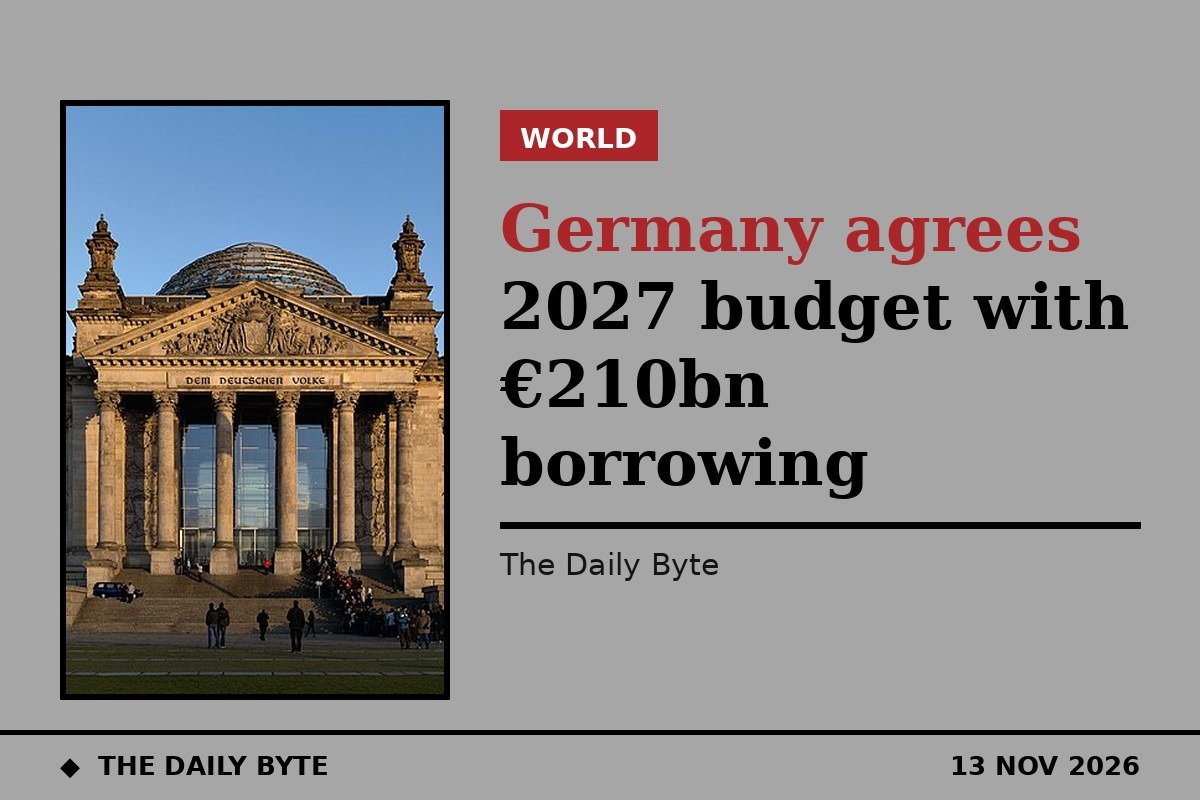
Germany's budget committee has finalised the country's 2027 budget in the early hours of Friday morning, agreeing a spending plan that relies on more than €210 billion in new borrowing, the second-highest level since the Second World War.
The committee reached agreement after weeks of negotiations, clearing the way for the package to go before the Bundestag for a final vote. The deal settles the shape of Chancellor Friedrich Merz's first full annual budget, a plan built around higher spending on defence and infrastructure.
Record borrowing, just short of the pandemic peak
According to a budget document seen by Reuters, the agreed package provides for total spending of €561 billion, including investment spending of €62 billion. Total new borrowing reaches €210.4 billion, just below the record of €215.4 billion recorded in 2021, during the Covid-19 pandemic.
Of that total, €123 billion is new borrowing from the core budget. The remainder comes through additional borrowing authorised under special measures agreed last year, which allow greater spending on infrastructure and defence outside the normal budget limits.
The figures mark a sharp break with the borrowing levels of recent years. Germany's cabinet approved the first draft of the 2027 budget in July, when total borrowing was put at €203.6 billion. The final committee figures are higher still, reflecting the cost of the coalition's plans to rebuild infrastructure and raise defence spending while the economy remains sluggish.
Taxes dropped and delayed to win agreement
Agreement was only reached after the coalition softened several contested measures. Late on Wednesday, officials in Merz's coalition agreed to scrap a proposed tax on plastic packaging materials that the cabinet had agreed in July, and to delay a tax on sugared drinks until 2028. Plans for cuts to social security spending were also dropped or delayed.
A planned cut to the electricity tax, championed by Merz, was delayed as well. Reports of the committee session said the across-the-board cut, worth about €5 billion, remains unfunded and has been referred to the coalition committee for a final decision.
The coalition also agreed to roll back plans to cut benefits for the children of low-income families, removing another obstacle that had held up the talks.
What happens next
The package now moves to the Bundestag, where a final vote is expected before the end of the year. The committee stage, known as the Bereinigungssitzung, is traditionally the point at which the budget's detailed figures are settled, and the overnight session that concluded on Friday morning ran long as ministers defended their departments' spending line by line.
The budget is the centrepiece of the Merz government's economic programme. Berlin is borrowing heavily to fund investment and defence after years of underinvestment, and to shield the economy from the energy shocks that followed Russia's invasion of Ukraine. The scale of the borrowing, and the strain it places on Germany's public finances, is likely to remain a subject of debate in parliament and beyond as the final vote approaches.
Frequently asked questions
How much is Germany borrowing in 2027? Total new borrowing under the agreed budget is €210.4 billion, including €123 billion from the core budget and the rest through special funds for infrastructure and defence.
How much will the government spend? The budget provides for total spending of €561 billion, including €62 billion of investment spending, according to a document seen by Reuters.
When will the budget become law? The budget committee has finalised the package, and it now goes to the Bundestag for a final vote, which is expected before the end of the year.
Sources: Reuters; Particle News. Figures are as reported from a budget document seen by Reuters.