Germany exports rise 2% as September trade surplus narrows
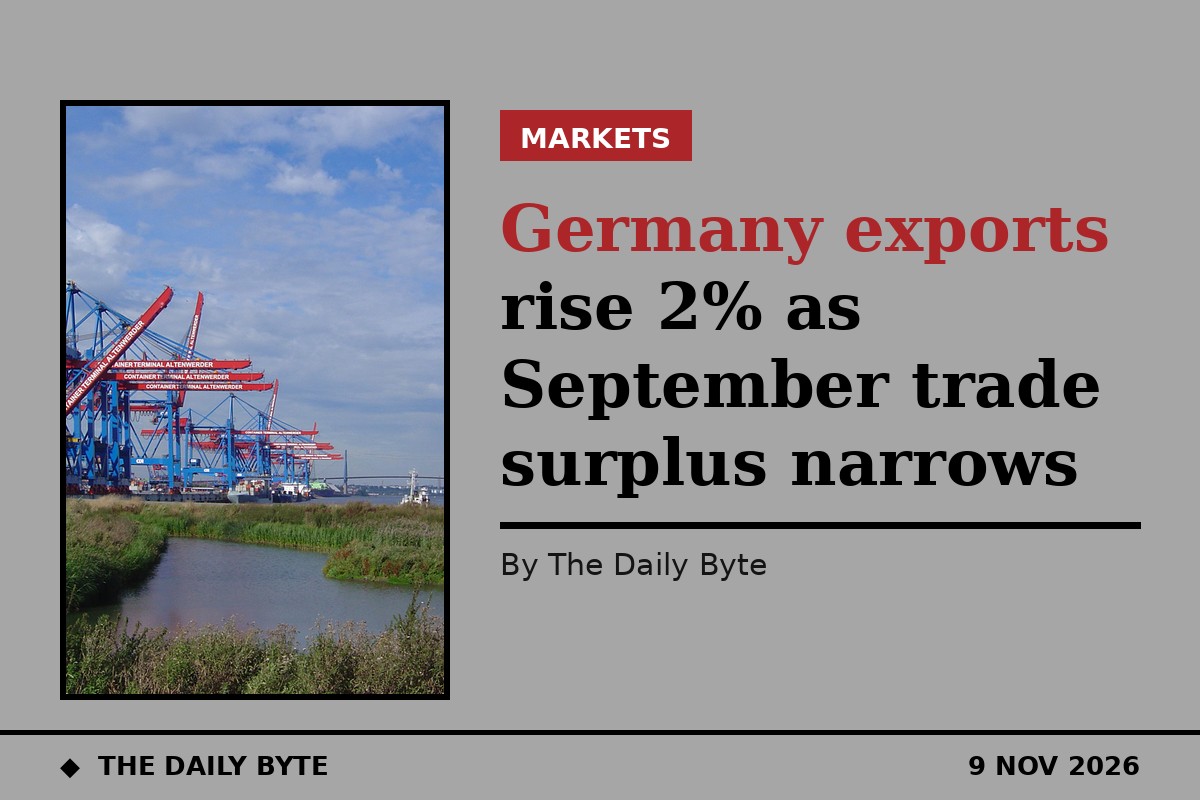
German exports rose by 2.0% in September compared with August, official figures released on Monday showed, but imports grew more than twice as fast and the country's trade surplus narrowed.
Germany exported goods worth €141.1 billion in September on a calendar and seasonally adjusted basis, the Federal Statistical Office, Destatis, said in press release No. 390 of 9 November 2026. Imports rose by 4.2% over the same period to €125.5 billion.
The foreign trade balance therefore showed a surplus of €15.6 billion in September, down from €17.9 billion in August. The figures are provisional and will be updated when detailed results are published on 20 November.
Imports grew faster than exports
The gap between the two growth rates explains the smaller surplus. Exports rose by a solid 2.0% on the month, but the 4.2% rise in imports was more than double that pace, eating into the balance.
Trade with other European Union countries remained the backbone of German commerce. Germany exported goods worth €80.8 billion to EU member states in September and imported goods worth €62.9 billion from them.
Trade with countries outside the EU was more evenly balanced. Exports to third countries amounted to €60.3 billion, up 0.1% on August, while imports from those countries totalled €62.7 billion, up 3.6%.
Exports to China fell sharply
One of the weakest spots in the release was China. German exports to China fell by 5.2% on the month to €5.5 billion in September. Destatis also reported that most German imports in September came from China, underlining how much of the import surge was driven by goods arriving from the world's second-largest economy.
On a nominal basis, without calendar and seasonal adjustment, Germany exported goods worth €148.5 billion and imported goods worth €131.1 billion in September.
What it means for Europe's largest economy
The figures arrive at a sensitive moment for Germany. Europe's largest economy has been wrestling with weak demand, high energy costs and intense competition from Chinese manufacturers, and export performance is watched closely as a gauge of industrial health.
There was some encouraging news alongside the trade data. German industrial production increased by 0.70% in September, according to market reports on Monday, suggesting factories were busier even as the trade surplus shrank.
Even so, the narrower surplus shows that Germany is paying more for what it buys from abroad than it is earning from what it sells. If import growth keeps outpacing export growth, the surplus that has long helped fund the German economy will keep shrinking.
Investors will get a fuller picture on 20 November, when Destatis publishes detailed results for September, including the breakdown by product group and trading partner.
Source: Destatis, press release No. 390 of 9 November 2026; corroborated by market reporting of the same release.