Ghana Turns Agbogbloshie E-Waste Dump Into 20,000 Jobs
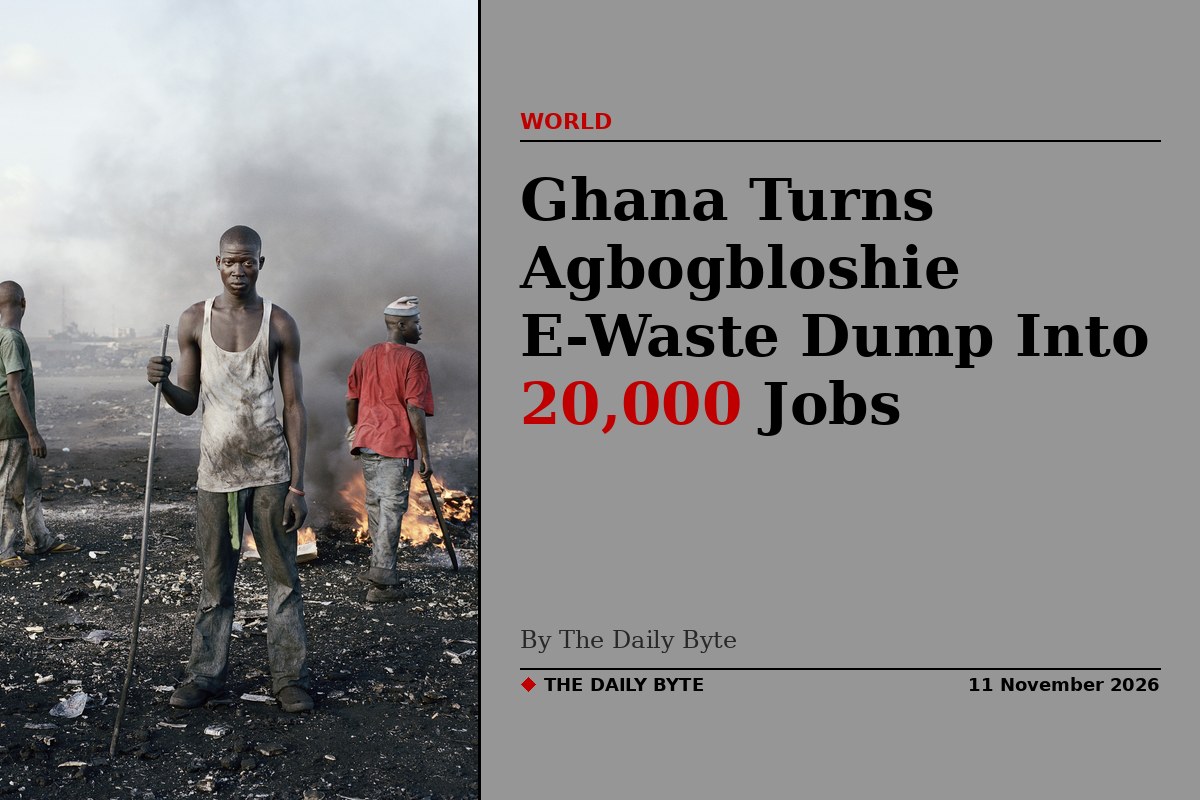
Ghana is working to turn Agbogbloshie, one of the world’s most notorious electronic waste dumps, into a source of up to 20,000 permanent jobs in waste management and the circular economy. The plan is in focus this week as waste management takes centre stage at the COP31 climate talks in Turkey, which began on Monday, 9 November.
The sprawling dump sits on the Korle Lagoon delta in Accra, beside an informal settlement of about 80,000 residents, many of them migrants and traders. For years, discarded electronics have been burned there for copper and other metals, drawing global attention to the health and environmental damage caused by informal recycling.
A formal system built on informal workers
Local Government Minister Mahama Ayariga has said the planned overhaul of Ghana’s waste management system could create at least 20,000 permanent jobs, opening opportunities in waste collection, recycling and waste-to-energy businesses. The proposal forms part of a nationwide sanitation strategy being developed by the government.
The plan includes engineered landfill sites in regional capitals, waste transfer stations across metropolitan, municipal and district assemblies, and the provision of waste bins for households. A key feature is waste separation, so recyclable and other usable materials can be recovered before waste reaches landfill, giving recycling and energy businesses a reliable supply of feedstock.
Crucially, the plan does not push scrap workers out. Instead, it brings informal collectors and haulers, including waste pickers and tricycle operators, into the formal recycling process. Existing operators will be incorporated into the redesigned system, with open-bucket tricycles replaced by self-loading and self-tipping models and night-time collection used to ease congestion. Electronic payments would replace cash between households and collectors.
One million tonnes to clear
President John Mahama launched a three-month effort in September to remove about one million tonnes of waste from the site. Heavy military and public works equipment has begun hauling rubbish to a landfill about 31 miles outside Accra, where it will be compacted and covered under strict environmental safeguards.
The government is also working on a financing model under which investment in bins, collection tricycles, trucks, transfer stations and landfill infrastructure can eventually be recovered through household waste collection payments and revenue from separated waste sold to recycling and waste-to-energy companies. Officials are now awaiting cost estimates for the proposed landfill sites and transfer stations.
The human cost of the dump
The cleanup cannot come too soon for the people who work at Agbogbloshie. Burning computer cables and batteries releases lead, mercury and other toxins, while open fires give off soot and dioxins. Scrap dealer Barima Okuanaju earns about four to nine dollars a day taking apart fridges and cars by hand in the fumes. James Hassan, a 31-year-old Liberian immigrant, sifts through waste without gloves or a mask and says he has headaches and coughs but has never sought medical care.
Epidemiologist Reginald Quansah of the University of Ghana says workers face lung and neurological conditions. No study has yet linked specific diseases to the dump, but he warns that the cumulative contamination is a serious concern. Fourteen-year-old Aminatu Fatawu, who sells water at the site, coughs and has noticed blood in her saliva.
Much of the waste comes from abroad. Greenpeace estimates that 15 million used garments arrive in Ghana each week, and roughly half of what remains after traders sell what they can ends up as dead waste, dumped or burned. It found that 89 percent of sampled dead garments contained petrochemical fibres such as polyester, which shed microplastics and release carcinogens at levels far above safe limits when burned. Greenpeace’s Hellen Kahaso Dena said the global north is using Ghana as a dumping ground for fashion waste.
For Ghana, the ambition is to turn that burden into livelihoods: cleaner neighbourhoods, formal jobs for the people who already do the work, and a recycling economy that keeps value in the country instead of burning it away.
Sources: OkayAfrica and The High Street Journal.


