Ghana unveils $10bn 'New Economy' plan in 2027 budget
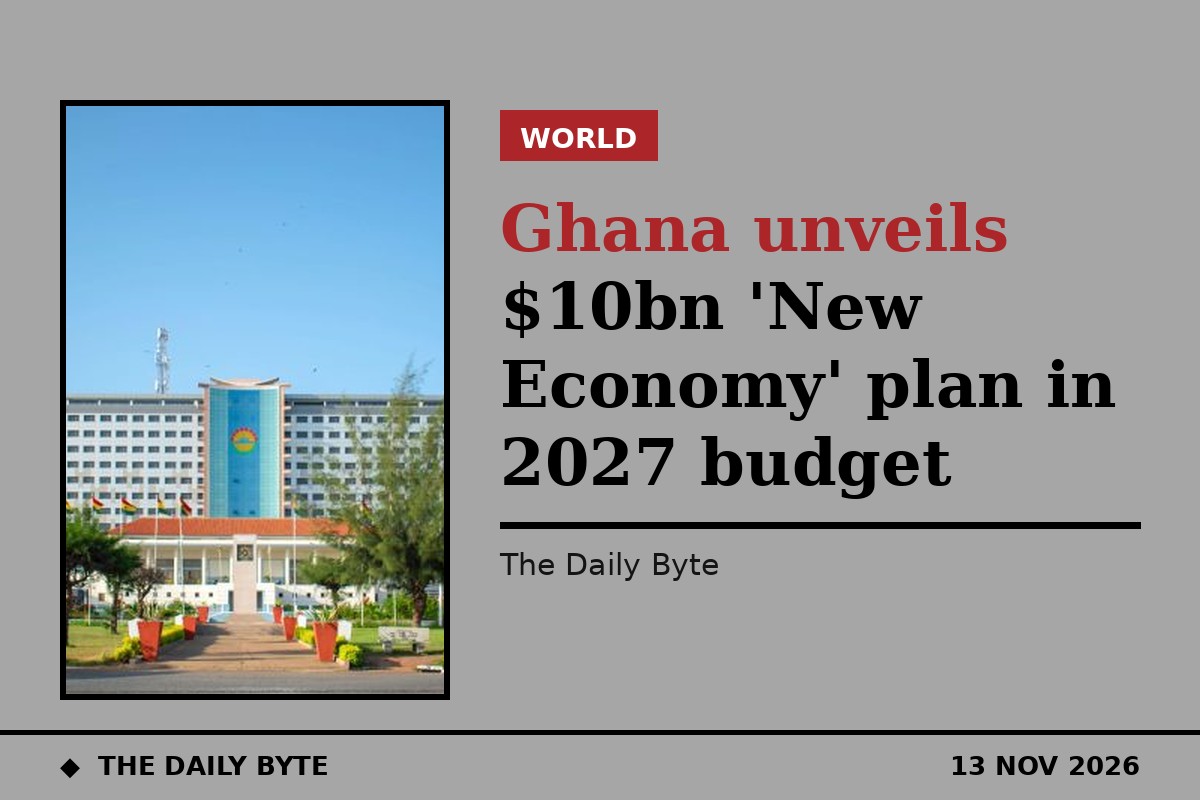
Ghana will invest $10 billion over four years from 2027 in a domestically funded “New Economy” programme to raise output, exports and jobs, Finance Minister Dr Cassiel Ato Forson told Parliament on Thursday 12 November as he presented the 2027 Budget Statement and Economic Policy. The budget, themed “The New Economy, New Ghana, Jobs and Prosperity”, marks the government’s shift from stabilising the economy after its debt crisis towards production, industrial growth and employment.
The programme will channel about $2.5 billion a year into sectors the government says can transform the structure of the economy and cut its dependence on raw commodity exports. Commercial agriculture takes the largest share, at $3 billion, followed by energy infrastructure at $2 billion and critical minerals value addition at $1.5 billion. Tourism, culture and the creative arts, textiles and garments, and pharmaceuticals and biomanufacturing each receive $1 billion, while the technology economy is allocated $300 million for 2027 and 2028. An eighth pillar, macroeconomic stability and affordable finance, carries no separate allocation. In 2027 alone the government will invest GH¢30 billion, equal to 1.5 per cent of gross domestic product, in the programme.
Growth, inflation and deficit targets
The budget projects real GDP growth of at least 5.2 per cent in 2027, up from 4.8 per cent this year, with non-oil growth of at least 5.7 per cent. Inflation is targeted at 8 per cent by the end of the year, within a band of two percentage points either side, and the fiscal deficit on a cash basis is projected at 3.6 per cent of GDP, down from 4 per cent in 2026. Total spending is set at GH¢389.2 billion, made up of GH¢375.3 billion of expenditure and GH¢13.9 billion to clear arrears. The budget introduces no new taxes.
Provisional figures given during the speech put public debt at GH¢759.3 billion, or 47.5 per cent of GDP, at the end of October 2026, above the government’s 45 per cent anchor. Gross international reserves stood at $12.7 billion at the end of September, equal to about four and a half months of import cover. The budget targets reserves of at least six months of imports by the end of 2027.
Early repayment of restructured debt
Forson also announced the early redemption of GH¢29 billion, about $2.48 billion, of Domestic Debt Exchange Programme bonds due in February 2027, with the repayment taking effect immediately. He said the government plans to repay by 31 December the second Eurobond restructured in 2024 and due to mature in January 2027. Together, the early redemptions are expected to retire more than GH¢36 billion of debt ahead of schedule.
It is the first budget since Ghana completed a $3 billion International Monetary Fund support programme, under which the economy improved markedly. Ghana sought IMF support in 2022 after debt-servicing costs soared following years of overspending, the Covid-19 pandemic, Russia’s invasion of Ukraine and high global interest rates. Inflation, which peaked at 54.1 per cent in December 2022, fell to 3.2 per cent in March this year, though it has edged up slightly since. Ghana continues to work with the IMF through a three-year Policy Coordination Instrument, an arrangement that involves no funding but includes regular IMF reviews.
The budget comes as Ghana prepares to mark 70 years of independence in 2027. Parliament will now scrutinise the proposals in the coming weeks, with a post-budget workshop scheduled in Ho in the Volta Region. The test for the New Economy programme will be whether the promised investment turns into factories, farms and jobs, rather than another round of announcements.