Gold Climbs Back Above $4,100 as Oil Slide Eases Fears
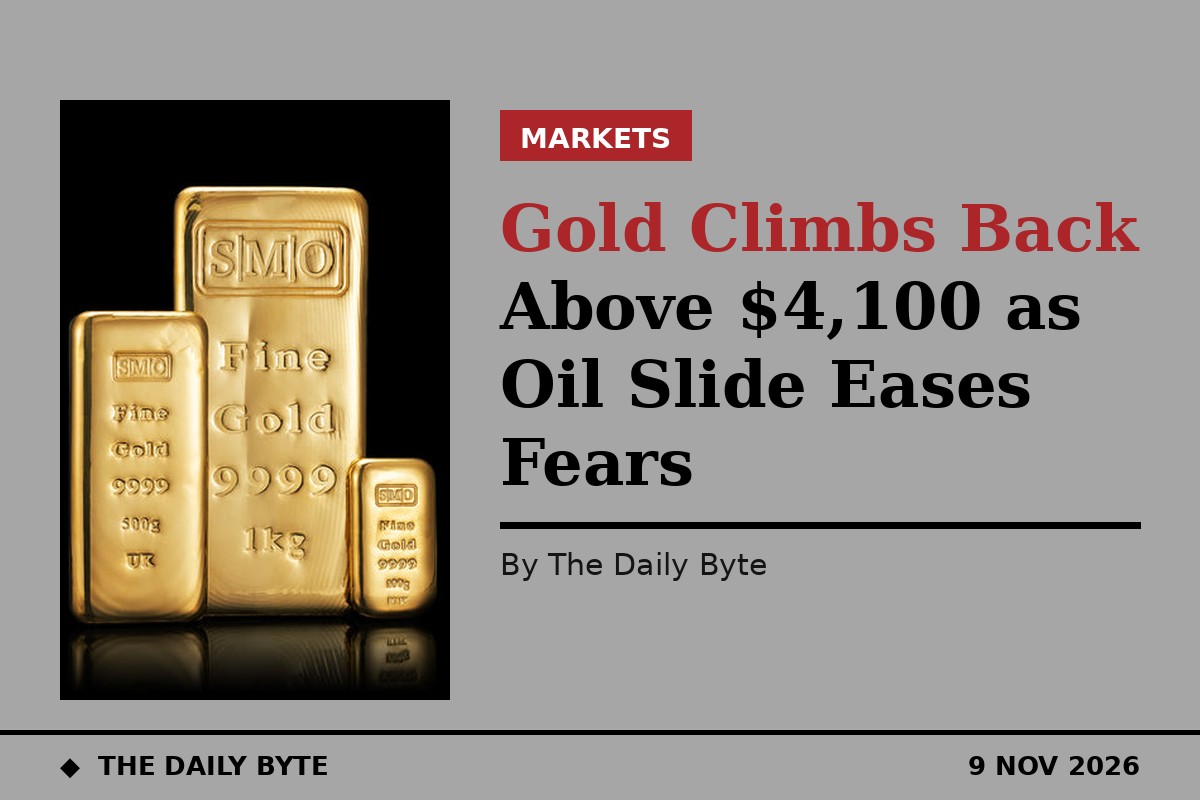
Gold climbed back above $4,100 an ounce on Monday, rising more than 1% in early trading as softer oil prices eased worries about inflation and investors looked ahead to key US data. Spot gold rose 1.4% to $4,123.46 an ounce by 0428 GMT, Reuters reported, while US gold futures for December delivery also gained 1.4% to $4,132.70.
The rebound follows a choppy week for bullion. Gold gained about 5% last week, but a stronger than expected US jobs report on Friday briefly knocked it lower, towards $4,033, as the dollar and Treasury yields rose. The October payrolls data showed employers added 165,000 jobs, up from 60,000 in September, and the unemployment rate fell to 4.1% from 4.2%.
Oil falls as Iran strikes look unlikely
Oil prices fell after US President Donald Trump said he was highly unlikely to order further attacks on Iran while talks to end the conflict continued. Brent crude was quoted around $97.67 a barrel earlier in the morning, with US crude around $91.15. Cheaper oil takes pressure off inflation, which in turn reduces the case for higher interest rates — and higher rates are gold's biggest headwind, because bullion pays no yield.
Silver joined the rise, climbing 2.5% to $53.15 an ounce, while platinum gained 1.3% to $1,553.23 and palladium rose 2.1% to $1,045.11. The broad move across precious metals suggests the rally was driven by the softer oil price and the weaker inflation outlook rather than anything specific to gold.
A strong week for bullion
Gold's recovery extends a strong run. Bullion gained about 5% last week, and the move back above $4,100 puts it within reach of the levels seen before the October sell-off in bond markets pushed yields higher. For investors, gold has acted as both a hedge against inflation and a refuge from the turbulence in technology shares, which suffered their worst week since April as fears of an AI bubble grew.
Traders now await the October US consumer price index, due on Tuesday, and the producer price index on Friday. Both will feed into expectations for the Federal Reserve, which meets on 8 and 9 December. Traders currently see an 81% chance that the Fed will raise rates in December, according to CME's FedWatch tool, up from 71% before the payrolls data.
That rate-hike pricing is the main risk to gold's recovery. If Tuesday's inflation reading comes in hot, yields could climb again and pull bullion back below $4,100. If it comes in soft, the case for holding gold strengthens — and the metal's 5% gain last week suggests buyers are already positioning for that outcome.