Gold forms death cross below $4,000 as oil surge revives inflation fears
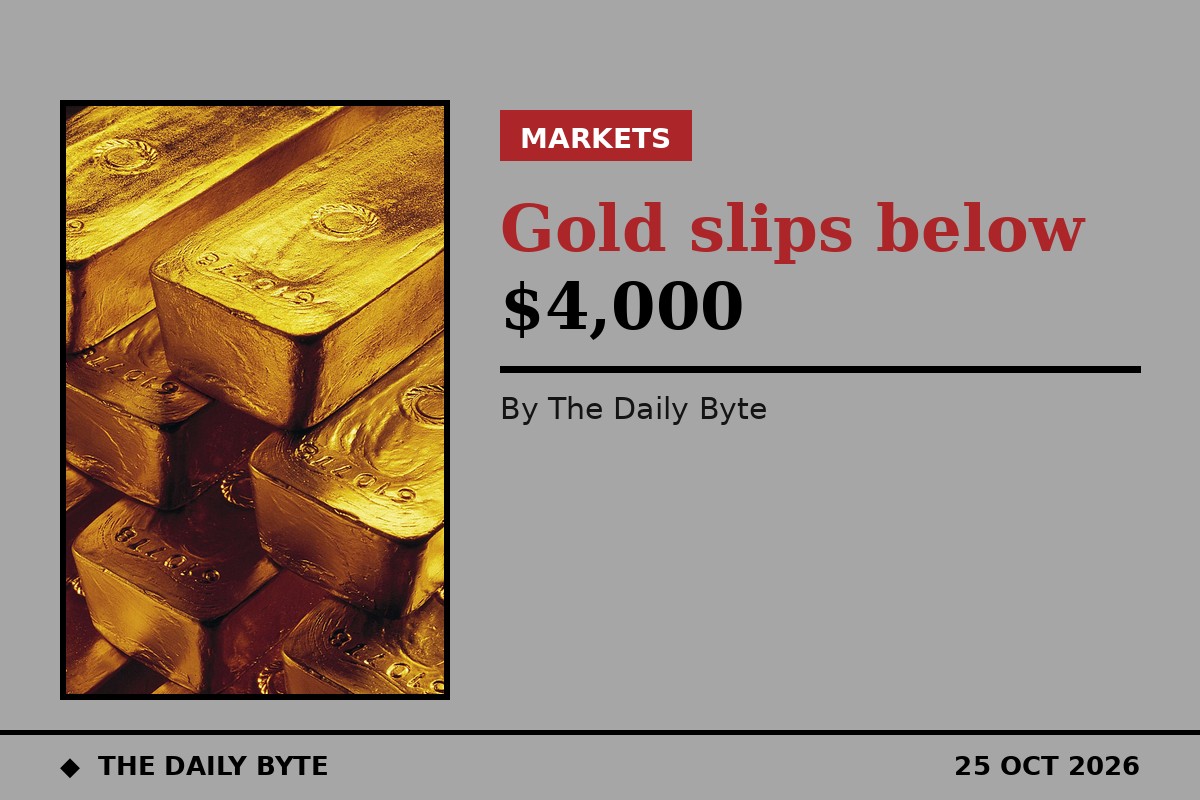
Gold has slipped below $4,000 an ounce and formed a death cross, a bearish technical signal, as surging oil prices revive inflation fears and keep interest-rate pressure on precious metals. The metal closed the week around $3,996 to $4,008 an ounce, down about 4.1% on the week and roughly 29% below this year's peak.
What a death cross means
A death cross forms when a shorter-term moving average falls below a longer-term one — here, the 50-day average dropping below the 200-day average. Traders read it as a sign that downward momentum may persist, though it is a backward-looking signal, not a guarantee of further falls. Gold also slipped below its Supertrend support level, adding to the bearish technical picture.
Oil's role in the sell-off
The retreat has coincided with a sharp rise in crude: Brent climbed above $116 a barrel and US WTI above $103, their highest closes since April, as Middle East tensions escalated. Higher oil feeds inflation expectations, which makes it harder for the Federal Reserve to cut interest rates soon — and higher-for-longer rates weigh on gold, which pays no yield. Silver fell harder, dropping more than 5% on the week to about $53.90 an ounce. All eyes now turn to the Federal Reserve meeting on 27-28 October for the next signal on rates.